






Definition & Meaning
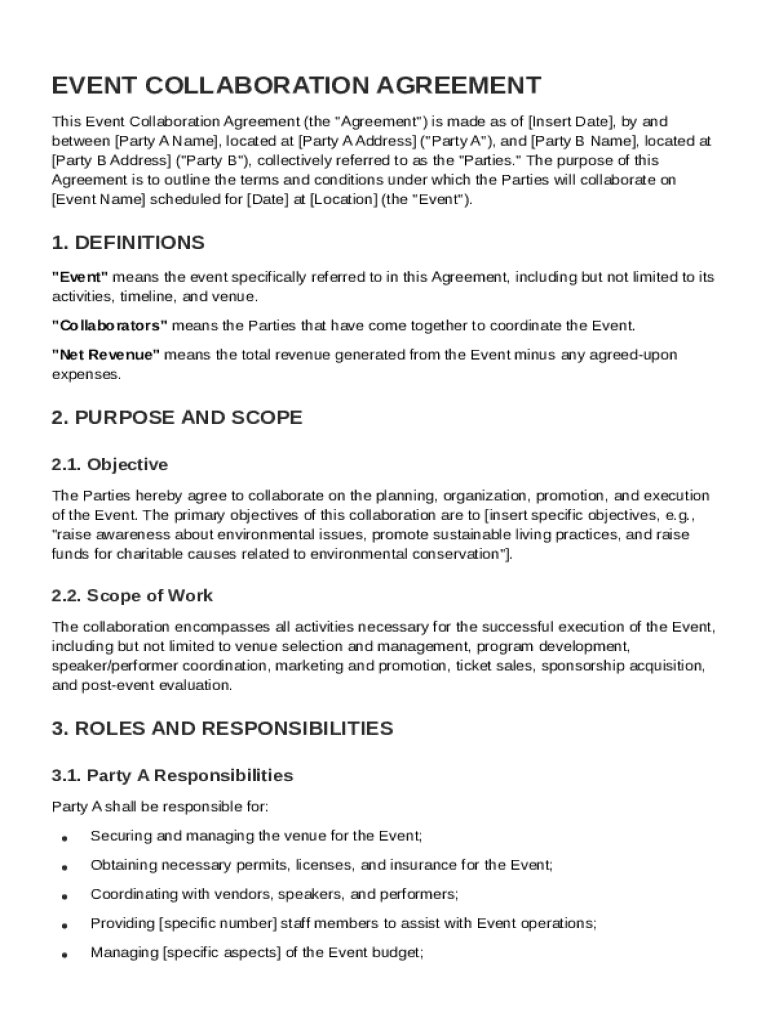
An Event Collaboration Agreement Template is a structured document that establishes a clear framework for two parties, commonly known as Party A and Party B, to collaboratively plan and execute an event. This template outlines the essential components of the partnership, such as objectives, roles, responsibilities, and terms of financial engagement. Typically, it also addresses crucial aspects like intellectual property rights and confidentiality obligations, ensuring both parties' interests are protected. Understanding this template's purpose can facilitate successful collaboration and compliance with legal standards.
Key Elements of the Event Collaboration Agreement Template
The template includes several fundamental components that are vital to a comprehensive agreement:
- Objectives and Scope of Work: Articulates the primary goals and detailed tasks that each party will undertake.
- Roles and Responsibilities: Clearly defines what each party is expected to do, establishing accountability.
- Budget and Revenue Sharing: Outlines the financial arrangements, including cost-sharing and distribution of proceeds.
Additional Elements
- Intellectual Property Rights: Specifies how intellectual property, such as logos or slogans, will be used and who retains ownership.
- Confidentiality Obligations: Ensures sensitive information is protected, with provisions for what constitutes confidential information.
Understanding these key elements can guide effective negotiation and execution of the agreement.
How to Use the Event Collaboration Agreement Template
Utilizing this template involves several practical steps:
- Download the Template: Find a reliable source to download the template, ensuring it is tailored to the specific needs of your event.
- Customize the Content: Modify sections to reflect the specific details of your collaboration, like objectives and financial arrangements.
- Review with Legal Counsel: Engage a legal professional to review the completed document and ensure compliance with relevant laws.
Practical Tips:
- Consider incorporating additional clauses that address specific concerns pertinent to your event.
- Use the template as a framework but be flexible to include additional provisions that can foster mutual benefit.
Steps to Complete the Event Collaboration Agreement Template
Completing this template effectively involves following a structured process:
- Initial Information Gathering: Collect all necessary details regarding the parties involved and the objectives of the event.
- Specify Roles and Responsibilities: Clearly articulate the specific tasks each party will perform.
- Outline Financial Terms: Define budgeting details, including cost division and revenue sharing.
- Draft Confidentiality Provisions: Include clauses that safeguard sensitive information shared between parties.
Final Steps:
- Review for Completeness: Ensure all sections are filled out comprehensively to prevent future disputes.
- Execute the Agreement: Have all parties sign the completed document, formalizing the collaboration.
Legal Use of the Event Collaboration Agreement Template
Understanding the legal context is crucial:
- Compliance with Law: Ensure the agreement adheres to federal and state regulations where the event is held.
- Enforceability: The document must be legally binding, with clauses that allow for enforcement in case of breach.
Common Legal Provisions:
- Dispute Resolution: Includes mechanisms like mediation or arbitration to resolve conflicts.
- Governing Law: Specifies which jurisdiction's laws will apply, usually correlating with the event's location.
Engaging legal professionals during drafting can ensure that the agreement is robust and defensible.
Examples of Using the Event Collaboration Agreement Template
Real-world scenarios can illustrate effective uses:
- Corporate Events: A tech company and an event management firm collaborate on a product launch, using the agreement to delineate tasks and share costs.
- Festivals: Two organizations jointly host a cultural festival, employing the agreement to manage branding rights and revenue distribution.
Lessons Learned:
- Clarity in defining roles prevents task overlap and ensures smoother execution.
- Clear revenue-sharing agreements prevent financial disputes post-event.
Important Terms Related to the Event Collaboration Agreement Template
Several terms are pivotal to understanding the template fully:
- Party A/B: Designates the collaborating entities.
- Force Majeure: Covers situations where unforeseen circumstances prevent fulfillment of obligations.
- Indemnification: Ensures one party covers potential legal liabilities of the other.
Additional Key Terms:
- Non-Disclosure Agreement (NDA): Often incorporated to maintain confidentiality.
- Termination Clause: Outlines conditions under which the agreement can be prematurely ended.
Familiarity with these terms enhances negotiation and eventual implementation of the agreement.
Software Compatibility
Event collaboration often requires compatibility with digital platforms:
- DocHub Integration: Streamlines document workflow through features like editing, annotation, and secure sharing.
- Google Workspace Connectivity: Enhances collaborative efforts by allowing integration with Google Drive and Gmail for easy document access and editing.
Additional Tools:
- Leveraging platforms like DocHub can facilitate seamless management of additional forms and necessary approvals in real-time, optimizing the overall collaborative process.
Selecting the right software tools can ensure efficient document handling, contributing to the agreement's successful execution.