






Definition and Meaning
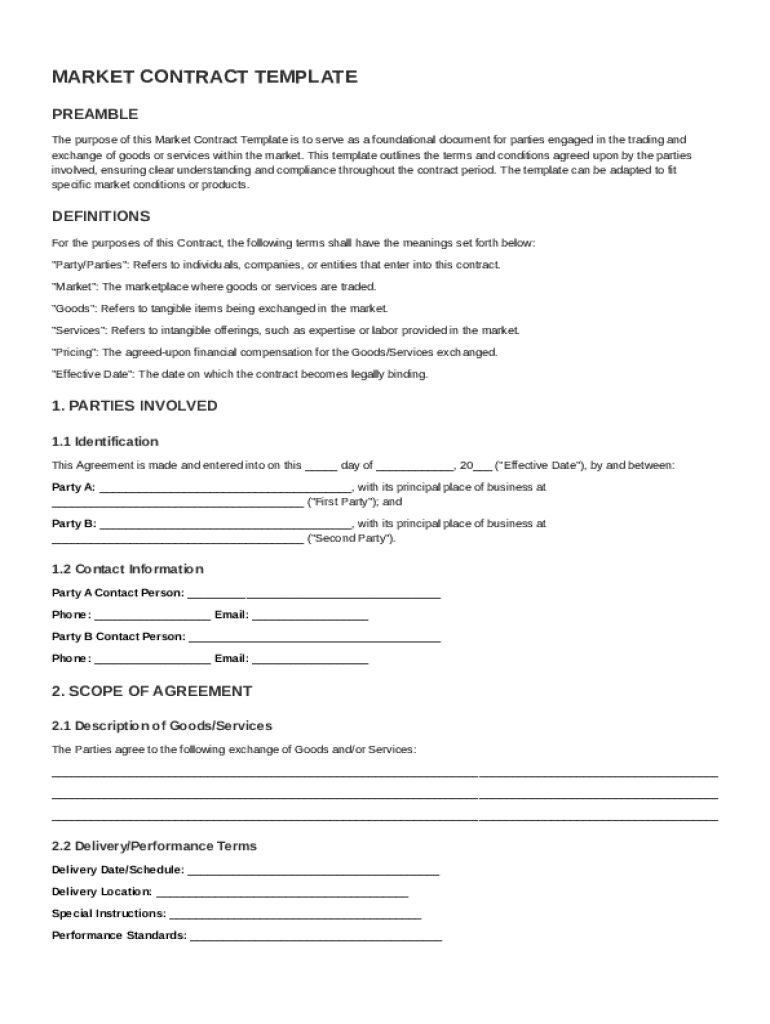
The Market Contract Template is a crucial document used in the trading of goods or services. It provides a standardized format that details the essential terms and conditions of agreements between parties. This includes elements such as the definition of terms, identification of involved parties, the scope of the agreement, and more. A clear template like this is indispensable as it ensures compliance and reduces the risk of misunderstandings throughout the duration of the contract.
Essential Features
- Definitions: Clearly specify the meaning of key terms used within the document to avoid ambiguities.
- Parties Involved: Identify the individuals or entities entering into the agreement.
- Scope of Agreement: Detail the extent and limitations of activities covered by the contract.
Key Elements of the Market Contract Template
The Market Contract Template is composed of several critical elements designed to safeguard the interests of all parties involved. It includes:
- Pricing and Payment Terms: Outlines how payments will be structured, including amount, currency, and payment method.
- Duration and Termination Clauses: Specifies the contract length and conditions under which it can be terminated.
- Dispute Resolution: Provides mechanisms for resolving disagreements, such as mediation or arbitration, which can prevent costly litigation.
Practical Examples
- Pricing and Payments: For instance, a contract may stipulate that payments are made monthly in U.S. dollars via bank transfer.
- Dispute Resolution: Many contracts include a clause requiring parties to attempt mediation before pursuing court action.
Steps to Complete the Market Contract Template
Completing a Market Contract Template involves several detailed stages, ensuring that all necessary information is included accurately.
- Fill in Basic Details: Start with the names and contact information of each party involved.
- Detail the Agreement Scope: Define precisely what is being sold or exchanged, including any quality standards or deadlines.
- Set Pricing Structure: Carefully note down all payment-related terms to ensure clarity.
- Review and Include Termination Clauses: Ensure that both parties understand under what conditions the contract may be ended.
How to Use the Market Contract Template
Utilizing the Market Contract Template effectively ensures all parties are on the same page regarding their responsibilities and rights.
- Customization: Tailor sections to fit specific needs, such as unique pricing models or delivery schedules.
- Review by Legal Experts: Consider having the drafted contract examined by a legal professional to ensure all clauses are enforceable under U.S. laws.
- Collaboration: Make use of platforms like DocHub for collaborative editing and real-time updates, allowing each party to contribute to the document.
Important Terms Related to Market Contract Template
Several terms recur throughout the Market Contract Template that requires careful attention for accurate completion.
Common Terms
- Confidentiality Obligations: Clauses that maintain the confidentiality of sensitive information shared between parties.
- Force Majeure: Provisions that relieve parties from liability due to unforeseeable events that hinder contract fulfillment.
Real-World Scenarios
- Confidentiality Obligations: A supplier might require a clause to ensure proprietary manufacturing processes remain undisclosed.
- Force Majeure: This term could protect either party in the event of natural disasters impacting production or delivery times.
Who Typically Uses the Market Contract Template
The Market Contract Template is especially popular with businesses engaged in the exchange of goods or services.


Types of Users
- Small and Medium Enterprises (SMEs): Often use templates to facilitate transactions without the need for an in-house legal team.
- Corporations: Utilize such contracts to standardize business operations and maintain consistency across different markets.
Who Issues the Form
Market Contract Templates are typically issued by legal service providers or business advisory firms. They are crafted to suit industry standards and legal requirements.
- Law Firms: Frequently develop and distribute these templates.
- Business Consultants: Provide templates as part of a suite of documents for operational efficiency.
Digital vs. Paper Version
Choosing between a digital or paper version of the Market Contract Template can influence how parties interact with the document.
Pros and Cons
- Digital Version: Offers ease of access and is perfect for remote teams; provides the ability to quickly update information as needed.
- Paper Version: May be preferred for offline environments; however, it can be less efficient for document management and sharing.
Software Compatibility
Platforms like DocHub support the efficient digital use of Market Contract Templates.
Compatible Software
- Google Workspace: Direct integration enables seamless import and export of documents.
- Microsoft Office: Can be used to edit and manage documents for wider applicability.
Examples of Using the Market Contract Template
Real-world cases highlight the versatility and necessity of Market Contract Templates in various business contexts.
Case Examples
- E-commerce Platforms: Use templates to establish terms for vendor partnerships.
- Manufacturers: Implement templates to formalize relationships with distributors, ensuring product supply terms are clear.
Through selecting these blocks, the intricacies and multi-faceted nature of the Market Contract Template are showcased, providing comprehensive guidance for its use and application.