
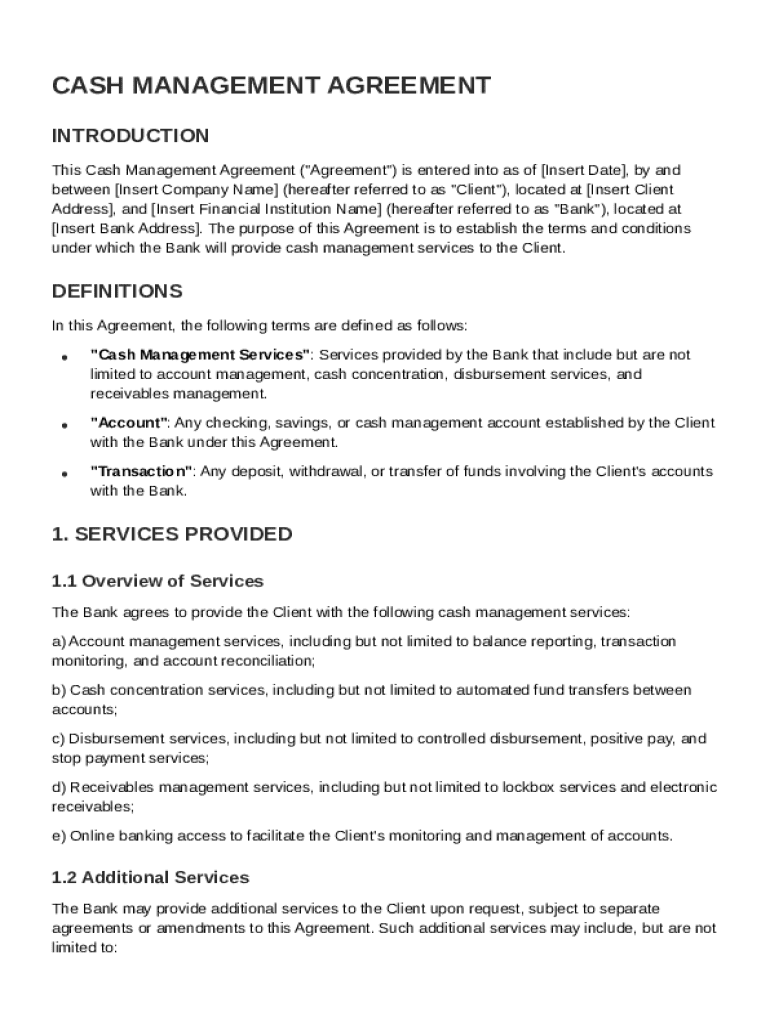







Definition and Meaning of Cash Management Agreement
A Cash Management Agreement Template delineates the terms under which a financial institution offers cash management services to a client. It is essential for outlining responsibilities and managing expectations between both parties. The document typically defines key services such as account management, cash concentration, disbursement, and receivables management. By detailing fees and charges, it helps clients understand their financial obligations. Furthermore, it specifies the client and bank's responsibilities, including confidentiality obligations and security requirements, ensuring both parties are aware of their roles.
How to Use the Cash Management Agreement Template
Understanding how to use the Cash Management Agreement Template effectively is essential for tailoring it to fit the specific needs of a transaction. Start by identifying all participating parties and ensuring their details are accurately entered. Next, outline the specific cash management services required and the corresponding terms. This may include selecting services such as automated transaction processing or liquidity solutions and adjusting sections to reflect any negotiated terms. Lastly, review and adjust fees, ensuring all parties understand the financial commitments.
Practical Application Steps
- Identify Parties: Add the full names and contact details of both the client and the bank.
- Select Services: Choose the cash management services needed, such as cash concentration.
- Adjust Terms: Modify terms based on negotiated agreements regarding fees, services, etc.
- Review and Confirm: Confirm all details with involved parties for accuracy and completeness.
Key Elements of the Cash Management Agreement Template
When crafting a comprehensive Cash Management Agreement, several key elements must be considered to ensure that the document serves all parties involved comprehensively. These elements include a precise definition of services, clearly outlined fees and charges, and detailed descriptions of the responsibilities of both the client and the bank. Additionally, it should include security requirements, indemnification clauses, and termination conditions.
Essential Components
- Service Definitions: Clearly define each service provided.
- Fee Schedule: Outline any fees related to each service.
- Roles and Responsibilities: Address what each party is responsible for.
- Security Protocols: Specify data protection and encryption measures.
- Termination Conditions: Detail how and when the agreement can be terminated.
Important Terms Related to Cash Management Agreement Template
Understanding the key terms within a Cash Management Agreement is crucial for ensuring clarity and preventing misunderstandings. These terms often include "Account Management," "Cash Concentration," "Disbursement Services," and "Receivables Management." Each term holds specific responsibilities and processes that need to be explicitly defined in the context of the agreement to provide clear guidance.
Common Terms Explained
- Account Management: Monitoring and managing clients' accounts to optimize cash flow.
- Cash Concentration: Aggregating funds from multiple accounts into a central account.
- Disbursement Services: Handling outgoing payments and transactions on behalf of the client.
- Receivables Management: Managing invoices and payment collection processes.
Steps to Complete the Cash Management Agreement Template
Completing a Cash Management Agreement Template involves a methodical process to ensure all aspects are covered effectively. Start by gathering all necessary information about the client and the bank, including contact details. Next, work through each section of the template to outline services required, fees, and responsibilities. Ensure each term is clear and understood by all parties involved.
Completion Checklist
- Gather Information: Include details for both client and bank.
- Outline Services: Detail required cash management services.
- Specify Fees: List all applicable fees.
- Clarify Responsibilities: Ensure roles and obligations are clearly defined.
- Review and Sign: Finalize the document with signatures from all parties.
Who Typically Uses the Cash Management Agreement Template
The Cash Management Agreement Template is commonly used by corporations, small businesses, and financial institutions. Businesses of varying sizes employ this template to manage their cash flows efficiently, optimize their treasury functions, and establish a solid foundation for their financial dealings. Financial institutions use these agreements to offer structured services to clients, ensuring a clear understanding of services provided.


Typical Users
- Corporations: For managing complex cash flows across multiple accounts.
- Small Businesses: To streamline banking and manage cash operations efficiently.
- Financial Institutions: To standardize their service offerings and client interactions.
State-Specific Rules for the Cash Management Agreement Template
When implementing a Cash Management Agreement, it is crucial to consider state-specific regulations that may affect its terms or validity. While federal laws provide a general framework, individual states may have specific laws pertaining to financial transactions, fees, and service agreements. Understanding these differences is vital for ensuring compliance and avoiding legal challenges.
Considerations by State
- Interest Rates: State laws may regulate permissible interest rates.
- Service Fees: Different states might have guidelines on banking service fees.
- Consumer Protection: Variable laws enforcing client protection and transparency.
Legal Use of the Cash Management Agreement Template
The Cash Management Agreement Template must be used in a manner that complies with legal standards, ensuring all services and obligations are clearly stated and understood by all parties. The document should adhere to the ESIGN Act for electronic signatures if used in a digital context, ensuring the enforceability of all signed terms. Proper execution of this agreement can prevent disputes and clarify each party's legal standing.
Legal Compliance
- ESIGN Act: Ensure electronic signatures are legally binding.
- Governing Laws: Specify which state's laws govern the agreement.
- Indemnification: Include clauses to protect parties against potential losses.




