
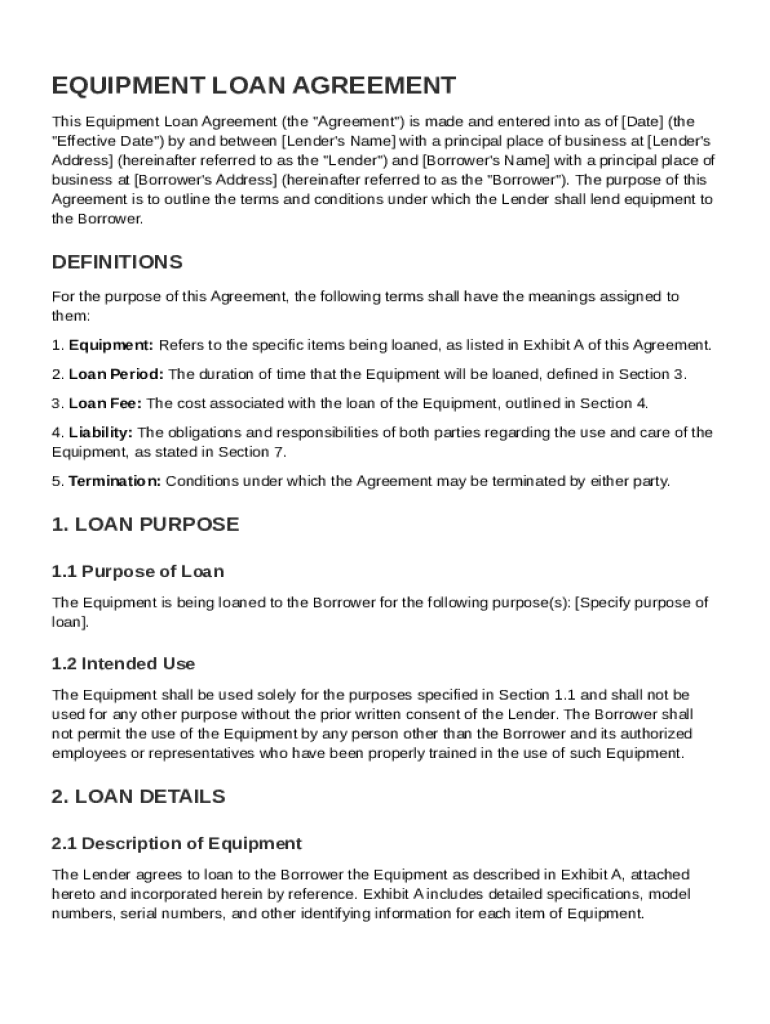







Definition & Meaning
An Equipment Loan Agreement Template outlines the terms and conditions for lending equipment from a lender to a borrower. This document is essential in formalizing the exchange, ensuring all parties are aware of their rights and responsibilities. It typically includes specific terminology that clearly defines the scope of the agreement, such as "lender," "borrower," "equipment," and "loan term." By establishing these definitions upfront, both parties can reference precise meanings, reducing potential misunderstandings. For example, "equipment" might refer to any machinery, tools, or devices loaned, and it is crucial to describe these items clearly in the agreement.
How to Use the Equipment Loan Agreement Template
Using the Equipment Loan Agreement Template effectively involves understanding its structure and filling in the necessary details pertinent to your situation. First, review each section to ensure you know what information is required. Typically, the template will have placeholders for details like the name of the lender, name of the borrower, specific equipment being loaned, and the loan period. Step-by-step:
- Identify Parties Involved: Fill in the names and addresses of both the lender and the borrower.
- Detail the Equipment: Include comprehensive descriptions of the equipment being loaned, ensuring unique identifiers like serial numbers are noted.
- Specify the Loan Term: Clearly state the start and end date of the loan, encompassing any relevant timeframes.
- Outline Financial Terms: Indicate any fees or payment structures if applicable.
- Review and Amend: Consider any additional clauses relevant to your specific agreement, such as insurance requirements or maintenance obligations.
Steps to Complete the Equipment Loan Agreement Template
Completing the Equipment Loan Agreement Template requires diligent attention to detail to ensure all sections are accurately addressed. Follow these steps:
- Fill Out Lender Information: Start with the lender’s details like full name, address, and contact information.
- Enter Borrower Information: Include the borrower’s full name, address, and contact detail.
- Describe the Equipment: Precisely detail the equipment, making note of brand, model, condition, and any unique identifiers.
- Set Terms and Conditions: Define the duration of the loan, responsibilities of each party, and any specific conditions tied to the use of equipment.
- Include Indemnification Clauses: Specify any liability coverage and indemnification processes in the event of damage or loss of equipment.
- Specify Governing Law: Reference the legal jurisdiction under which the agreement is enforced.
- Review and Sign: Both parties should thoroughly review the document, making necessary amendments before signing.
Key Elements of the Equipment Loan Agreement Template
Certain elements are critical to a comprehensive Equipment Loan Agreement Template, ensuring all bases are covered legally and operationally. Key elements include:
- Identification of Equipment: Detailed description and identifiers.
- Loan Duration and Conditions: Specific terms governing the loan period and usage.
- Responsibilities of Borrower and Lender: Clear articulation of maintenance, care, and insurance responsibilities.
- Fee Structure: Outline of any associated costs.
- Liability and Indemnification Provisions: Sections to protect both parties from unforeseen liabilities.
- Termination Rights: Clauses outlining grounds for early termination.
- Governing Law: Declaration of the state or jurisdiction laws applicable to the agreement.
Legal Use of the Equipment Loan Agreement Template
The Equipment Loan Agreement Template must adhere to legal standards to be enforceable. It is important to ensure the agreement complies with relevant laws in the jurisdiction where the loan is taking place. Legal use often involves including clauses that protect both parties such as:
- Compliance with State Laws: Ensure that the agreement aligns with the equipment lease act of the relevant state.
- Legally Binding Signatures: Secure digital or electronic signatures that comply with the ESIGN Act.
- Insurance Requirements: Legal obligations for the borrower to insure the equipment.
- Confidentiality Provisions: Agreement to keep sensitive information private.
Important Terms Related to Equipment Loan Agreement Template
Several terms are frequently used within an Equipment Loan Agreement Template. Understanding these terms aids in drafting a thorough document:
- Lender/Borrower: Parties involved in the lending agreement.
- Loan Period: Timeframe for which the equipment is loaned.
- Indemnity: Security against legal liability for damage or loss of equipment.
- Governing Law: Legal jurisdiction governing the agreement.
- Amendment: Procedure for making changes to the agreement after it is signed.
Each term carries weight in defining the scope and enforcement of the agreement.
Examples of Using the Equipment Loan Agreement Template
Real-world examples demonstrate the utility of an Equipment Loan Agreement Template. For instance:
- Construction Companies: Equipment loan agreements may be used for temporary lending of machinery like cranes or bulldozers.
- Film Productions: Equipment such as cameras and sound gear may be loaned between production companies or individuals.
- Educational Institutions: Schools may loan equipment like projectors or lab supplies for specialized programs.
In each scenario, clear documentation ensures understanding and legal protection for both parties.
Software Compatibility
Compatibility with various software platforms makes it convenient to use and manage Equipment Loan Agreement Templates. Examples include:
- DocHub: Easily edit, share, and sign the agreement digitally.
- Google Workspace: Import and export agreements directly with seamless cloud integration.
- Adobe Acrobat: Edit or annotate PDF versions of the agreement.
- Microsoft Word: Modify or create agreements in a familiar word-processing environment.
Utilizing compatible software enhances the efficiency of working with these agreements and simplifies sharing and collaboration processes.




