






Definition and Purpose
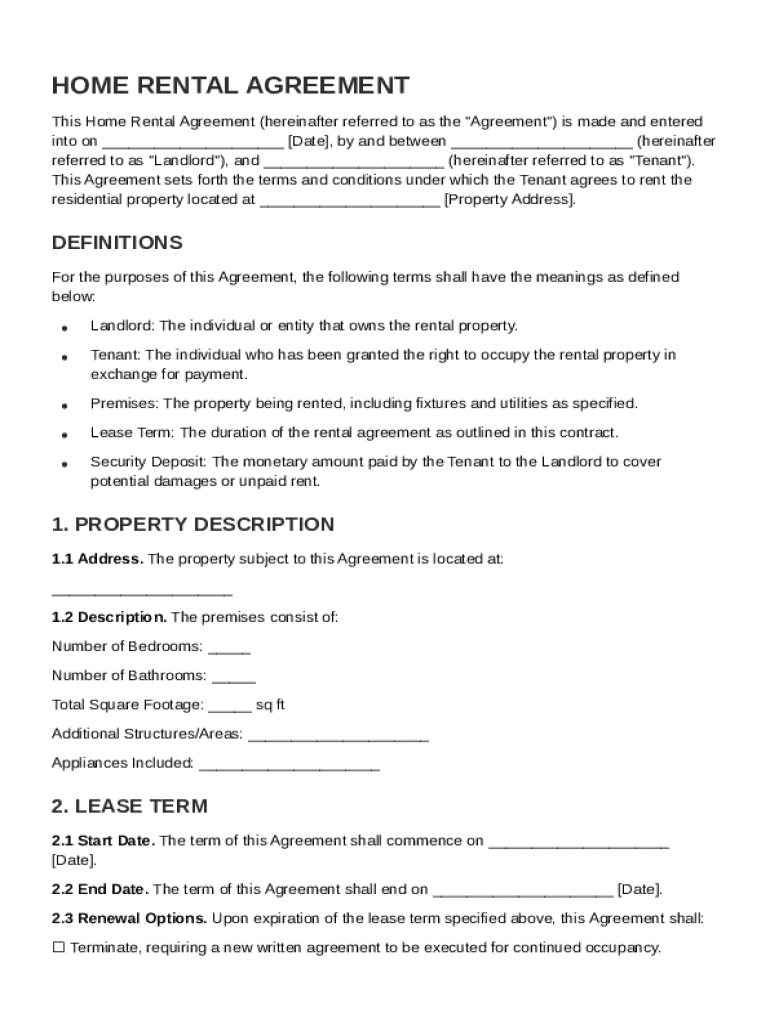
The Home Rental Contract Template is a structured document used as the foundation for drafting a Home Rental Agreement. It specifies the legal terms for renting a residential property and serves to protect both landlords and tenants by establishing clear obligations and rights. The agreement delineates key components such as property description, lease duration, rent amount, payment schedule, and security deposit details. It is vital for preventing disputes and ensuring mutual understanding between both parties.
Key Elements
The template typically includes:
- Property Description: Detailed information about the rental property, including address and unit details.
- Lease Term: Duration of the agreement and any provisions for renewal or termination.
- Rent Payment Details: Monthly rent amount, due dates, late fees, and accepted payment methods.
- Security Deposit: Amount required, conditions for refund, and circumstances that may lead to deductions.
- Maintenance Responsibilities: Responsibilities for maintaining the property, delineating tasks between landlord and tenant.
- Use and Occupancy Rules: Accepted use of the property, occupancy limits, and restrictions.
- Termination Procedures: Process for terminating the lease, notice periods, and penalties for early termination.
- Governing Law: Legal jurisdiction applicable to the agreement.
How to Use the Home Rental Contract Template
Using the Home Rental Contract Template involves several straightforward steps to ensure a legally sound agreement. Follow these general guidelines to customize the template to your specific needs:
- Review Template Sections: Familiarize yourself with the template layout and main sections.
- Customize to Property: Fill in specifics such as property details, tenant names, and rental terms.
- Adjust Rent and Deposits: Set the monthly rent, deposit amounts, and payment deadlines that match your agreement.
- Specify Responsibilities: Clearly outline maintenance duties and other responsibilities to avoid future misunderstandings.
- Incorporate Special Conditions: Add any additional clauses or conditions tailored to your unique rental situation.
- Legal Review: If possible, have a legal professional review the finalized document.
Steps to Complete the Home Rental Contract Template
Completing the template requires careful attention to each section. Adhere to these steps for a comprehensive and effective contract:
Preparation
- Collect Information: Gather essential data about the property, tenant, and landlord.
- Check Local Laws: Ensure the contract complies with state or local rental laws.
Customization Process
- Fill in Basic Details: Start with tenant and landlord information and property details.
- Define Lease Period: Specify the start and end dates for the lease term.
- Input Rent and Payment Details: Clearly state the rent amount, payment date, and any late fees.
- Outline Maintenance Duties: Describe what maintenance is expected from the tenant and what the landlord will handle.
- Add Special Provisions or Addendums: Include any additional agreements, such as pet policies or parking terms.
Legal Use of the Home Rental Contract Template
Employing the Home Rental Contract Template for legal purposes requires compliance with several key factors to ensure its enforceability in a court of law. Consider these aspects to maintain legal validity:
- Adherence to Jurisdiction Rules: Contracts must meet regional legal necessities, including disclosure laws and habitability requirements.
- Clear and Concise Language: Legal documents demand precision and clarity to avoid ambiguities or disputes.
- Necessary Legal Notices: Include required legal disclaimers and notifications, such as lead-based paint warnings for older properties.
- Execution by Both Parties: Both landlord and tenant must sign and date the agreement to make it binding.
State-Specific Rules for Home Rental Contract Templates
Rental agreements may differ depending on state regulations. These differences impact key areas like eviction procedures, security deposit rules, and required property disclosures. For instance:
- Security Deposit Limits: Some states cap the amount a landlord can charge for deposits.
- Disclosures and Notices: Specific waivers or disclosures might be mandated by local laws, such as notification of prior contamination or criminal incidents.
- Eviction and Notice Periods: Compliance with state-mandated notice periods is crucial for legal eviction processes.
Important Terms Related to Home Rental Contract Template
Understanding specific legal terms within the Home Rental Contract Template is crucial for interpreting rights and responsibilities:
- Lessee: The tenant or person who leases the property from the landlord.
- Lessor: The landlord or property owner who leases the property to the tenant.
- Quiet Enjoyment: The tenant's right to use the property without disturbance by the landlord.
- Habitability: The property must meet safety and health standards.
- Sublease: The process where the original tenant rents out the property to a third party, with the landlord's consent.
Key Elements of the Home Rental Contract Template
While specific requirements vary, core elements generally covered by the Home Rental Contract Template include:
- Tenant and Landlord Details: Names and contact information for each party.
- Property Address and Description: Exact location and characterization of the rental unit.
- Lease Duration: Specific start and end dates and any renewal conditions.
- Rent Payment Structure: Details on rent amount, due dates, and acceptable payment methods.
- Security Deposit Conditions: Amount, handling of disputes, and refund provisions.
- Maintenance and Repair Obligations: Responsibilities assigned to each party for property upkeep.
- Other Provisions: Additional elements, such as cost allocation for utilities, pet ownership rules, and restrictions on property usage.
Digital vs. Paper Version of the Home Rental Contract Template
Choosing between a digital or paper version of the Home Rental Contract Template depends on several factors:
Digital Version
- Ease of Access: Documents can be accessed, edited, and stored electronically from any device.
- Collaboration: Digital formats support multi-user collaboration, enabling revisions and comments from parties involved.
- Security: Offers solid encryption and the ability to track changes and access.
Paper Version
- Traditional Preference: Some parties may trust or prefer tangible paper formats.
- Accessibility: No need for electronic devices or internet access for referencing.
- Signature Authenticity: Physical signatures may be perceived as more authentic or secure by some users.