






Definition and Meaning of the Board of Directors Confidentiality Agreement
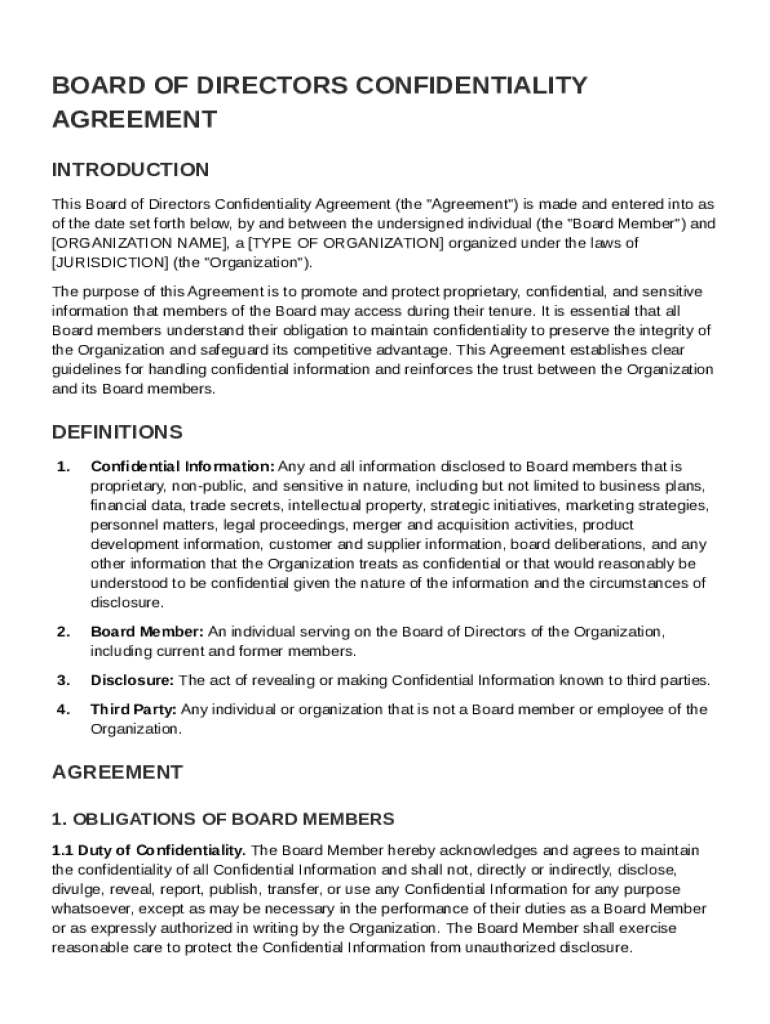
The Board of Directors Confidentiality Agreement is a legally binding contract that establishes the obligations of board members to protect sensitive and proprietary information encountered during their tenure. It is specifically designed to safeguard organizational secrets and maintain a competitive edge by ensuring that confidential information is not disclosed without permission. The agreement typically includes key definitions, such as what constitutes 'Confidential Information,' along with stipulations on permitted disclosures, the duration of confidentiality obligations, and the repercussions of breaches. This framework not only fosters trust and transparency between board members and the organization but also upholds the integrity of strategic initiatives.
How to Use the Board of Directors Confidentiality Agreement Template
Guidelines for Effective Use
The template serves as a foundational document that can be customized to suit the specific requirements of your organization. Begin by reviewing each clause to ensure alignment with your corporate policies and legal standards. Modify language to include any additional provisions unique to your organization's needs.
Practical Steps
- Review the Template: Conduct a thorough read-through to understand each section's purpose and ensure it aligns with your organization's needs.
- Customize Provisions: Tailor the clauses to reflect specific situations relevant to your board composition and operation.
- Legal Consultation: Engage with legal counsel to ensure that the template complies with applicable state and federal laws.
- Implementation: Once finalized, distribute the agreement to board members for review and signatures, making sure they understand their obligations.
Steps to Complete the Board of Directors Confidentiality Agreement Template
- Download the Template: Obtain the document from a trusted source like DocHub, ensuring you have the latest version.
- Fill in Organizational Details: Include your organization's name, address, and any other identifying details.
- Define Confidential Information: Clearly delineate what constitutes confidential information to avoid legal ambiguities.
- Set Confidentiality Duration: Specify how long the confidentiality obligations will remain in effect once a board member's tenure concludes.
- Include Signatory Blanks: Add spaces for names, titles, and dates where board members will sign.
- Seek Legal Review: Before finalizing, consult with legal experts for compliance with local legal requirements.
Key Elements of the Board of Directors Confidentiality Agreement Template
Essential Clauses
- Definition of Confidential Information: Clearly defines which types of information must be kept confidential.
- Non-Disclosure Obligations: Outlines the responsibilities of board members in protecting sensitive data.
- Duration of Obligations: Specifies the time period for which confidentiality must be maintained, even after board members leave.
- Permitted Disclosures: States circumstances under which information can be legally disclosed, such as legal proceedings.
Consequences of Breach
- Legal repercussions for unauthorized disclosures.
- Possible dismissal or replacement of board members violating the agreement.
Legal Use of the Board of Directors Confidentiality Agreement Template
Ensuring compliance with legal standards is crucial when implementing this agreement. The document must adhere to U.S. federal and state laws concerning trade secrets and confidentiality agreements. It serves as a protective measure against potential legal disputes by laying out explicit terms and conditions for information handling.
Legal References
- ESIGN Act Compliance: If executed digitally, the agreement should meet electronic signature legal requirements.
- State Laws: Be aware of specific state laws that might affect the negotiation or enforcement of confidentiality agreements.
Who Typically Uses the Board of Directors Confidentiality Agreement Template


Common Users
- Corporate Boards: Ensure that members do not disclose sensitive corporate strategies.
- Non-Profit Organizations: Protect donor lists and proprietary fundraising strategies.
- Startups: Safeguard innovative business ideas and operational secrets during formative stages.

Benefits for Users
- Provides peace of mind for organizations that their proprietary information remains confidential.
- Enhances trust among board members and external partners by setting clear expectations.
Important Terms Related to the Board of Directors Confidentiality Agreement Template
Understanding key legal and business terms within the agreement is essential for effective implementation. This glossary includes:
- Proprietary Information: Data or knowledge owned by the organization that gives a competitive advantage.
- Non-Disclosure Agreement (NDA): A legal contract that binds parties to confidentiality.
- Intellectual Property (IP): Creations of the mind that the organization may possess rights to.
Business Types That Benefit Most from the Board of Directors Confidentiality Agreement Template
Organizations stand to protect their economic viability through confidentiality agreements tailored to their specific needs. Business types that benefit include:
- Tech Firms: Safeguarding software code, algorithms, and product development plans.
- Pharmaceuticals: Protecting research data and patent-pending drugs.
- Financial Services: Maintaining confidentiality over sensitive financial models and client information.
Industry Use Cases
- Healthcare Institutions: Protect patient records and proprietary treatment methodologies.
- Educational Institutions: Secure data pertaining to innovative educational techniques and research findings.
By understanding and implementing a Board of Directors Confidentiality Agreement, organizations create a framework that upholds the integrity of sensitive information, ensuring it remains protected from unauthorized access or disclosure.