
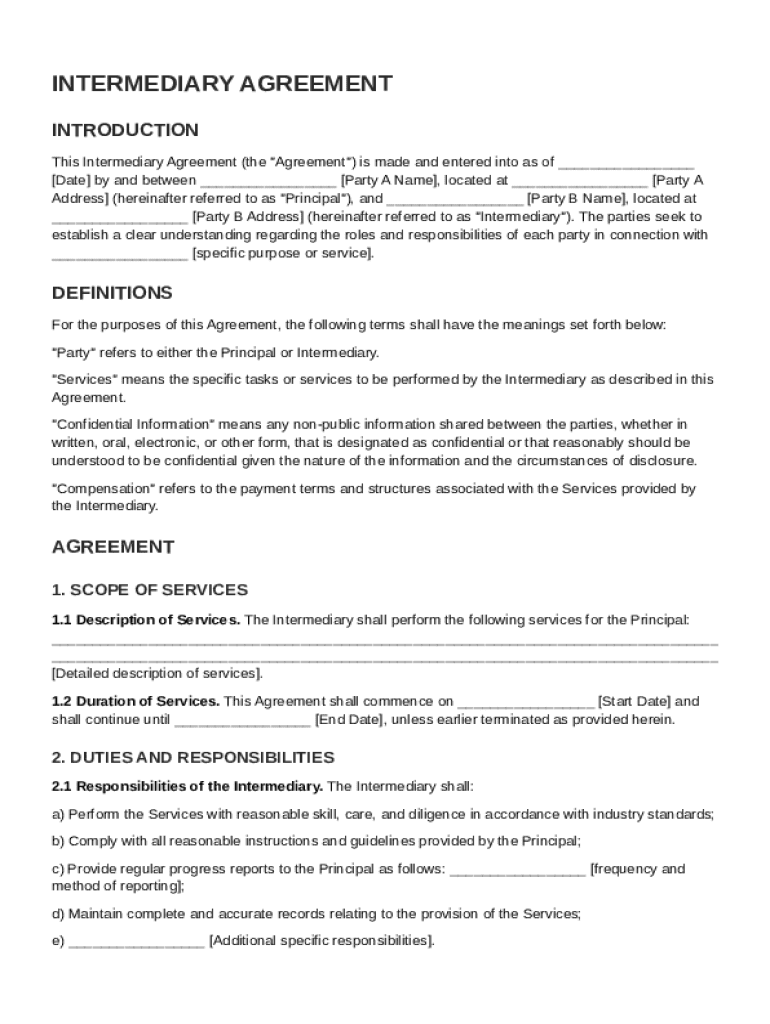







Definition of the Intermediary Contract Template
The Intermediary Contract Template is a legal document used to outline the responsibilities and terms under which an intermediary acts on behalf of a principal. It details the specific services the intermediary will provide, including the responsibilities, rights, and obligations of both parties involved. This template typically includes sections on compensation, confidentiality, and termination to ensure that all aspects of the intermediary relationship are clearly defined. Establishing these terms safeguards both parties' interests and facilitates smooth collaboration.
Key Elements of the Intermediary Contract Template
A comprehensive Intermediary Contract Template contains several critical elements. These include:
- Roles and Responsibilities: Clearly delineates the duties of the principal and the intermediary.
- Scope of Services: Defines the specific services the intermediary is contracted to provide.
- Compensation Structure: Outlines the payment terms, including any fees, commission rates, or other compensation.
- Confidentiality Provisions: Ensures any sensitive information exchanged is protected.
- Intellectual Property Rights: Specifies the ownership and use rights regarding any intellectual property created or utilized during the contract.
- Termination Conditions: Details the scenarios and notice requirements for ending the agreement.
- Indemnification Clauses: Protects each party against potential legal claims arising from the contract.
These elements are crucial for creating a binding and enforceable agreement.
Steps to Complete the Intermediary Contract Template
- Gather Information: Collect essential details about both parties, including contact information and business details.
- Define the Scope: Clearly outline the services to be provided, including any limitations or exclusions.
- Specify Compensation: Detail the payment terms, such as rates, frequency, and payment methods.
- Draft Confidentiality Clauses: Include terms to protect sensitive business information from unauthorized disclosure.
- Discuss Intellectual Property: Negotiate and document rights related to intellectual property.
- Finalize Termination and Indemnification: Agree on the terms regarding the end of the contract and liability protections.
- Review and Sign: Ensure both parties understand and agree to the terms before signing. It's often advisable to have legal counsel review the contract.
Who Typically Uses the Intermediary Contract Template
The Intermediary Contract Template is commonly used by businesses and individuals in sectors where intermediaries play a significant role:
- Real Estate Agents: Serving as intermediaries between buyers and sellers.
- Sales Representatives: Representing companies to sell products or services.
- Consultants: Acting as intermediaries to provide expert advice and services.
- Talent Agents: Managing negotiations and deals for artists and performers.
In each of these roles, the contract helps to formalize expectations and ensure clear communication between parties.


Important Terms Related to Intermediary Contract Template
Several terms are critical to understanding and using an Intermediary Contract Template effectively:
- Principal: The party for whom the intermediary acts.
- Intermediary: The individual or entity facilitating transactions or services on behalf of the principal.
- Commission: Payment to the intermediary based on a percentage of sales or service fees.
- Non-Disclosure Agreement (NDA): A clause or separate document ensuring confidentiality.
- Breach of Contract: A violation of any term or condition set forth in the agreement.
Understanding these terms is essential for effectively drafting and negotiating the contract.
Legal Use of the Intermediary Contract Template
This contract must adhere to relevant laws to be legally binding. Compliance with federal and state regulations is crucial, ensuring that no legal requirements are overlooked. Terms such as confidentiality and intellectual property rights must comply with applicable laws to protect the interests of both parties. The inclusion of indemnification clauses helps to shield both parties from potential legal repercussions.
State-Specific Rules for the Intermediary Contract Template
While many contract provisions are universally applicable, state laws may impose specific requirements or restrictions. For example:
- California: Has stringent laws regarding the enforceability of non-compete clauses.
- New York: Often requires explicit cause for contract termination.
- Illinois: May have unique rules surrounding disclosures and confidentiality obligations.
It's advisable to consult with legal counsel to ensure compliance with the specific state laws governing the contract.
Software Compatibility with the Intermediary Contract Template
The Intermediary Contract Template is compatible with various software tools that can aid in editing and managing documents efficiently:
- DocHub: Allows for comprehensive editing, signing, and sharing of documents online.
- Adobe Acrobat: Widely used for PDF editing and form completion.
- Microsoft Word: Provides flexibility in drafting and revising contract terms.
- Google Docs: Facilitates collaboration and version control with multiple parties.
These software options provide different levels of functionality to suit various needs, from simple editing to advanced collaboration features.




