






Definition and Purpose of the Airbnb Co-Host Agreement Template
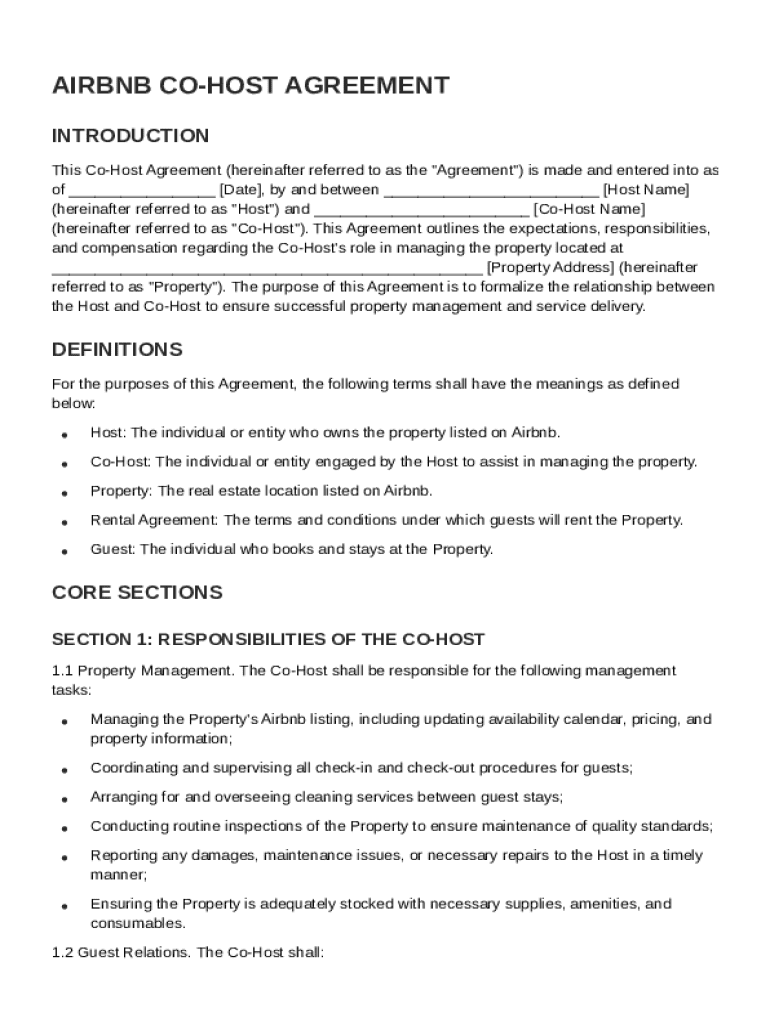
The Airbnb Co-Host Agreement Template is a crucial document that defines the partnership between a property owner (Host) and a property manager (Co-Host). This agreement stipulates the obligations of both parties concerning the management of a short-term rental property. Typically used for Airbnb properties, it outlines essential aspects such as property management responsibilities, guest interaction, marketing efforts, and financial duties. Additionally, it covers legal matters like termination terms, confidentiality agreements, and compliance with applicable regulations. For property owners and managers, it serves as a guiding framework that ensures clear communication and defined expectations.
Common Features and Clauses
The template generally includes sections specifying the responsibilities of the Co-Host, including guest communication, cleaning coordination, and property monitoring. For the Host, the agreement might outline obligations such as maintenance and financial management. The compensation structure for the Co-Host, which can be a percentage of rental income or a fixed fee, is also delineated. Legal clauses, such as indemnity, confidentiality, and termination conditions, are common, ensuring that both parties are legally protected.
How to Use the Airbnb Co-Host Agreement Template
Using the Airbnb Co-Host Agreement Template involves several key steps. The document starts by detailing the property and involved parties, followed by outlining specific roles and responsibilities. This step-by-step process helps ensure all crucial elements are covered and agreed upon.
- Identification of Parties: Clearly state the names and contact information of both the Host and Co-Host.
- Property Details: Describe the rental property, including location and rental specifics.
- Allocation of Responsibilities: Clearly define each party's duties, ensuring no ambiguity.
- Compensation Details: Specify how the Co-Host will be paid, including rates and payment schedule.
- Legal Protections: Ensure both parties agree to confidentiality clauses and any dispute resolution processes.
- Signing and Agreement: Both parties must sign the document, acknowledging understanding and consent to the terms.
Key Elements of the Airbnb Co-Host Agreement Template
The key elements highlighted in the template focus on equity and clarity in property management agreements. Essential components include:
- Roles and Responsibilities: Clearly articulating duties of both the Host and Co-Host.
- Payment Structure: Details of fees or percentage arrangements for property management.
- Termination Terms: Conditions under which the agreement can be ended by either party.
- Legal Obligations: Compliance with local, state, or federal regulations.
- Dispute Resolution: Processes for handling disagreements, potentially including arbitration or mediation.
Important Terms Related to Airbnb Co-Host Agreement Template
Understanding the essential terminology used in the Airbnb Co-Host Agreement Template can provide clarity and prevent misunderstandings. Important terms often encountered include:
- Host: The property owner responsible for ensuring the property's upkeep.
- Co-Host: The property manager who manages day-to-day operations.
- Indemnity Clause: Legal term protecting one party from liability for certain types of claims.
- Confidentiality Agreement: Provisions to protect sensitive information from unauthorized disclosure.
- Termination Clause: Specific conditions under which the agreement can be concluded.
Legal Use of the Airbnb Co-Host Agreement Template
Legal compliance is imperative when utilizing an Airbnb Co-Host Agreement Template. The agreement must adhere to local and national laws governing rental practices. This includes ensuring terms do not violate fair housing laws and maintaining documentation for tax purposes. Parties should consider consulting legal professionals to guarantee their agreement is robust and enforceable in court if necessary.
Compliance Considerations
- Local Regulations: Ensure conformity with municipal bylaws regulating short-term rentals.
- Federal Laws: Consider regulations concerning fair housing and anti-discrimination.
- Documentation: Maintain comprehensive records for potential audits or legal challenges.
State-Specific Rules for Airbnb Co-Host Agreements
Real estate laws can vary significantly across states, affecting how Co-Host agreements are structured and enforced. While the template provides a general framework, modifications may be needed to comply with state-specific guidelines. This can include variations in rental licensure requirements or unique tax implications for short-term rental income.
- Licensing Requirements: Some states require specific licenses for short-term rentals.
- Taxation: State taxes on rental income may differ and need to be reflected in the agreement.
- Regulatory Differences: Local zoning laws may impose additional restrictions on rental properties.
Who Typically Uses the Airbnb Co-Host Agreement Template
The primary users of the Airbnb Co-Host Agreement Template are property owners and property managers. However, the scope of usage extends to different participants in the short-term rental market.
- Individual Hosts: Those who own and rent out one or two properties.
- Property Management Companies: Firms that manage multiple rental properties.
- Investors: Individuals or groups investing in rental properties who prefer outsourcing management tasks.
- Frequent Travellers: Homeowners who travel frequently and need someone to manage their property during absences.


Examples of Using the Airbnb Co-Host Agreement Template
Practical applications of the Airbnb Co-Host Agreement Template illustrate its versatility in various scenarios. Examples include:
- Single Property Management: A homeowner finds an experienced Co-Host to manage their second home.
- Growing Portfolio: An investor uses the template to manage a portfolio of rental properties across different states.
- Remote Hosting: A Host living abroad installs a Co-Host agreement to handle on-site responsibilities and guest interactions.
- Partnership Dynamics: Two friends buy a property together; one acts as a Host while the other serves as a Co-Host.