
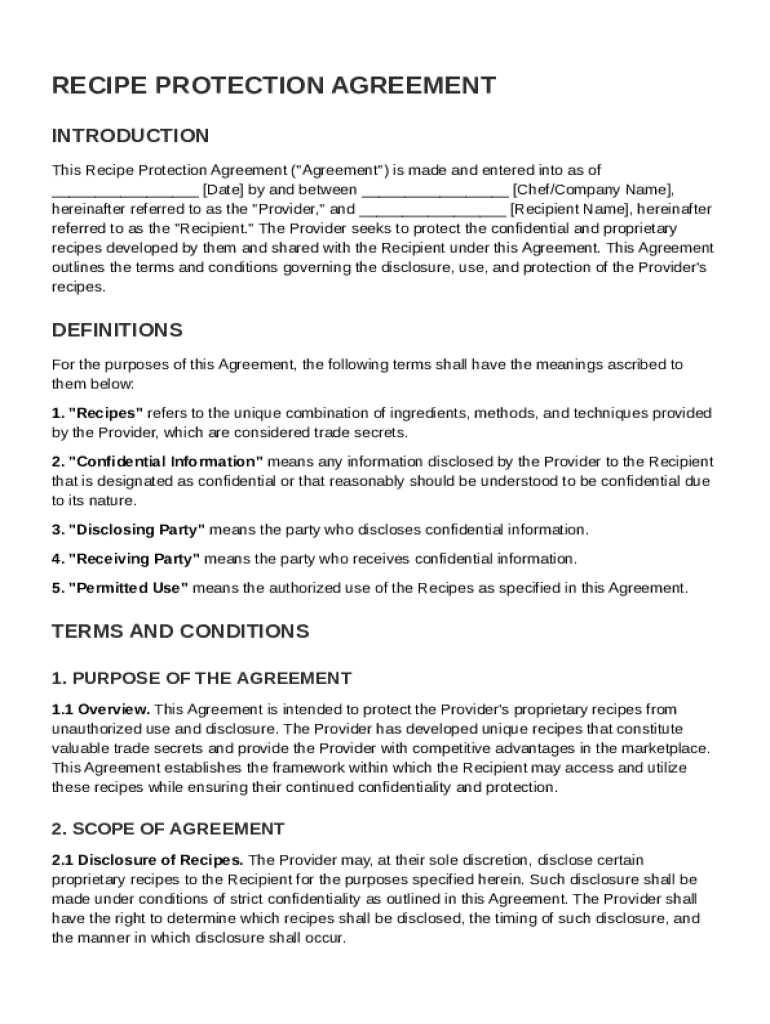







Definition & Meaning
A Recipe Protection Agreement Template is a structured legal document that outlines specific terms and conditions for safeguarding a provider's confidential and proprietary recipes. It serves a critical role in ensuring that the intellectual property rights of the provider remain intact while preventing unauthorized use or disclosure of the recipe by the recipient. Within this agreement, essential clauses typically cover definitions of what constitutes confidential information, the expectations for maintaining confidentiality, and the duration of protection.
Detailed Explanation
- Confidential Information: Specifies what is considered as proprietary data, ensuring clear terms.
- Intellectual Property: Emphasizes that all rights remain with the provider, safeguarding their trade secrets.
- Confidentiality Obligations: Outlines the duties of the recipient to prevent unauthorized disclosure or use.
How to Use the Recipe Protection Agreement Template
Understanding how to utilize the Recipe Protection Agreement Template is crucial for both providers and recipients to ensure effective protection of proprietary recipes. Users should familiarize themselves with each section of the template, understanding the purpose and requirements of each clause.
Steps to Use the Template
- Review the Template: Carefully read through the entire template to understand all terms and obligations.
- Tailor to Specific Needs: Customize sections to fit specific recipe details and any unique requirements.
- Consult Legal Assistance: Seek legal advice if uncertain about any clauses to ensure comprehensive understanding.
- Signatures: Both parties should sign the document to validate it legally.
Steps to Complete the Recipe Protection Agreement Template
Completing the Recipe Protection Agreement Template involves several key steps to ensure thoroughness and accuracy. This process requires attention to detail to make the agreement legally binding and effective in protecting the recipe.
Step-by-Step Completion
- Identify Parties: Clearly indicate the provider and recipient, ensuring all parties are correctly named.
- Define Confidential Information: Explicitly describe what information is protected, such as ingredient lists or preparation methods.
- Set Terms for Disclosure: Establish conditions under which information may or may not be shared.
- Set a Term Limit: Define the duration for which confidentiality needs to be maintained.
- Include Termination Conditions: Specify scenarios under which the agreement may be terminated.
- Legal Review: Have the document reviewed by a legal professional before finalization.
- Gather Signatures: Both parties should sign the agreement to render it effective.
Key Elements of the Recipe Protection Agreement Template
The Recipe Protection Agreement Template includes several critical components that ensure the effective protection of proprietary information. These elements serve to define, protect, and enforce confidentiality for the parties involved.
Integral Components
- Definitions Clause: Clearly defines what information falls under protection.
- Confidentiality Terms: Outlines the recipient's responsibility to maintain secrecy.
- Intellectual Property Rights: Ensures ownership rights remain with the provider.
- Dispute Resolution: Provides mechanisms for resolving any breaches or disputes.
Important Terms Related to Recipe Protection Agreement Template
Understanding important terms related to the Recipe Protection Agreement Template can help clarify the intentions and obligations within the document. These terms provide additional context and detail.
Relevant Terms
- Trade Secret: A form of intellectual property comprising formulas, practices, or processes not publicly known.
- Nondisclosure Agreement (NDA): A broader legal contract preventing sharing of specific sensitive information.
- Proprietary Information: Data owned by a business that gives it an economic advantage.
Legal Use of the Recipe Protection Agreement Template
Using the Recipe Protection Agreement Template legally requires adherence to specific guidelines to make it enforceable in a court of law. These guidelines ensure that the agreement is valid and recognized legally.
Legal Considerations
- Compliance with State Laws: Ensure the agreement complies with relevant state laws regarding trade secrets.
- Legally Binding Language: Use clear and precise language that is enforceable in the legal domain.
- Specificity: Include detailed descriptions to avoid ambiguity in terms.
Who Typically Uses the Recipe Protection Agreement Template
The Recipe Protection Agreement Template is employed by various entities focused on protecting their culinary innovations. Users often hail from industries where recipes constitute vital assets.


Typical Users
- Restaurant Owners: To protect unique menu items from being reproduced.
- Food Manufacturers: Safeguarding proprietary formulae for prepared foods.
- Culinary Professionals: Personal chefs or catering services eager to maintain secrecy over signature dishes.
Examples of Using the Recipe Protection Agreement Template
Examining real-world scenarios where the Recipe Protection Agreement Template has been beneficial can provide practical insights into its value and effectiveness.
Practical Scenarios
- A New Restaurant Launch: A restaurant uses the agreement to safeguard its exclusive recipes from staff disclosure.
- Collaborative Cooking Projects: Two chefs collaborating on a cookbook ensure their recipes are protected from unauthorized sharing.
- Food Product Development: Food manufacturers protecting new formulations in the testing phase before official launch.




