






Definition & Meaning
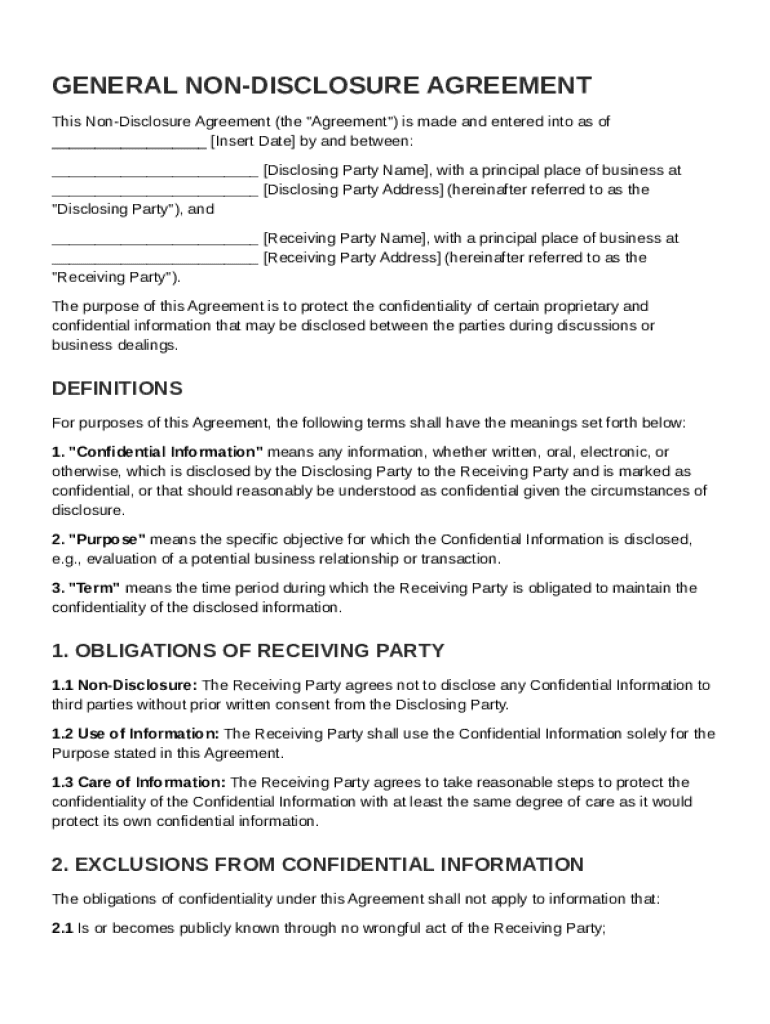
A General Non-Disclosure Agreement (NDA) serves as a legal document that establishes a confidential relationship between a Disclosing Party and a Receiving Party. The primary aim is to protect sensitive information exchanged between parties during business proceedings. Within this framework, "Confidential Information" is broadly defined, ensuring clarity on what data is protected. It encompasses sensitive material such as proprietary business strategies, trade secrets, client information, or any data marked as confidential. The NDA makes it clear that the Receiving Party is obligated to protect the confidentiality of the information and restricts its use beyond the agreed purposes. Additionally, the agreement does not grant any rights to the Receiving Party over the Disclosing Party's intellectual property.
Key Elements of the General Non-Disclosure Agreement Template
When drafting or reviewing a General NDA, several critical components ensure comprehensive protection:
- Confidential Information Definition: Clearly specifies what constitutes confidential information, often including anything disclosed in discussions or documents labeled as confidential.
- Use of Information: Limits the Receiving Party's use of the information solely for the purposes outlined within the agreement.
- Obligations of Non-Disclosure: The Receiving Party agrees to maintain confidentiality and not disclose the information to any third parties without explicit consent.
- Exclusions from Confidentiality: Details circumstances where the information may not be considered confidential, such as information already in the public domain or disclosed through no fault of the Receiving Party.
- Term and Duration: Outlines the timeframe during which the NDA is effective and for how long the information must remain confidential.
- Return or Destruction of Information: Specifies that upon termination of the agreement or completion of its purpose, the Receiving Party must return or destroy all copies of the confidential information.
- Governing Law: Indicates which jurisdiction's laws will govern the agreement, essential for resolving any legal disputes.
How to Use the General Non-Disclosure Agreement Template
The General NDA Template provides a structured framework to capture the necessary details effectively. Here's a step-by-step guide to using it:
- Identify the Parties: Clearly state the names of the Disclosing and Receiving Parties, ensuring there is no ambiguity.
- Detail the Confidential Information: Provide a thorough description of the information deemed confidential. Consider category-based exclusions for clarity.
- Set the Purpose: Clearly specify the purpose for which the information is being shared to ensure both parties are aligned.
- Outline the Obligations: Make sure both parties understand their responsibilities regarding non-disclosure. Explicitly list what is expected from each party.
- Usage Restrictions: Specify any restrictions on the use of the information beyond the agreed-upon scope.
- Determine the Term: Establish the duration for which the NDA will remain in effect and any conditions for termination.
- Include Legal Provisions: Add a section detailing any legal stipulations, governing law, and dispute resolution processes.
Steps to Complete the General Non-Disclosure Agreement Template
Completing an NDA involves several procedural steps and checks to ensure all necessary components are addressed:
- Review Purpose and Scope: Before filling out the template, both parties should jointly review and understand the purpose and scope of the NDA.
- Customization: Tailor the document to address specific industry needs or unique business terms relevant to the transaction.
- Input Party Details: Enter the full legal names of the entities or individuals entering into the agreement.
- Define Confidential Information: Use precise language to describe the confidential material covered by the NDA.
- Set Terms and Conditions: Clearly state the duration, obligations, and any exceptions.
- Legal Review: Have the document reviewed by a legal professional to ensure its comprehensiveness and compliance with applicable laws.
- Signature and Date: Obtain signatures from authorized representatives from both parties, dating the agreement to denote its activation.
Who Typically Uses the General Non-Disclosure Agreement Template
NDAs are versatile tools utilized across various sectors. Common users include:
- Businesses and Corporations: Often used in joint ventures, partnerships, or any scenario involving proprietary exchanges.
- Startups and Entrepreneurs: Essential when pitching ideas to investors or partners.
- Service Providers: Employed when service agreements involve access to client intellectual property or sensitive data.
- Consultants and Freelancers: Used to assure clients of confidentiality when handling their proprietary information.
- Manufacturers and Suppliers: Critical when disseminating product designs or manufacturing processes to third parties.

Legal Use of the General Non-Disclosure Agreement Template
The legal enforceability of an NDA is fundamental to its utility:
- Compliance with Laws: NDAs must adhere to applicable contract laws to be enforceable. This includes being clear, reasonable, and not contrary to public policy.
- Protection of Rights: NDAs protect intellectual property rights by legally binding the Receiving Party to confidentiality terms.
- Legal Remedies: In case of a breach, the Disclosing Party is often entitled to injunctive relief and damages, safeguarding their interests.
- Severability and Amendments: NDAs typically include clauses that address the legality of individual provisions and possible amendments, ensuring flexibility and continued enforceability even if part of the agreement is invalidated.
State-Specific Rules for the General Non-Disclosure Agreement Template
While NDAs are standard across states, specific jurisdictional considerations might apply:
- State Variations: The enforceability of non-disclosure clauses can vary significantly from one state to another. Employers and businesses must familiarize themselves with local laws to ensure compliance.
- Jurisdiction Clauses: It's crucial to incorporate a jurisdiction clause to preemptively decide which state's courts will adjudicate disputes.
- Local Precedents: Reviewing local court cases can provide insight into how NDA terms are typically interpreted within that jurisdiction.
- Regulatory Considerations: Particular industries may be subject to additional confidentiality obligations imposed by state regulations.
Important Terms Related to General Non-Disclosure Agreement Template
A General NDA often includes various terms that hold specific legal significance:
- Confidentiality Agreement: Another term for NDA that some entities prefer; the terms are interchangeable but may carry specific legal nuances based on usage.
- Non-solicitation Clauses: Occasionally included to prevent parties from poaching employees or clients.
- Non-compete Clauses: While not always a part of NDAs, these clauses restrict parties from directly competing with one another for a specified period post-termination.
- Residuals Clauses: Allows Receiving Parties to use general knowledge or nonspecific information retained in memory, provided it doesn’t violate confidentiality.
Examples of Using the General Non-Disclosure Agreement Template
Real-world applications demonstrate the practicality of NDAs:
- Tech Industry: Protecting proprietary software code or system architecture during collaboration projects between tech firms or with external developers.
- Pharmaceuticals: Used when conducting joint research with academic institutions to safeguard proprietary compounds or processes.
- Creative Industry: Ensuring that scripts or creative concepts shared during production negotiations are kept confidential until they’re officially released.
- Mergers and Acquisitions: Providing security during discussions on sensitive financial details or business strategies before a deal is finalized.