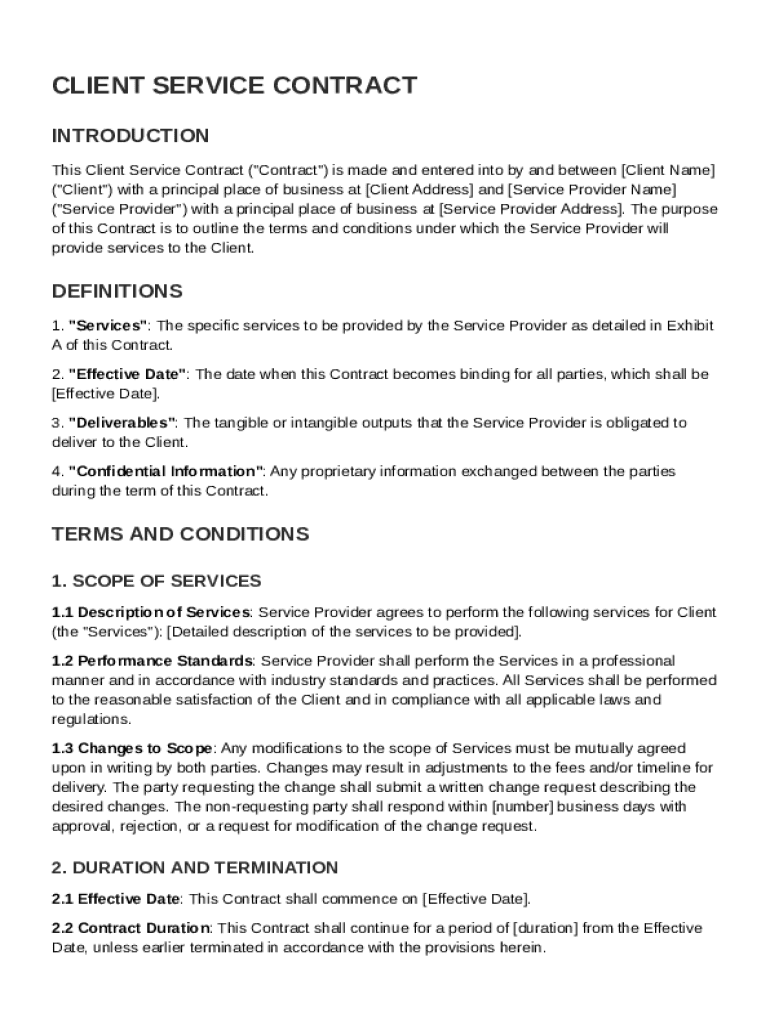







Definition and Purpose of a Client Service Contract Template
A Client Service Contract Template is a pre-structured agreement designed to outline the relationship between a client and a service provider. It serves as the foundational document that details the terms and conditions under which services will be rendered. The template usually includes essential elements such as definitions of key terms, scope of services to be provided, payment agreements, responsibilities of both parties, confidentiality clauses, intellectual property rights, indemnification, and liability provisions. By using this template, both parties can ensure a mutual understanding of expectations and obligations, thus minimizing potential disputes.
How to Use the Client Service Contract Template
Utilizing a Client Service Contract Template involves several important steps to ensure it meets the specific needs of the parties involved. First, review the standard terms included in the template to confirm they align with your particular business or service arrangement. Next, customize sections such as the scope of work, payment schedule, and term duration to fit the details of the service being provided. It's crucial to tailor confidentiality and intellectual property clauses to safeguard any sensitive information or proprietary material. Lastly, both parties should carefully review the completed template and negotiate any necessary revisions before proceeding to signatures, ensuring all terms are clear and agreeable to both sides.
Customizing the Template
- Scope of Work: Define specific tasks, projects, or deliverables.
- Payment Terms: Detail the payment method, schedule, and conditions for remuneration.
- Duration and Termination: States the contract's active period and conditions under which it can be ended.
- Responsibilities and Deliverables: Outline the obligations of each party and the expected outcomes.
Steps to Complete the Client Service Contract Template
The process of completing a Client Service Contract Template is straightforward but requires careful attention to detail. Here is a step-by-step guide:
- Review and Understand the Template: Start by reading through the entire document to become familiar with its structure and legal implications.
- Fill in the Basic Information: Include the names, addresses, and contact details of both the client and the service provider.
- Outline the Scope of Services: Clearly describe the services to be provided, ensuring precise definitions to avoid ambiguity.
- Detail Payment Terms: Specify the total payment amount, payment schedule, and preferred payment methods.
- Finalize Legal Clauses: Address provisions related to confidentiality, liability, and dispute resolution.
- Sign and Date: Both parties should sign and date the document to validate the agreement.
Important Terms Related to the Client Service Contract Template
Certain terms are critical when drafting or reviewing a Client Service Contract Template, and understanding them is vital:
- Scope of Services: Defines the specific activities or tasks the service provider will perform.
- Confidentiality: Obligates parties to protect sensitive information from disclosure.
- Indemnification: Compensation for potential losses or damages, safeguarding one party from liability.
- Governing Law: Determines which state’s laws will apply in case of legal disputes.
Being conversant with these terms aids in crafting a robust contract that protects both parties' interests.
Key Elements of the Client Service Contract Template
A comprehensive Client Service Contract Template typically incorporates several critical elements. These components ensure clarity, protection, and mutual understanding:
- Definitions: Clarifies the language and terms used throughout the contract.
- Scope and Nature of Services: Provides detailed descriptions of what is expected from the service provider.
- Payment Details: Specifies payment method, timing, conditions, and total contract value.
- Confidentiality Agreements: Safeguards confidential information and proprietary data.
- Intellectual Property Rights: Assigns ownership of any intellectual property created during the contract's term.
- Liability and Indemnification: Addresses legal liabilities and indemnifies parties as necessary.
Each section of the contract template addresses specific aspects of the service relationship, ensuring all potential issues are pre-emptively managed.
Who Typically Uses the Client Service Contract Template
The Client Service Contract Template is commonly used by a wide range of professionals and businesses. Small business owners, freelancers, consultants, and larger corporations often utilize this template to formalize their service agreements with clients. This template is particularly vital for industries such as consulting, marketing, IT services, and design, where services rendered require clear terms to avoid disputes. By clearly documenting expectations and responsibilities, this contract supports better client relationships and ensures legal protection.


Legal Use of the Client Service Contract Template
The use of a Client Service Contract Template must comply with applicable laws and regulations, ensuring it remains a legally valid document. For it to be enforceable:
- Both parties must have the legal capacity to enter a contract.
- The contract must not include clauses that violate federal or state laws.
- It should be signed by authorized representatives from both parties and properly dated.
- Consult with legal counsel to adapt the template to specific jurisdictions or industry standards.
Understanding these legal considerations helps parties avoid potential disputes and ensures the contract is binding and enforceable in a court of law.
State-Specific Rules for the Client Service Contract Template
While a standard Client Service Contract Template provides a broad framework, certain state-specific rules might impact its provisions. Various states have unique requirements or constraints concerning contract elements such as:
- Governing Law Clauses: Some states mandate specific language or choice of law requirements.
- Non-compete Clauses: The enforceability of these varies significantly by jurisdiction.
- Consumer Protection Laws: States may have additional disclosures or consumer rights that impact contract terms.
Considering state-specific laws and regulations ensures that the contract remains compliant and enforceable across different geographical locations.