






Definition and Purpose of Classroom Rules Contract Template
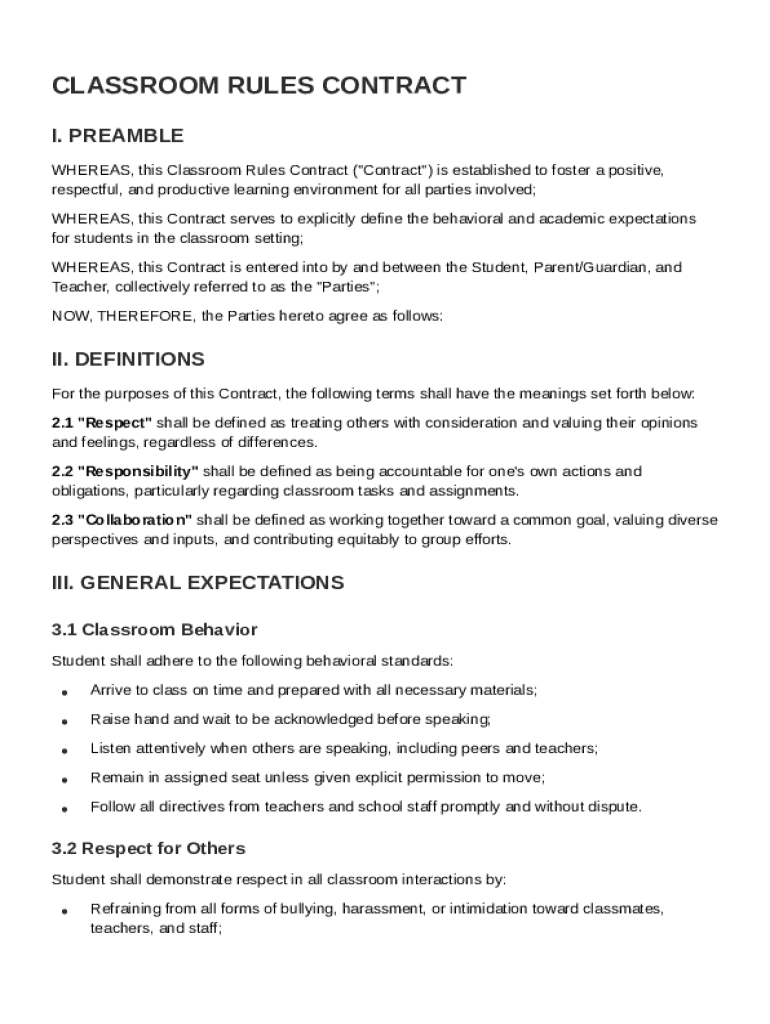
The Classroom Rules Contract Template serves as a structured guide to define behavioral and academic expectations within a classroom setting. It outlines the roles and responsibilities of students, parents or guardians, and teachers, aiming to foster a positive learning environment. Core elements include foundational terms like respect, responsibility, and collaboration, along with guidelines for participation and conduct. This contract helps establish a clear framework for accountability and communication, which is crucial for achieving educational goals and maintaining a harmonious classroom dynamic.
Importance of Clearly Defined Expectations
- Respect: Encourages mutual respect among all parties, vital for a positive atmosphere.
- Responsibility: Promotes accountability for actions and decisions in an educational context.
- Collaboration: Highlights the importance of working together to achieve common objectives.
Key Elements of the Classroom Rules Contract Template
The contract incorporates several vital elements to ensure its effectiveness in a classroom setting. It prioritizes clarity, inclusivity, and respect to guide behavior and interaction among students, teachers, and guardians.
Core Components
- Behavioral Standards: Specifies expected conduct and accountability measures.
- Academic Participation: Details participation requirements and academic responsibilities.
- Consequences and Rewards: Outlines repercussions for rule violations and rewards for positive behavior.
Practical Examples
- A section detailing acceptable classroom behavior and related disciplinary actions.
- Clear guidelines for homework submissions and class participation expectations.
Steps to Complete the Classroom Rules Contract Template
Filling out the Classroom Rules Contract Template involves several straightforward steps, ensuring that all parties involved understand their roles and the classroom expectations.
Completion Process
- Review each section: Carefully read through the template to understand the provisions and expectations.
- Enter required information: Fill in necessary details such as names, roles, and specific agreements.
- Customize as needed: Adapt sections to fit specific classroom goals or student needs.
- Discuss with stakeholders: Present the draft to students and their guardians for feedback and understanding.
- Finalize and sign: Make any necessary adjustments, then have all parties sign the contract to signify agreement.
Legal Considerations for Classroom Rules Contract Template
While typically not a legally binding document in a formal sense, the Classroom Rules Contract acts as an agreement that upholds behaviors in an educational environment. Ensuring that the contract is articulate and understood by all parties promotes a commitment to the outlined standards.
Key Legal Aspects
- Agreement Clarity: The contract should be explicit and clear to avoid any misunderstandings.
- Ethical Compliance: Ensure compliance with ethical guidelines and educational policies.
Important Terms Related to Classroom Rules Contract Template
Understanding critical terms within the Classroom Rules Contract Template is essential for clarity and effectiveness.
Essential Terminology
- Accountability: Holding individuals responsible for their actions and adherence to the contract.
- Collaboration: The act of working together to achieve educational goals.
- Respect: Mutual consideration and acknowledgment of others' roles and efforts.
Common Use Cases for Classroom Rules Contract Template
The Classroom Rules Contract Template can be employed in various educational contexts to enhance discipline and promote positive behavior.
Examples of Use
- Primary Schools: Establishing early-age behavioral norms among students.
- High Schools: Reinforcing academic responsibility and accountability.
- Special Education: Tailoring behavioral expectations to accommodate diverse learning needs.
Practical Scenarios
- Implementing a contract at the start of the school year to set baseline expectations.
- Using the contract as a reference during parent-teacher meetings to discuss behavioral or academic concerns.
Digital and Paper Versions of the Classroom Rules Contract Template
The Classroom Rules Contract Template is available in both digital and paper formats, offering flexibility depending on the classroom's needs and resources.
Digital Version Benefits
- Easy Accessibility: Available on various devices, enabling quick updates and distribution.
- Efficiency in Editing: Facilitates easy modification and customization through document editing tools.
Paper Version Advantages
- Tangibility: Physical copies provide a lasting, referenceable document.
- Perceived Formality: Some find paper versions convey formality and permanence, enhancing commitment.
Who Typically Uses the Classroom Rules Contract Template
The template is typically employed by educators, school administrators, and parents or guardians to ensure a cohesive understanding of classroom expectations.


Primary Users
- Teachers: Utilize the template to maintain order and promote constructive behavior.
- School Administrators: Oversee contract implementation and address any arising disputes.
- Parents/Guardians: Engage with the contract to support their child’s adherence to classroom rules.
Impact on Different Stakeholders
- Enhances communication between parents and educators regarding expected student conduct.
- Provides a reference point for students to understand behavioral and academic standards.