Definition and Meaning of the Civil Contract Template
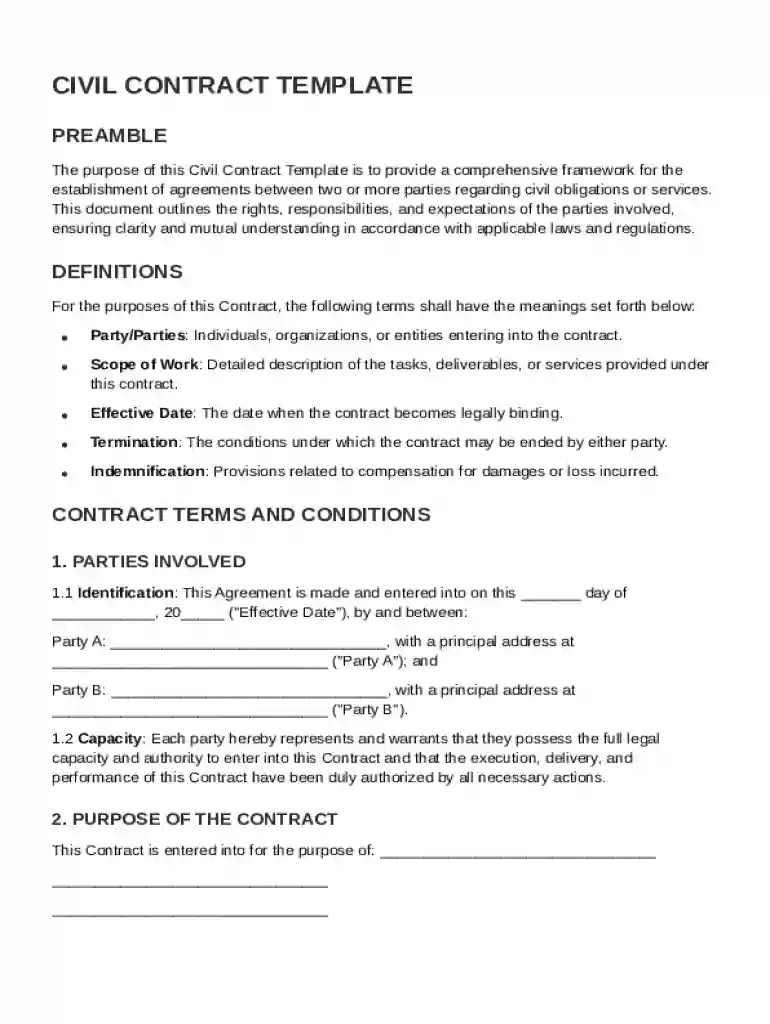
A Civil Contract Template is a pre-structured document designed to establish clear agreements between parties concerning civil obligations or services. It lays out a comprehensive framework to formalize the terms and conditions under which parties agree to engage. These templates typically include standard elements such as definitions, descriptions of parties involved, scope of work, compensation details, confidentiality clauses, termination conditions, dispute resolution procedures, and other miscellaneous provisions. The purpose of this template is to ensure clarity, foster mutual understanding, and assist in complying with applicable legal requirements. By standardizing the structure of the agreement, parties can focus on tailoring specific terms to their unique needs.
Key Elements of the Civil Contract Template
The Civil Contract Template consists of several key elements critical to forming a comprehensive agreement:
- Definitions: Establish clear meaning for specific terms used throughout the contract.
- Parties Involved: Identify all entities or individuals entering into the agreement.
- Purpose and Scope of Work: Detail the services or obligations one party will provide to another.
- Compensation: Outline the payment terms, including amounts, due dates, and methods of payment.
- Confidentiality: Include clauses to protect sensitive information exchanged during the contract period.
- Termination Conditions: Specify situations and procedures for ending the contract before completion.
- Dispute Resolution: Provide mechanisms for resolving disagreements, such as mediation or arbitration.
- Miscellaneous Provisions: Cover miscellaneous issues such as amendments, severability, or governing law.
Each element contributes to a legally enforceable contract by clearly outlining responsibilities and expectations of involved parties.
Steps to Complete the Civil Contract Template
Completing a Civil Contract Template involves several practical steps, which ensure that all legal and practical aspects are addressed:
- Identify the Parties: Clearly list the names and contact information of all parties involved.
- Define the Scope of Work: Describe the specific tasks or services to be performed, including any deliverables.
- Determine Compensation: State how and when payments will be made, along with any penalties for late payment.
- Set Confidentiality Terms: Determine what information is confidential and outline how it will be protected.
- Establish Termination Conditions: Define scenarios for terminating the agreement and the required notice periods.
- Agree on Dispute Resolution: Select a method for resolving any potential disputes, such as arbitration.
- Review and Finalize: Conduct a thorough review to ensure all terms are clear and acceptable before signing.
By following these steps, parties can ensure the contract is thorough, legally compliant, and tailored to their specific needs.
How to Use the Civil Contract Template in Practice
Using the Civil Contract Template involves customizing it to fit specific circumstances:
- Customizing Definitions: Adjust definitions to ensure they reflect the specific context of the agreement.
- Adapting the Scope of Work: Tailor the scope to include specific tasks, projects, or deliverables unique to the agreement.
- Modifying Compensation Details: Enter precise financial details based on negotiations between the parties.
- Adjusting Confidentiality Clauses: Ensure the confidentiality terms are suitable for the type of information being protected.
- Editing Termination Clauses: Modify termination terms to align with company policies or regulatory requirements.
- Personalizing Dispute Resolution: Choose a dispute resolution process that aligns with the parties' preferences and legal considerations.
The versatility of the Civil Contract Template allows users to create specific and enforceable agreements with minimal effort.
Legal Use of the Civil Contract Template
The legal use of a Civil Contract Template ensures that agreements are enforceable under U.S. law. To achieve this:
- Ensure compliance with federal and state laws applicable to the agreement.
- Include required legal elements, such as offer, acceptance, and consideration.
- Verify the legal capacity of involved parties to enter into a contract.
- Utilize clauses that protect all parties, such as intellectual property rights or indemnification.
- Consider seeking legal advice to ensure the agreement stands up to legal scrutiny.
By following these guidelines, users can confidently employ the Civil Contract Template to formalize business agreements legally.
Important Terms Related to the Civil Contract Template
Certain terms are crucial within the Civil Contract Template and should be clearly defined:
- Breach of Contract: An instance where one party fails to fulfill their contractual obligations.
- Arbitration: A legally binding process for resolving disputes outside of court.
- Indemnification: A clause requiring one party to compensate another for certain damages or losses.
- Force Majeure: Circumstances beyond control preventing fulfillment of the contract.
- Amendment: A formal change or addition made to the contract after signing.
Understanding these terms is essential for effectively navigating the details of a civil contract.
Examples of Using the Civil Contract Template
The Civil Contract Template can be effectively utilized in various scenarios:
- Real Estate Transactions: Setting terms for property sales, including price, inspection periods, and closing requirements.
- Service Agreements: Defining the scope of services, payment terms, and confidentiality for professional services.
- Partnership Agreements: Outlining the roles, responsibilities, and profit-sharing arrangements between business partners.
- Consulting Contracts: Specifying deliverables, consulting fees, and the duration of the contract for individuals or firms.
These examples illustrate the template’s adaptability to a wide range of civil agreements.
Versions and Alternatives to the Civil Contract Template
Multiple versions and alternatives of the Civil Contract Template exist:
- Standard Version: A general template that can be adapted for most civil contract needs.
- Industry-Specific Templates: Tailored templates that address norms and requirements of particular industries like construction or retail.
- Customizable Legal Software: Platforms offering automated contract generation with customizable clauses.
- Alternative Forms: Different legal documents may serve similar purposes depending on the context, like Memorandums of Understanding (MOUs).
Choosing the appropriate version or alternative depends on the specific needs of the parties and the nature of the agreement.