Definition and Meaning
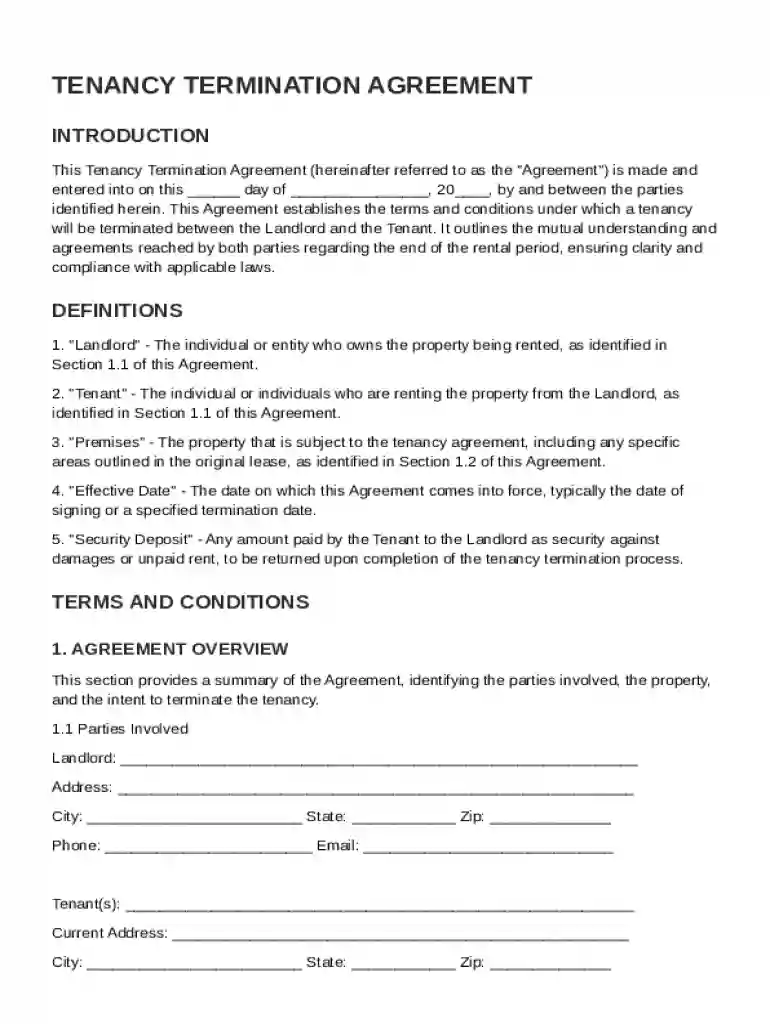
The Tenancy Termination Agreement Template is a legal document that formalizes the process of ending a rental lease between a landlord and a tenant. This template sets out the terms and conditions involved in terminating the tenancy, ensuring both parties understand their responsibilities and rights. Essential sections within the agreement typically cover the termination date, reasons for vacating the premises, and procedures for returning any deposited funds. Furthermore, this document helps to prevent disputes by providing clear definitions of key terms and outlining any conditions necessary for a smooth termination process.
Key Elements of the Tenancy Termination Agreement Template
A comprehensive Tenancy Termination Agreement Template includes several crucial elements that formalize the termination procedure.
- Parties Involved: Identifies both the landlord and tenant, with full legal names and contact information.
- Termination Date: Clearly specifies the date when the tenant must vacate and when the agreement will officially end.
- Outstanding Payments: Details any remaining rent or fees that must be settled before vacating.
- Security Deposit Return: Outlines steps for the return of the security deposit and any conditions affecting the amount returned.
- Waiver of Claims: Includes any waivers that prevent future legal claims related to the tenancy period.
- Governing Law: Identifies the specific state law governing the agreement to ensure compliance.
Steps to Complete the Tenancy Termination Agreement Template
Completing the Tenancy Termination Agreement Template involves a clear series of steps to ensure all details are accurately recorded and agreed upon.
- Gather Information: Collect all relevant details about the tenancy, including the rental address, contact information for both parties, and lease terms.
- Fill in Key Dates: Enter the agreed-upon termination date and any deadlines for fulfilling related conditions.
- Outline Financial Settlement: Specify any outstanding payments and how the security deposit will be handled.
- Review and Amend Clauses: Ensure that each party agrees to specific clauses such as governing laws and waivers.
- Obtain Signatures: Both parties should sign the document, either manually or using a legally binding electronic signature.
Legal Use of the Tenancy Termination Agreement Template
The Tenancy Termination Agreement Template must comply with legal standards to ensure it is enforceable.
- Compliance with State Law: The agreement should adhere to the specific state’s landlord-tenant laws, which may dictate notice periods and allowable reasons for termination.
- Proper Notification Procedures: Typically, proper notice must be delivered to the tenant, often in writing, documenting receipt.
- Binding Signatures: Both parties must provide their signatures to make the document legally binding and enforceable.
- Amendment Provisions: The agreement should include provisions for amending terms if both parties consent.
Important Terms Related to Tenancy Termination Agreement Template
Understanding the terminology used in the Tenancy Termination Agreement Template is crucial for both landlords and tenants.
- Lease Termination: Refers to ending the rental lease before the original expiration date.
- Notice Period: The timeframe required for alerting the other party of the termination, often defined by state law.
- Security Deposit: A refundable amount held against damages or unpaid rent, returned after deducting allowable expenses.
- Early Termination Fee: A fee that may apply if the tenant leaves before the lease term ends without mutual agreement.
- Condition of Premises: The state in which the property must be left to avoid deductions from the security deposit.
Who Typically Uses the Tenancy Termination Agreement Template
A variety of individuals and entities benefit from using the Tenancy Termination Agreement Template.

- Landlords: Utilize it to formalize the end of tenancies and protect their property investments.
- Tenants: Use the document to ensure clarity and avoid disputes when leaving a rental property.
- Property Management Companies: Employ this template for streamlined and consistent handling of lease terminations across multiple properties.
- Real Estate Attorneys: Use the template to advise clients on compliance and legal risks associated with lease terminations.
State-Specific Rules for the Tenancy Termination Agreement Template
Termination regulations can differ significantly from one state to another, making understanding these variations essential.
- Notice Periods: Many states require specific notice periods based on lease type, such as 30 days for monthly leases.
- Tenant Rights: Some states provide additional protections for tenants, including requirements for the condition reports before deposit deductions.
- Termination Reasons: States may regulate acceptable reasons for terminating leases, such as non-payment, lease violations, or owner move-ins.
Examples of Using the Tenancy Termination Agreement Template
Real-world examples illustrate how individuals and organizations might use this template.
- Landlord Initiated Termination: A landlord wishing to sell the property provides proper notice to the tenant using the template.
- Mutual Agreement: Both landlord and tenant agree to terminate early, documenting the terms clearly to avoid future misunderstandings.
- Lease Violation: A tenant consistently failing to pay rent uses the template to outline the legal basis for the termination and expected vacating date.
By utilizing these comprehensive blocks, users can gain a detailed understanding of the Tenancy Termination Agreement Template and its applications.