Definition and Meaning
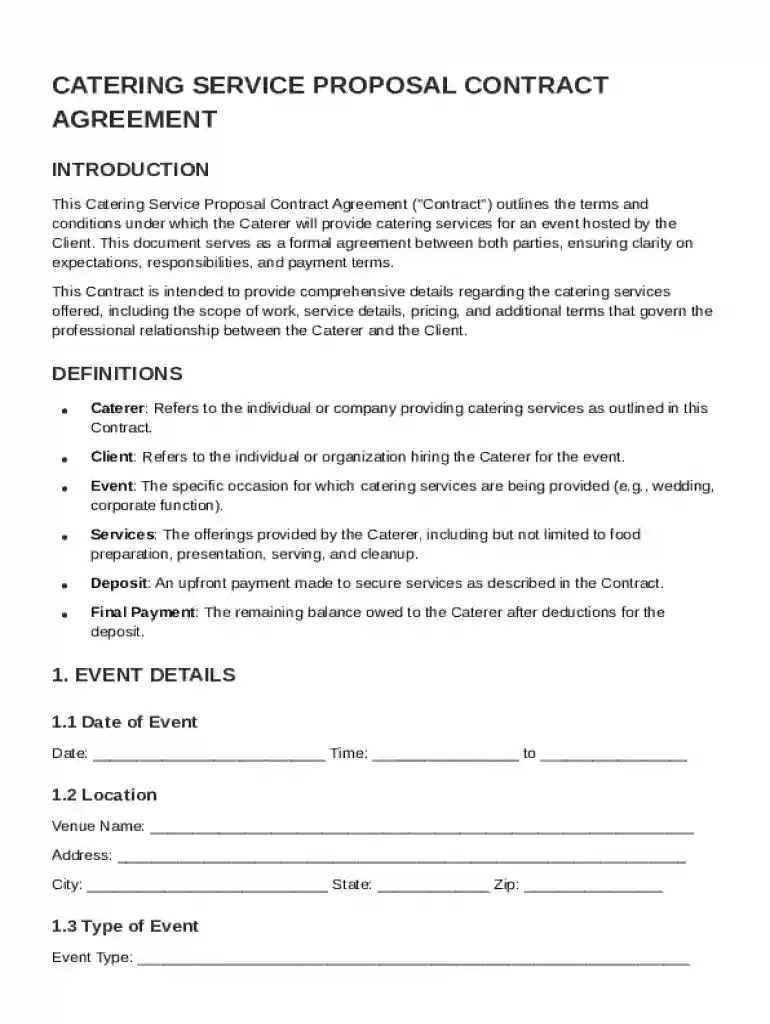
A Cater Proposal Contract Template is a structured agreement between a caterer and a client, outlining the terms and conditions for catering services at an event. This legal document specifies details such as menu choices, pricing arrangements, event dates, and locations, ensuring mutual understanding and agreement on all aspects of the service provided. By establishing clear expectations, both parties can avoid misunderstandings and disputes, resulting in a streamlined event planning process.
Key Elements of the Cater Proposal Contract Template
Event Details
- Date and Time: Specifies when the event is taking place.
- Venue: Indicates the location where services will be provided.
- Client Information: Includes details such as the client's name, contact details, and any other relevant information.
Menu Selection
- Catering Options: Lists the types of meals and beverages, including any vegetarian or vegan options.
- Customization: Allows for variations and special requests, such as allergen-free meals.
Pricing and Payment Terms
- Cost Breakdown: Lists all costs involved, including taxes and service fees.
- Payment Schedule: Details when payments are due, such as deposits and final balances.
Steps to Complete the Cater Proposal Contract Template
- Review Event Specifications: Ensure all details like date, time, and venue are accurate.
- Confirm Menu Choices: Discuss with the client to select and finalize the menu.
- Agree on Pricing: Verify the total cost, including any additional fees.
- Specify Payment Terms: Outline deposits, interim payments, and due dates.
- Include Cancellation Terms: Define conditions and penalties for cancellation.
- Finalize Signatures: Ensure both the caterer and client sign the document to make it legally binding.
Important Terms Related to Cater Proposal Contract Template
- Deposit: An upfront payment confirming the client's commitment.
- Liability Clause: Details the caterer's responsibilities concerning any damages or injuries during the event.
- Force Majeure: Accounts for events beyond control, potentially affecting the contract's execution.
Legal Use of the Cater Proposal Contract Template
This template serves as a legal safeguard that outlines what each party is responsible for, ensuring compliance with local, state, and federal regulations. It protects the interests of both the caterer and the client by clearly explaining expectations, thereby minimizing legal disputes. When correctly executed, the agreement holds up under U.S. law, providing a clear record if disagreements occur.

Who Typically Uses the Cater Proposal Contract Template
- Catering Companies: To specify their service offerings and requirements.
- Event Planners: To organize catering details on behalf of their clients.
- Corporate Clients: When hosting large-scale or official events requiring external catering services.
- Private Individuals: For personal events such as weddings or anniversaries.
Examples of Using the Cater Proposal Contract Template
- Weddings: Clearly specifies meal options, special dietary requirements, and the event timeline.
- Corporate Events: Details the number of participants, menu variety for a professional setting, and both parties' obligations.
- Community Gatherings: Considers larger groups and potential menu adjustments to accommodate different cultural preferences.
Software Compatibility
DocHub supports various document formats, such as PDF, DOC, PPT, and XLS, ensuring compatibility with most document management systems. This flexibility allows for seamless integration with popular software applications like QuickBooks or TurboTax Documentation, facilitating efficient contract management and revision without the need for continuous format conversion.
Digital vs. Paper Version
Using a digital Cater Proposal Contract Template through DocHub offers several benefits over paper versions:
- Efficiency: Instant edits and streamlined sharing options.
- Security: 256-bit SSL encryption for sensitive documents.
- Accessibility: Edit and view contracts on multiple devices, anytime and anywhere.
Emphasizing digital use can result in notable time savings and risk mitigation concerning document misplacement or unauthorized access.