Definition and Meaning
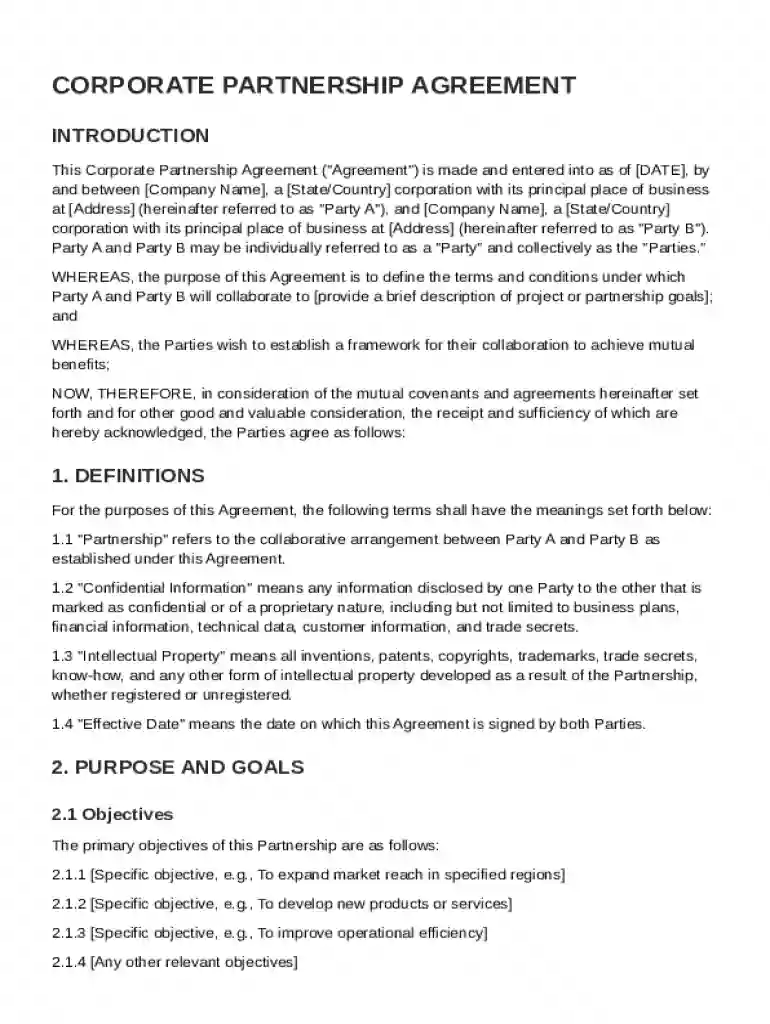
A Corporate Partnership Agreement Template is a legal document that outlines the collaboration terms between two corporate entities, typically referred to as Party A and Party B. This template provides a structured framework that includes objectives, specific roles, responsibilities, and financial commitments. It also covers confidentiality clauses, intellectual property rights, and dispute resolution mechanisms. The primary aim is to foster mutual benefits through coordinated efforts on particular projects or goals. By utilizing a template, corporations can efficiently draft agreements that comply with legal standards while ensuring all essential elements are addressed.
Examples and Applications
- Joint Ventures: Two corporations may use this agreement to officially partner on developing a new product or service.
- Research Collaborations: Companies working together on R&D efforts can specify the sharing and ownership of resulting intellectual property.
- Supply Chain Partnerships: Clarifying responsibilities and financial contributions in a supply chain relationship to optimize collaboration.
How to Use the Corporate Partnership Agreement Template
Using the Corporate Partnership Agreement Template involves several steps aimed at customizing the document to fit the specific needs of the partnership. Typically, both parties will collaboratively fill out the template to ensure mutual agreement on all particular points.
- Identify Partnership Goals: Clearly outline what each party seeks to achieve through the partnership.
- Define Roles and Responsibilities: Specify what each corporation will contribute and be accountable for during the partnership.
- Outline Financial Contributions: Describe the financial contributions each party will make, including any shared expenses or investments.
- Include Confidentiality Clauses: Protect sensitive information with strict confidentiality agreements.
- Set Dispute Resolution Mechanisms: Determine how disagreements will be handled legally to prevent dissolution over conflicts.
Practical Considerations
- Ensure legal review for compliance with jurisdictional laws.
- Use the template to facilitate negotiation, where both parties can suggest modifications before finalizing the agreement.
Key Elements of the Corporate Partnership Agreement Template
A comprehensive Corporate Partnership Agreement Template should cover various critical elements to ensure clarity and legal rigor.
- Identification of Parties: Clear identification of the involved corporations, typically with names, addresses, and representative contacts.
- Objectives and Scope: Detailed description of the partnership's goals and limitations.
- Term and Termination: Duration of the partnership and conditions under which the agreement can be terminated.
- Intellectual Property Rights: Clauses specifying how intellectual property will be handled and ownership assigned.
- Financial Terms: Details on how profits and expenses will be divided, including payment schedules and responsibilities.
- Confidentiality Provisions: A comprehensive section outlining how confidential information will be protected.
Legal Use of the Corporate Partnership Agreement Template
The legal utilization of a Corporate Partnership Agreement Template is crucial to avoid disputes and ensure enforceability.
Compliance with Contracts Law
All agreements should comply with the laws of the state where the business operations occur. It is beneficial to have legal professionals review the document to ensure it meets all statutory requirements and common law principles.
Legally Binding Nature
For an agreement to be binding:
- Offer and Acceptance: Both parties must agree to the terms.
- Consideration: There should be some form of payment or compensation.
- Capacity: Parties must have the legal capacity to enter into an agreement.
State-Specific Rules for the Corporate Partnership Agreement Template
Each state in the U.S. may have variant laws governing partnership agreements, including:
- Jurisdiction: Laws applicable to the document should be specified in the agreement.
- Registration Requirements: Some states may require the registration of partnership agreements or particular filings.
State Jurisprudence
- California: May require specific environmental considerations for certain types of partnerships.
- New York: Might require additional compliance metrics within the financial services industry.
Important Terms Related to Corporate Partnership Agreement Template
Understanding critical legal terminology within the Corporate Partnership Agreement Template is necessary to navigate its complexities.
- Indemnity: Protects parties from potential losses arising out of the partnership.
- Force Majeure: Clauses that outline responsibilities when uncontrollable circumstances occur, such as natural disasters.
- Non-Compete: Prevents either party from starting a competing partnership or utilizing proprietary information beyond the agreement’s scope.
Steps to Complete the Corporate Partnership Agreement Template
Completing the Corporate Partnership Agreement Template requires careful coordination between the involved parties.
- Preliminary Discussions: Begin conversations to align on partnership objectives and expectations.
- Drafting the Agreement: Use the template to draft an initial version, focusing on critical elements like scope, finances, and staffing.
- Review and Modify: Both parties should review and propose modifications to ensure all concerns are addressed.
- Legal Review: Engage legal counsel to review the agreement for compliance and enforceability.
- Finalization and Signatures: Final approval and signing by authorized representatives.
Recommended Practices
- Ensure transparency during negotiation stages to prevent misunderstandings.
- Keep all communication documented in case legal clarification is required later.