Definition and Importance of Vehicle Lease Agreement Template
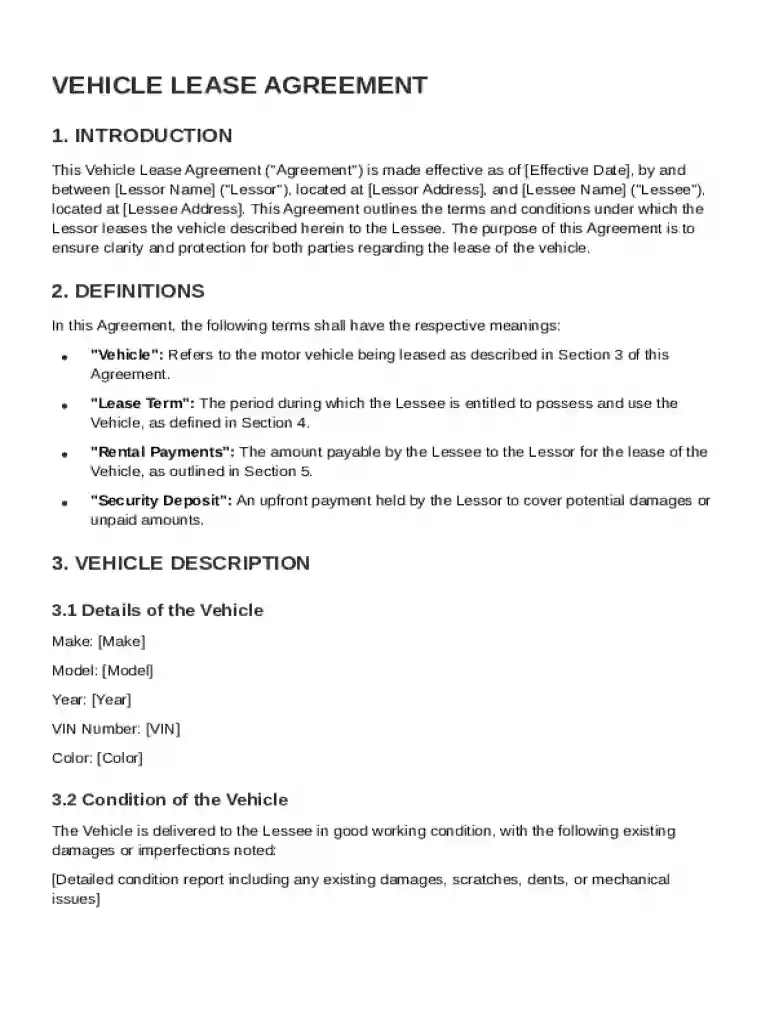
A Vehicle Lease Agreement Template is a structured document outlining the contractual terms and conditions agreed upon by a vehicle owner, known as the Lessor, and the individual or company leasing the vehicle, referred to as the Lessee. This template is instrumental in ensuring clarity and legal compliance in the lease arrangement. It details critical aspects such as the vehicle description, lease duration, payment terms, and responsibilities of both parties. By using a standardized template, Lessors and Lessees can minimize misunderstandings, ensure that their rights are protected, and fulfill legal obligations throughout the lease period.
- Vehicle Description: Specific details such as make, model, year, and VIN (Vehicle Identification Number) ensure both parties have a verified understanding of the leased asset.
- Lease Duration: Clearly states the start and end dates of the lease term, providing a defined period within which rights and responsibilities are exercised.
How to Use the Vehicle Lease Agreement Template
Utilizing the Vehicle Lease Agreement Template involves a structured approach to capture and record all necessary details for a legally binding contract. Users can access the template via platforms such as DocHub, which facilitates online editing and electronic signing.
- Initial Setup: Begin by opening the template in DocHub to edit directly. Familiarize yourself with the sections to understand the required information.
- Customization: Modify standard provisions to meet specific needs, such as unique lease terms or additional clauses.
- Completion: Fill in all requisite fields, ensure accuracy in critical sections like payment terms, and review for completeness.
Key Tips
- Proofreading: Double-check entries for accuracy to prevent legal issues or disputes.
- Security Features: Enable password protection for sensitive agreement documents shared electronically.
Steps to Complete the Vehicle Lease Agreement Template
Completing the Vehicle Lease Agreement Template requires attention to detail and an understanding of each clause’s implications. Follow this guided process to ensure thoroughness:
- Fill Out Vehicle Information: Include essential details such as make, model, and VIN to avoid confusion.
- Lease Term Specification: Clearly define the start and end dates of the lease.
- Payment Terms: Specify the lease amount, payment schedule, and methods accepted.
- Liability and Maintenance: Clarify responsibilities for maintenance and liability in case of damage.
- Insurance Requirements: Outline obligatory insurance coverage needed during the lease period.
Important Considerations
- Signatures: Utilize electronic signatures within DocHub for quicker, legally binding acknowledgments.
- Clause Review: Carefully assess any penalty clauses for late payments to avoid unexpected charges.
Key Elements of the Vehicle Lease Agreement Template
A thorough Vehicle Lease Agreement encompasses several key elements that facilitate a comprehensive understanding and execution of the contract between parties.
- Security Deposit: Outlines any required deposits as financial protection for the Lessor against potential damages or missed payments.
- Permitted Uses: Specifies how the vehicle may be used, including geographical or usage restrictions to prevent unauthorized activities.
- Governing Laws: Identifies the jurisdiction's laws that apply to the agreement, ensuring that relevant legal standards are met.
Highlighted Sections
- Defaults and Remedies: Details consequences and solutions if either party fails to fulfill their contractual obligations.
- Renewal Options: Explains any potential for lease renewal or extension beyond the original terms.
Legal Use of the Vehicle Lease Agreement Template
Ensuring the Vehicle Lease Agreement Template adheres to legal standards is essential for its enforceability and effectiveness. This involves aligning the lease with state and federal regulations governing vehicle leases.
Legal Compliance Measures
- Conformity with ESIGN Act: Legal bindingness of electronic signatures as per the ESIGN Act ensures secure, valid electronic agreements.
- Insurance Provisions: Meets minimum insurance requirements set by state law for leased vehicles.
State-Specific Rules for Vehicle Lease Agreements
Vehicle lease agreements can vary by state due to differing legal requirements. Users must be aware of and comply with these variations to ensure legality.
- State-Specific Clauses: Some states may have unique disclosure requirements or consumer protection laws affecting lease agreements.
- Compliance Necessities: Adapt the standard template to meet local legislative distinctions specific to vehicle leasing.
Examples of Using the Vehicle Lease Agreement Template
Real-world scenarios illustrate the versatility and utility of the Vehicle Lease Agreement Template for both Lessors and Lessees in various contexts.
- Personal Leasing: Individuals needing a temporary vehicle solution can utilize this template to formalize terms with a dealership or private owner.
- Business Applications: Companies frequently lease vehicles for official use, employing templates to standardize processes and maintain fleet consistency.
Practical Scenarios
- Fleet Management: Businesses managing larger fleets leverage templated agreements to streamline operations and reduce overall administrative workload.
- Temporary Relocation: Professionals relocating for short-term projects often lease vehicles, benefiting from templates that accommodate specific time frames and usage needs.
Important Terms Related to the Vehicle Lease Agreement Template
Understanding key legal and contractual terms within the Vehicle Lease Agreement Template ensures that users fully grasp their rights, duties, and expectations.
- Lessor: The party leasing out the vehicle, responsible for ownership duties and leasing conditions.
- Lessee: The individual or entity leasing the vehicle, assuming responsibilities outlined in the agreement.
- Indemnity Clause: Protects parties from certain legal liabilities, often shifting risks as defined within the contract.
Detailed Explanations
- Force Majeure: Covers unforeseen events preventing parties from fulfilling their obligations, such as natural disasters or political unrest.
- Waiver: Indicates conditions under which parties might relinquish certain rights or terms outlined in the agreement.