Definition and Meaning of a Private Residential Tenancy Agreement Template
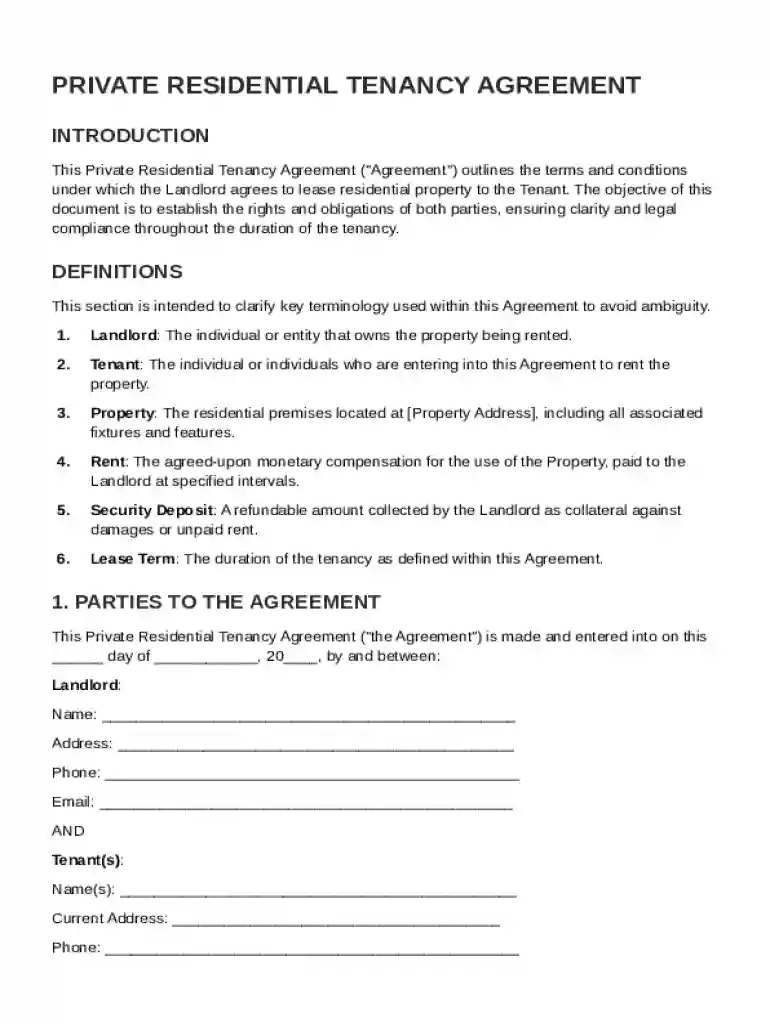
A private residential tenancy agreement template serves as a structured framework designed for landlords and tenants to establish clear terms and conditions regarding the rental of residential property. This legally binding document delineates the rights and responsibilities of both parties, ensuring mutual understanding and compliance with applicable laws. The agreement typically includes details such as the names of the landlord and tenant, the description of the property, the duration of the tenancy, and financial obligations like rent and security deposits. By using such a template, parties can efficiently formalize the lease without missing critical legal elements required for enforceability.
How to Use a Private Residential Tenancy Agreement Template
Utilizing a private residential tenancy agreement template streamlines the process of crafting a comprehensive lease agreement. Here's a step-by-step approach:
- Download or create: Acquire the template from a trusted source or platform, ensuring it complies with local legal requirements.
- Fill in tenant and landlord information: Input personal details of both the landlord and tenant, including full names and contact information.
- Describe the property: Clearly outline the property being leased, including the address and any specific unit details if applicable.
- Specify the lease term: Define the start and end dates of the tenancy, along with any provisions for renewal or extension.
- Outline financial terms: Include rent amount, due dates, late fees, and payment methods, alongside security deposit terms.
- List responsibilities: Address maintenance responsibilities, utilities, and any other tenant or landlord obligations.
- Review and revise: Both parties should carefully review the document, making adjustments as necessary to address specific needs or concerns.
- Sign and date: Upon agreement of terms, both parties should sign and date the document to formalize the arrangement legally.
Steps to Complete the Private Residential Tenancy Agreement Template
Completing a private residential tenancy agreement entails a systematic approach to ensure all necessary details are addressed. Here's how to do it:
- Collect Information: Gather all required personal and property details before starting.
- Choose Template: Select a template that is designed for your specific state's legal requirements or one that allows modifications.
- Enter Essential Details: Begin by filling out the names of the landlord and tenant, and enter the property address.
- Rent and Deposit Terms: Fill in rent amount, payment schedule, and deposit criteria. Be precise to avoid any potential conflicts.
- Specify Lease Terms: Clearly state the duration of the lease, including the start and end date.
- Rights and Obligations: Include clauses that explain maintenance responsibilities and any additional obligations or restrictions.
- Additional Clauses: Reflect any unique agreements, such as pet policies or alterations allowed during the tenancy.
- Review for Compliance: Ensure the agreement adheres to local housing laws and regulations.
- Signatures: Both parties must sign the final document to validate the agreement.
Key Elements of the Private Residential Tenancy Agreement Template
A comprehensive tenancy agreement includes several critical components, which are essential for its legality and clarity. The core elements are:
- Parties Involved: Identifies the landlord and tenant, along with their contact details.
- Property Description: Detailed identification of the rental property.
- Lease Duration: Defines whether it is a fixed-term or periodic tenancy.
- Rent Details: Amount, due date, and preferred payment method.
- Security Deposit: Amount, conditions for return, and account holding it.
- Maintenance Responsibilities: Outlines who handles repairs and maintenance.
- Use of Premises: States acceptable uses of the property and any restrictions.
- Termination Terms: Conditions and processes for ending the lease.
- Signatures: Signatures and dates from both parties.
Legal Use of the Private Residential Tenancy Agreement Template
The legal efficacy of a private residential tenancy agreement is contingent on adherence to state-specific regulations. Landlords and tenants must ensure that the template:
- Complies with State Laws: Each state in the United States may have different legal requirements. It is crucial to consult local regulations to ensure compliance.
- Includes Mandatory Disclosures: Necessary information such as lead-based paint disclosures for older properties should be present.
- Adheres to Fair Housing Laws: The agreement must not contain discriminatory language or unlawful stipulations.
- Incorporates Tenant Rights: Ensure tenants' rights, such as privacy and quiet enjoyment, are respected within the document.
State-Specific Rules for the Private Residential Tenancy Agreement Template
Different states may impose specific regulations that need to be reflected in a tenancy agreement. For example:
- Security Deposit Limits: States like California cap security deposits, while others allow variable amounts.
- Notice Periods: States may require specific notice periods for termination or renewal.
- Rent Control: Certain locales have rent control ordinances that must be considered.
- Mandatory Disclosures: Some states require additional disclosures, such as flood risk or mold presence.
Important Terms Related to the Private Residential Tenancy Agreement Template
Understanding the terminology in a tenancy agreement is crucial for all parties. Key terms often found in these templates include:
- Lessee and Lessor: The tenant (lessee) and the landlord (lessor) engaged in the agreement.
- Premises: The property or rental unit designated for lease.
- Habitable Condition: State of the property that ensures it is suitable for living.
- Quiet Enjoyment: Tenant's right to undisturbed use of the property.
- Subletting: Allowing the tenant to rent the premises to another party.
- Default: Failure to fulfill agreed-upon terms of the lease.