01. Edit your form online
Type text, add images, blackout confidential details, add comments, highlights and more.

Type text, add images, blackout confidential details, add comments, highlights and more.

Draw your signature, type it, upload its image, or use your mobile device as a signature pad.

Send it via email, link, or fax. You can also download it, export it or print it out.
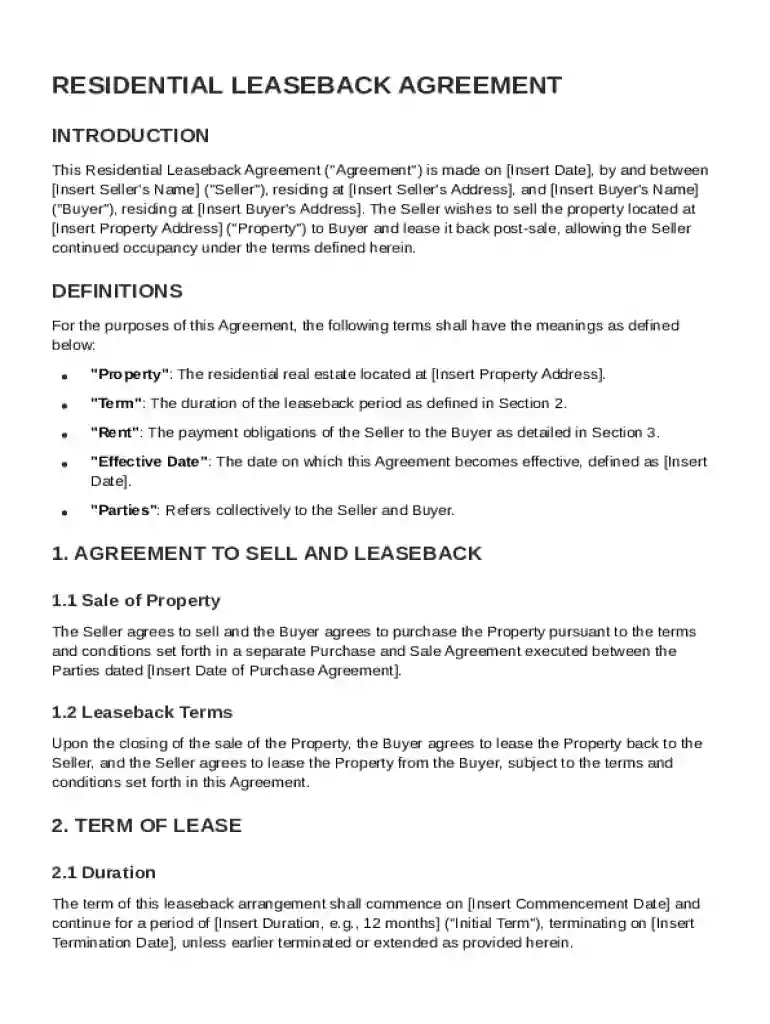
A Residential Leaseback Agreement, sometimes known as a sale-leaseback, is a legal document outlining the terms under which a property owner sells their property while retaining the ability to lease it back from the new owner. This arrangement allows the seller to free up capital while continuing to live in or use the property. The contract clearly defines key terms such as the lease duration, rental payments, and responsibilities for property maintenance. This type of agreement can also include clauses regarding compliance with local laws and the conditions under which the lease can be terminated.
To effectively use a Residential Leaseback Agreement Template, follow these steps:
A Residential Leaseback Agreement typically includes several critical components:
The legal standing of a Residential Leaseback Agreement ensures both parties' rights are protected through clearly defined terms. The agreement must align with state and federal laws, including zoning regulations and tenant rights laws. In ensuring it is enforceable, parties should ensure it includes signatures, witness clauses, and potentially notarization, depending on jurisdictional requirements.
Residential Leaseback Agreements must be tailored to comply with the specific real estate laws of the state in which the property is located. States may have unique regulations regarding tenant rights, eviction proceedings, and other housing laws that must be reflected in the agreement. Parties may need to consult state resources or a local attorney to ensure all requirements are met.
This template is particularly useful for:
Understanding the following terms is crucial when dealing with Residential Leaseback Agreements:
Consider a homeowner who sells their home for a significant profit but desires to stay due to the community and local amenities. They can use a Residential Leaseback Agreement to negotiate a lease term that suits their long-term needs while allowing access to liquid funds. Conversely, investors might purchase a property in a high-demand area under a sale-leaseback arrangement to secure a reliable tenant immediately.
At DocHub, your data security is our priority. We follow HIPAA, SOC2, GDPR, and other standards, so you can work on your documents with confidence.