






Definition & Meaning
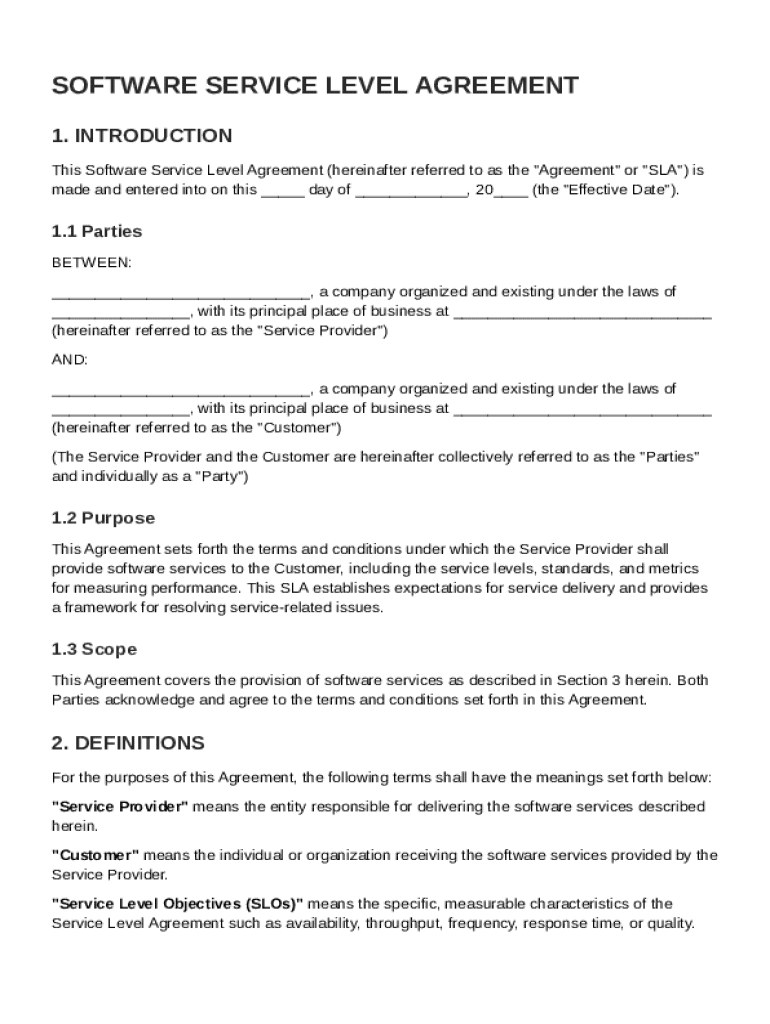
A Software Service Level Agreement (SLA) Template formalizes the expectations between a Service Provider and a Customer regarding the provision of software services. This agreement details various components crucial to maintaining the quality and consistency of services offered. By outlining service levels, performance metrics, support availability, and incident management, the SLA serves as a comprehensive document ensuring both parties clearly understand their responsibilities and obligations. It also specifies guidelines for handling situations where service levels are not met, such as service credits and dispute resolution processes.
Key Elements of the Software Service Level Agreement Template
An SLA template encompasses several critical elements to ensure detailed and binding documentation of service terms:
- Service Levels: Defines benchmarks for service performance, including uptime guarantees and response times.
- Performance Metrics: Establishes how service quality is measured, detailing key performance indicators.
- Support Availability: Specifies the availability of support services, including hours of operation and contact methods.
- Incident Management: Outlines procedures for addressing service disruptions, including escalation protocols.
- Confidentiality Obligations: Ensures that both parties maintain the confidentiality of sensitive information.
- Termination Conditions: Details conditions under which the agreement may be terminated by either party.
Steps to Complete the Software Service Level Agreement Template
Creating a comprehensive and effective SLA involves several key steps:
- Identify Stakeholders: Determine the parties involved, including decision-makers and those responsible for service delivery and receipt.
- Define Services: Clearly outline the services provided, their scope, and any exclusions.
- Set Performance Standards: Establish service levels and performance metrics to measure service quality.
- Detail Support and Escalation Procedures: Include specifics on support availability and steps for escalating issues.
- Review Legal Provisions: Ensure the SLA complies with applicable legal requirements, including data protection laws.
- Sign and Distribute: Upon finalizing the document, ensure all parties sign it and distribute copies accordingly.
Who Typically Uses the Software Service Level Agreement Template
SLA templates are primarily utilized by companies and organizations that rely on software services to function efficiently. Typical users include:
- IT Service Providers: Ensures alignment of expectations with clients regarding support and performance.
- Corporate Enterprises: Maintains consistent service delivery from software vendors.
- Government Agencies: Ensures accountability and performance in software procurement contracts.
- Educational Institutions: Establishes clear guidelines when using third-party software services for administrative and educational purposes.

Legal Use of the Software Service Level Agreement Template
Legal considerations are integral to the effectiveness of an SLA. It serves as a legally binding contract, obligating both parties to adhere to the stipulated terms. Key legal aspects include:
- Comply with Laws: Ensures adherence to relevant data protection and privacy laws, notably if handling sensitive information.
- Service Credits: Specifies compensatory measures in case of service level failures.
- Dispute Resolution: Establishes mechanisms for resolving any contractual disputes, such as arbitration or legal proceedings.
Examples of Using the Software Service Level Agreement Template
Numerous real-world scenarios illustrate the practical application of SLAs:
- Enterprise IT Services: Deploying SLAs to guarantee uptime and support responsiveness for mission-critical software applications.
- SaaS Providers: Outlining usage terms, subscription details, and performance expectations.
- Managed Service Providers: Detailing the extent of network monitoring and incident response times.
Important Terms Related to Software Service Level Agreement Template
Understanding specific terminology is important for interpreting SLAs effectively:
- Uptime Requirement: The guaranteed percentage of time the software is operational.
- Response Time: The duration within which support will address client inquiries or service requests.
- Escalation Path: Hierarchical process for addressing service issues if initial responses are inadequate.
Business Types that Benefit Most from Software Service Level Agreement Template
Different business entities can greatly benefit from adopting SLAs:
- Startups and Small Businesses: Establishes reliable software service expectations and manages costs through clear service definitions.
- Large Enterprises: Hassures that service standards and repercussions are well-documented, reducing risks related to service disruptions.
- Healthcare Providers: Ensures software compliance with healthcare-specific regulations and maintains high service standards.