Definition and Meaning of VoIP Service Level Agreement Template
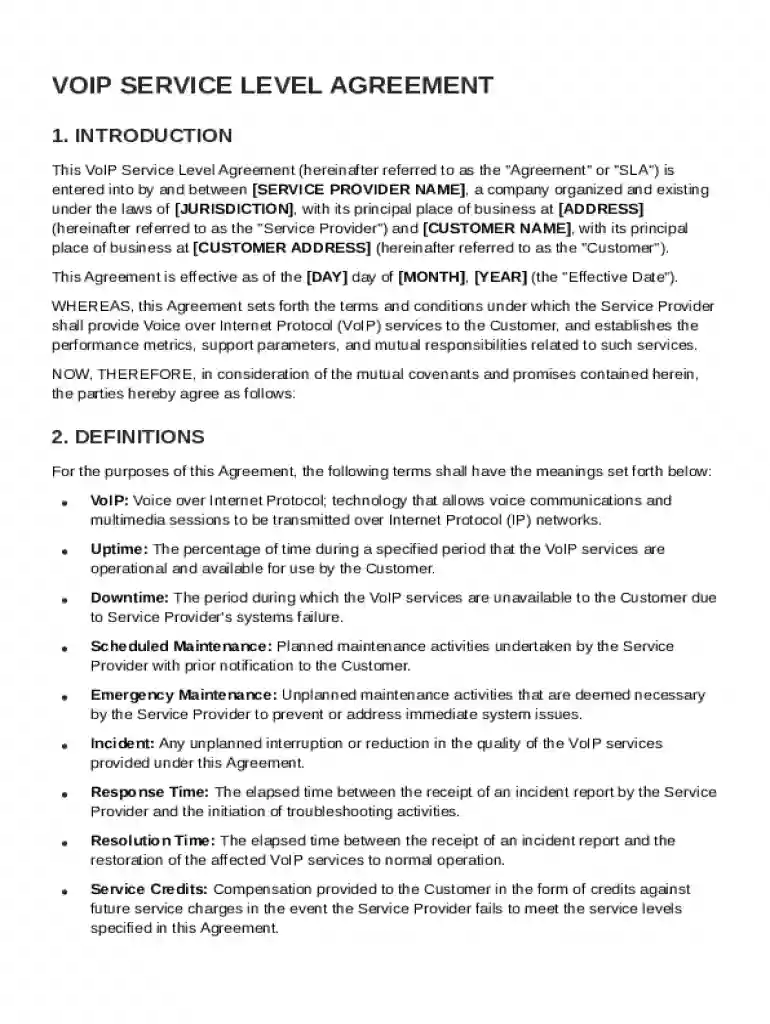
A VoIP Service Level Agreement (SLA) template is a formal document that a service provider and a customer use to outline the terms and conditions of delivering Voice over Internet Protocol (VoIP) services. It specifies the service scope, performance metrics, and responsibilities of both parties. The template includes key elements such as service availability, quality of service (QoS) parameters, response and resolution times for incidents, and protocols for technical support and performance reporting. By defining these aspects, the SLA aims to ensure that both parties have clear expectations and understandings of the service standards and remedies involved.
Key Elements of a VoIP Service Level Agreement Template
The VoIP SLA template typically includes several crucial components to ensure comprehensive coverage and understanding:
- Service Scope: This section details the services provided, including any specific VoIP features or requirements.
- Performance Metrics: Defines measurable standards such as uptime guarantees, latency thresholds, and packet loss tolerances.
- Support Services: Specifies the technical support offered, including response and resolution times for different types of issues.
- Responsibilities: Outlines the duties of both the service provider and the customer, including security obligations and data handling practices.
- Penalties: Describes consequences for non-compliance, such as service credits or financial penalties.
- Amendment Procedures: Sets forth the process for making changes to the SLA, ensuring that any amendments are mutually agreed upon and documented.
- Termination Conditions: Specifies the conditions under which the agreement can be terminated by either party.
Steps to Complete the VoIP Service Level Agreement Template
- Identify Agreement Parties: Clearly define the service provider and the customer involved in the agreement.
- Specify the Service Scope: List the VoIP services and features provided under the agreement.
- Outline Performance Metrics: Set the standards for service delivery, including uptime and quality measures.
- Detail Support Processes: Describe the support services available, including contacts and escalation procedures.
- Assign Responsibilities: Clarify the roles and obligations of both the service provider and the customer.
- Document Penalties and Remedies: State the penalties for failure to meet service levels and the conditions for invoking them.
- Define Amendment and Termination Procedures: Ensure there are clear rules for how the SLA can be amended or terminated.
How to Use the VoIP Service Level Agreement Template
Using a VoIP SLA template effectively involves a series of methodical steps:
- Review and Customize: Start by reviewing the template thoroughly. Customization is often necessary to ensure that the generic terms align with the specific needs and expectations of both parties.
- Consult Stakeholders: Engage with relevant stakeholders, including IT, legal, and finance teams, to ensure all critical areas are covered.
- Negotiate Terms: Both parties should negotiate the terms to ensure a balanced and fair agreement.
- Formalize the Agreement: Once finalized, both parties should sign the agreement to formalize it.
- Monitor Compliance: Regularly review and monitor compliance with the SLA’s terms to ensure adherence and address any issues promptly.
Important Terms Related to VoIP Service Level Agreement Template
Understanding important technical and legal terms in a VoIP SLA is crucial:
- Uptime: The percentage of time the service is operational and available.
- Latency: The time it takes for data to travel from source to destination.
- Packet Loss: The percentage of packets that are lost during data transmission.
- QoS (Quality of Service): The overall performance quality of a communications service.
- Service Credits: Financial reimbursements or credits provided when the service provider doesn't meet agreed-upon service levels.
Penalties for Non-Compliance
Non-compliance with a VoIP SLA can lead to various penalties, including:
- Service Credits: Monetary compensation to the customer for unmet service levels.
- Contract Termination: While severe, persistent breaches of the SLA may result in contract termination.
- Reputation Damage: Repeated failures to meet SLA terms can tarnish a provider's reputation, affecting future business opportunities.
Examples of Using the VoIP Service Level Agreement Template
Practical applications of a VoIP SLA include:
- Small Businesses: A small company may leverage an SLA to ensure their VoIP services meet necessary uptime for daily operations.
- Large Corporations: Large enterprises often use SLAs to manage risks associated with communication breakdowns.
- Educational Institutions: Universities using VoIP services may rely on SLAs to maintain consistent communication platforms for staff and students.