Definition & Meaning
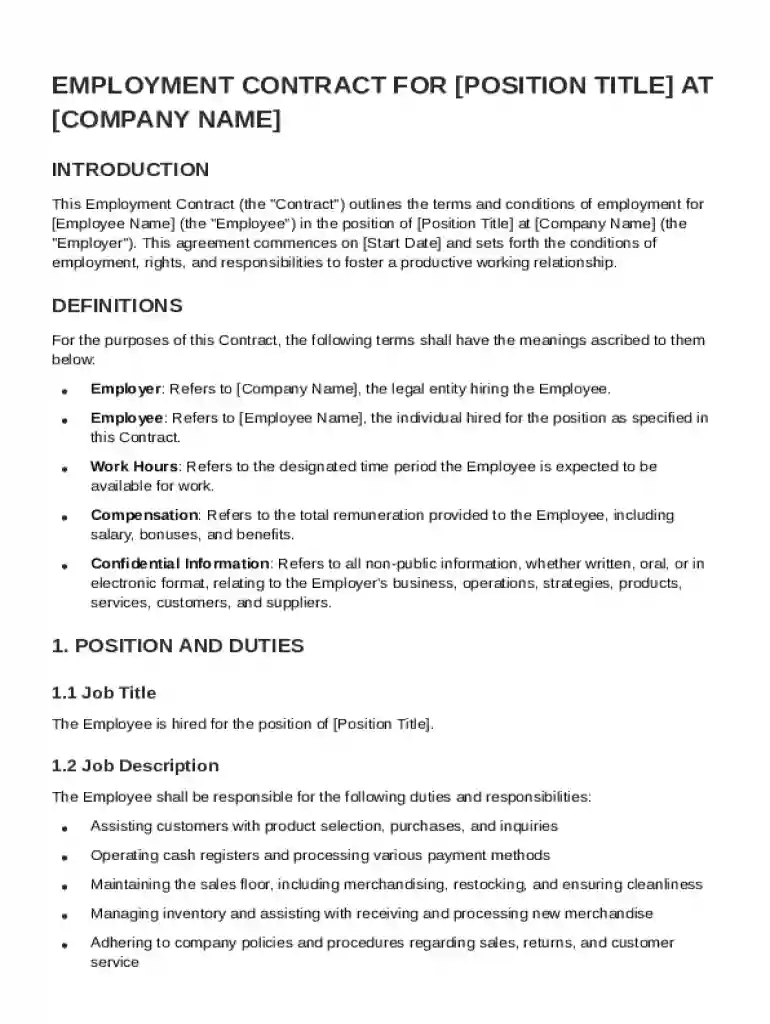
A Retail Employment Contract Template is a pre-structured document designed to establish the terms and conditions of employment for retail employees. This template serves as a legal agreement between an employer and an employee, outlining both parties' rights and obligations in a retail work setting. Typically, it includes sections on job responsibilities, employment duration, compensation, benefits, and work hours. The purpose of this document is to provide a standardized approach to formalizing employment agreements, ensuring both parties have a clear understanding of the expectations and legal commitments involved in the employment relationship.
Examples and Real-World Scenarios
- A small retail store hires a new sales associate and uses this template to clearly communicate job expectations, like specific sales targets and customer service duties.
- A national retail chain uses a customized version of the template for different positions, ensuring that every new employee across states understands their role, compensation, and benefits package.
Key Elements of the Retail Employment Contract Template
The Retail Employment Contract Template consists of several critical elements that provide a comprehensive framework for employment. These components ensure that both the employer’s and the employee's interests are protected and that legal compliance is maintained.
Essential Sections
- Employee Information: Personal details such as name, address, and social security number.
- Job Title and Description: Clearly outlines the role and specific duties of the employee.
- Compensation: Details regarding salary, hourly wage, and possible bonuses.
- Benefits: Information on health insurance, retirement plans, and any other benefits.
- Confidentiality Clause: An agreement to protect sensitive business information obtained during employment.
- Termination Conditions: Guidelines for voluntary and involuntary termination of employment.
Legal Use of the Retail Employment Contract Template
This template serves as a legally binding document once signed by both parties, conforming to employment laws and ensuring mutual understanding and agreement.
Legal Considerations
- Compliance with Employment Laws: The contract must meet federal and state labor laws to avoid legal disputes.
- Enforceability: Sections like non-compete clauses should be reasonable and not overly restrictive to ensure they hold up in court.
Steps to Complete the Retail Employment Contract Template
Completing the template involves several methodical steps to ensure accuracy and compliance.
- Input Employee Details: Fill in the employee's personal information and employment start date.
- Define Job Responsibilities: Clearly state the expectations and daily duties associated with the position.
- Establish Compensation Terms: Specify the compensation structure, including salary or hourly wage and any commissions or bonuses.
- Outline Benefits: Detail eligible benefits and enrollment processes.
- Include Confidentiality and Intellectual Property Clauses: Ensure these sections are clear to protect company information.
- Specify Termination Procedures: Clearly indicate the notice period and conditions under which employment may be terminated.
Real-World Application
- Managers in large retail organizations use the template during the onboarding process, ensuring uniformity in contracts across different branches.
- Human resource departments adapt the template for both full-time and part-time positions, ensuring all necessary sections are appropriately filled out.
State-Specific Rules for the Retail Employment Contract Template
Employment contract regulations can vary significantly from state to state, affecting how the template should be completed and enforced.
Considerations for Different States
- Minimum Wage Laws: Ensure the compensation section complies with state-specific minimum wage regulations.
- Termination Laws: Understand state laws regarding at-will employment and required notices.
- State Benefit Requirements: Be aware of state-mandated benefits such as disability insurance or family leave.
Typical Users
- Retail Store Owners: Small business owners who need to provide formal employment documents.
- Human Resources Professionals: HR departments in large retail companies that require standardized contracts for numerous employees.
- Franchise Managers: Individuals responsible for ensuring compliance across franchise locations.
Important Terms Related to Retail Employment Contract Template
Understanding specific terms is vital for accurately completing and enforcing the contract.
Key Definitions
- Non-Compete Clause: A provision that restricts the employee from working with direct competitors post-employment.
- Probationary Period: A timeframe at the beginning of employment where performance is evaluated to determine a permanent role.
- At-Will Employment: A term indicating that either party can terminate the employment relationship without cause, given compliance with notice periods and legal stipulations.
Examples of Using the Retail Employment Contract Template
Several scenarios highlight the template’s adaptability in different retail contexts.
Application in Various Scenarios
- Seasonal Employees: Use the template to establish short-term contracts for holiday peak periods.
- Part-Time Staff: Adjust compensation and benefits to reflect part-time roles accurately.
- Promotion and Role Change: Amend an existing employee's contract to reflect a new position or responsibilities, ensuring legal clarity and alignment with company policy.
Understanding these detailed elements and processes ensures the Retail Employment Contract Template not only meets business needs but also complies with applicable laws, providing a professional and consistent approach to employment agreements in the retail sector.