Definition & Meaning
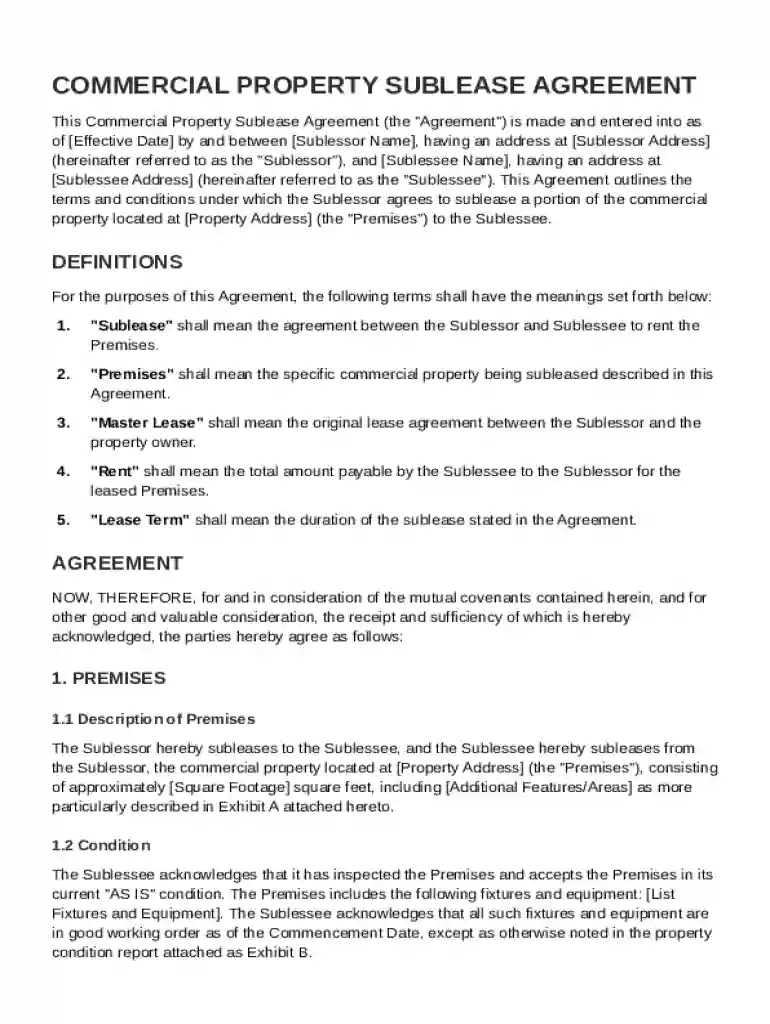
A Commercial Property Sublease Agreement Template is a legal document that outlines the arrangement between a sublessor (the current tenant) and a sublessee (the new tenant) for subleasing a commercial property. This agreement is pivotal for clarifying the rights and responsibilities of each party and ensuring compliance with the original lease terms. Typical features include rent details, permitted property uses, maintenance duties, and adherence to insurance requirements.
Real-World Application
In practice, these agreements facilitate business operations by allowing existing tenants to sublease unused space to other businesses. For example, a company downsizing its operations might sublease part of its office to a startup, creating a beneficial arrangement for both parties.
Key Elements of the Commercial Property Sublease Agreement Template
A comprehensive Commercial Property Sublease Agreement should include essential components to prevent misunderstandings and legal complications.
Core Components
- Identification of Parties: Names and contact information of the sublessor and sublessee.
- Sublease Term: Start and end dates of the sublease period.
- Rent Payment Terms: Specific details regarding the amount, due dates, and payment methods for rent.
- Property Use Clause: Detailed description of approved uses of the premises.
- Maintenance and Repairs: Obligations of each party concerning property upkeep, including any alterations or improvements.
Additional Considerations
- Insurance Requirements: Specifications for insurance coverage that must be maintained.
- Default and Remedies: Procedures for handling breaches of the agreement.
- Compliance with Master Lease: Confirmation that the sublease adheres to the original lease conditions.
How to Use the Commercial Property Sublease Agreement Template
Using a Commercial Property Sublease Agreement Template effectively ensures proper documentation of the subleasing arrangement.
Step-by-Step Guide
- Initial Discussion: Both parties should discuss and agree on the key terms such as rent and duration.
- Completion of Template: Begin by filling out the pre-defined sections related to both parties’ information and property details.
- Review of Legal Terms: Ensure all clauses, especially those regarding compliance with the master lease and conflict resolution, are well understood.
- Signatures and Witnessing: Both parties must sign the agreement, preferably in the presence of a witness, to validate it legally.
State-Specific Rules for the Commercial Property Sublease Agreement Template
Commercial property subleasing rules can vary significantly from one state to another. Understanding these variations is critical for compliance.
Examples of Variations
- California: Requires explicit consent from the landlord for any sublease arrangement.
- New York: Often mandates additional disclosures for commercial property usage.
- Texas: Has unique regulations regarding tenant improvement and payment of property taxes by sublessees.
Compliance Tips
- Always consult a local attorney to ensure state-specific regulations are met.
- Review the original lease for any geographic stipulations that might affect the sublease.
Steps to Complete the Commercial Property Sublease Agreement Template
Completing the template correctly involves careful attention to detail and an understanding of the legal context.
Detailed Process
- Gather Required Information: Collect details on both parties, the property, and the original lease.
- Draft Agreement Terms: Ensure clarity in drafting rent, term, and property use clauses.
- Review with Legal Counsel: It's advisable to have a lawyer review the agreement to identify potential issues.
- Negotiate Final Terms: Both parties should review and negotiate any final adjustments needed.
- Execute the Agreement: Finalize by obtaining the necessary signatures and notarizing when required.
Legal Use of the Commercial Property Sublease Agreement Template
The proper legal use of a Commercial Property Sublease Agreement Template ensures that the sublessor and sublessee are protected under the law.
Important Legal Considerations
- Adherence to Master Lease: Confirm that the sublease aligns with the obligations and permissions set out in the original lease.
- Liability Clauses: Clearly state who is liable for property damage or other incidents.
- Dispute Resolution: Specify methods for resolving disagreements, such as mediation or arbitration.
Example Scenarios
- A company needs to share its retail space due to reduced foot traffic and uses the template to legally sublease part of its storefront to a compatible business.
- An office tenant opts to sublease extra space to another professional group, ensuring both the rights and obligations are clearly documented using the agreement.
Scenarios of Use
- Cost Management: Large companies subleasing part of their office space due to a shift towards remote work.
- Expansion Testing: Small businesses testing new locations before committing to a long-term lease.
Software Compatibility with the Commercial Property Sublease Agreement Template
The Commercial Property Sublease Agreement Template can be integrated with various software solutions to enhance efficiency and accessibility.
Compatible Platforms
- DocHub: Directly supports editing and signing of the template in various file formats.
- Google Workspace: Integrates with Google Drive for seamless document management.
- Adobe Acrobat: Allows additional editing features for PDF documents.
Benefits of Compatibility
- Efficient Workflow: Facilitates quick processing and sharing of the agreement.
- Security Measures: Ensures the document is securely handled through SSL encryption and authentication protocols.
- Collaboration Features: Multiple parties can work on the document simultaneously, making necessary adjustments in real time.