
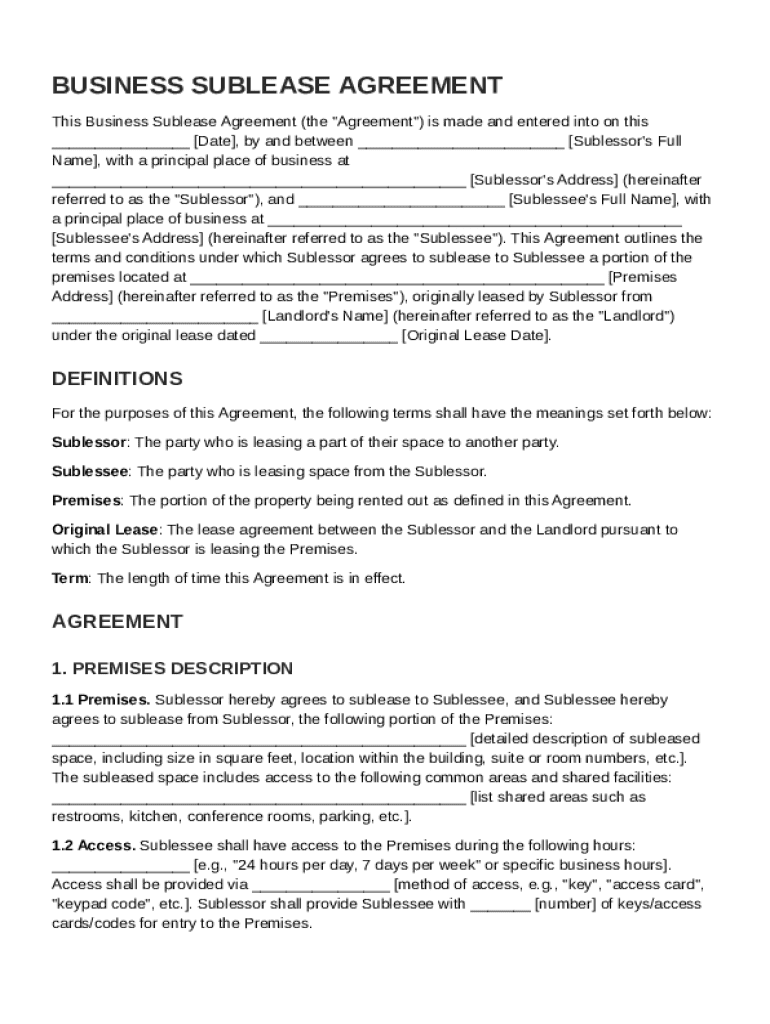







Definition and Meaning
A Business Sublease Agreement Template is a legal document used when a current tenant (sublessor) decides to lease out a part or the entirety of their leased commercial property to another party (sublessee). This template outlines the terms and conditions under which the sublessee will occupy the premises, providing a structured framework for both parties to understand their rights and responsibilities during the sublease period.
Key Features of the Agreement
- Premises Description: Clearly outlines the portion of the property covered by the sublease.
- Term Details: Specifies the start and end dates of the sublease, ensuring clarity on the duration.
- Rent and Payment Terms: Details the payment schedule and amounts the sublessee is expected to fulfill.
- Security Deposit: Highlights the required deposit and conditions for its return.
Importance of Understanding Terminology
The agreement uses precise legal language to prevent ambiguities. Terms like "Sublessor" and "Sublessee" need to be fully understood to avoid misinterpretations and ensure compliance with state laws.
How to Use the Business Sublease Agreement Template
Using a template for a business sublease agreement simplifies the subleasing process and ensures all necessary legal aspects are covered.
Steps to Utilize the Template
- Download and Review: Obtain the template and thoroughly read through each section to familiarize yourself with the terms.
- Customize the Template: Fill in specific details like party names, property address, and rent details. Add any additional clauses relevant to your specific circumstances.
- Seek Legal Advice: It is often wise to consult with a legal expert to review the customized agreement to ensure compliance with state laws and to address any particular concerns.
Tailoring the Template for Specific Needs
Customize sections to reflect unique conditions or requirements not covered in the standard template. This could include specific maintenance responsibilities or other commitments unique to the subleased space.
Steps to Complete the Business Sublease Agreement Template
Completing the Business Sublease Agreement Template involves careful attention to detail and an understanding of each section's significance.
Step-by-Step Completion Process
- Identify Parties: Clearly state the names and contact information of both the sublessor and sublessee.
- Describe the Premises: Include detailed descriptions of the property being subleased, including physical boundaries within the property.
- Input Lease Terms: Specify the agreed-upon length of the sublease, including start and end dates.
- Set Rental Terms: Outline the rental amount, due dates, and accepted payment methods.
- Outline Security Deposit Details: Include the deposit amount, conditions for deductions, and return procedures.
- Include Use of Premises: Define the acceptable uses of the property to avoid potential conflicts.
- Legal Assurance: Both parties should sign the document, making it legally binding.
Ensuring Legality and Clarity
Accurately completing each section ensures the agreement is enforceable and prevents potential disputes down the line. Cross-reference with the primary lease to ensure compatibility with the landlord’s permissions.
Key Elements of the Business Sublease Agreement Template
A well-structured sublease agreement comprises several key components to cover all critical aspects of the subleasing arrangement.
Essential Clauses
- Premises Details: Including layout or specific area within the existing lease.
- Sublease Duration: Stipulating the precise start and end dates, including provisions for renewal or early termination.
- Rent Obligations: Defining payment amounts, frequency, and methods.
- Security Deposits: Conditions for usage and return, including any interest procedures.
- Permitted Use: Clearly outlining permissible activities within the subleased area.
Additional Considerations
Include clauses related to:
- Default Conditions: Consequences of non-compliance with terms.
- Insurance Requirements: What insurance each party must hold.
- Maintenance and Repairs: Responsibilities of each party concerning upkeep of the property.
Who Typically Uses the Business Sublease Agreement Template
Various business types and organizations can find the Business Sublease Agreement Template beneficial under specific circumstances.


Common Users
- Small Business Owners: Those who rent larger spaces than needed and wish to mitigate costs.
- Start-ups and Entrepreneurs: When seeking affordable co-working spaces.
- Larger Corporations: That have outgrown their current lease but want to maintain the property partly in use.

Versatility Across Industries
Applicable in various sectors such as retail, office space, or restaurants, adapting to businesses with overlapping requirements for commercial premises.
Legal Use of the Business Sublease Agreement Template
Legally compliant use of the Business Sublease Agreement Template ensures protection and clarity for both parties involved.
Compliance with Law
- State Regulations: Each state in the U.S. may have unique regulations governing subleasing; ensure that the agreement adheres to local laws.
- Primary Lease Compatibility: Verify that the sublease terms do not conflict with the primary lease agreement held with the landlord.
- Legal Review: Having the completed draft reviewed by an attorney familiar with local real estate laws can prevent future disputes.
Enforceability
After both parties sign the agreement, it becomes legally binding and enforceable, safeguarding each party's rights under the agreed terms.
State-Specific Rules for the Business Sublease Agreement Template
State laws can significantly affect the drafting and enforcement of sublease agreements. Understanding variable state regulations ensures proper compliance.
State Variability
- Different Legal Practices: States like California or New York may have specific tenant/landlord laws affecting subleases.
- Required Disclosures: Some states require explicit disclosures or specific language to be included in subleasing agreements.
Tailoring Agreements to State Requirements
Different states may have divergent requirements regarding:
- Deposit Handling: Some states may regulate how and when deposits are returned.
- Notice Requirements: The amount of notice for lease termination may vary.
Who Issues the Form
This template is generally not issued by any central authority but is a tool that can be utilized by parties in private leasing agreements.
Source of the Template
- Legal Websites and Services: Typically available through legal documentation service providers.
- Independent Preparation: Businesses can also tailor general templates to suit their specific sublease needs.




