






Definition and Meaning
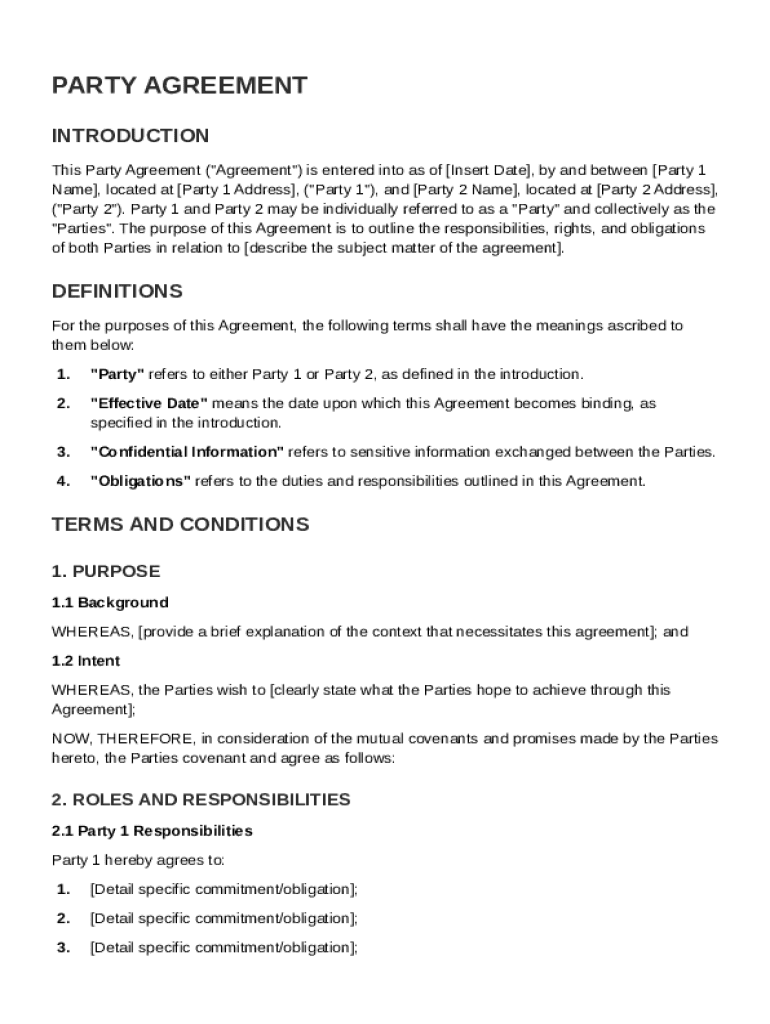
A Party Agreement Template serves as a foundational document outlining the rights and obligations of two or more parties entering into a legally binding arrangement. It acts as a standardized framework, ensuring that each party clearly understands their roles, responsibilities, payment terms, and other essential conditions. This template not only defines key legal terms but also sets the groundwork for how any potential disputes may be addressed, often including clauses on confidentiality, governing law, and termination conditions. By using a Party Agreement Template, parties can streamline the process of contract creation, ensuring all legal bases are covered without drafting a unique document from scratch each time.
Who Typically Uses the Party Agreement Template
Party Agreement Templates are utilized by various individuals and entities, reflecting their diverse applicability across different fields. Small businesses and large corporations use these templates to structure partnerships, client engagements, and vendor relationships. Freelancers and independent contractors may also rely on these templates to formalize agreements with clients, ensuring clarity about deliverables, timelines, and payment schedules. Additionally, individuals entering personal or informal arrangements, such as event planning, may find these templates beneficial for defining expectations and responsibilities. By utilizing a template, parties of all sizes and industries can ensure their agreements are clear and legally sound.


Key Elements of the Party Agreement Template
The Party Agreement Template typically includes several critical components designed to ensure clarity and legal enforceability:
- Parties Involved: Clearly identifies all parties entering the agreement, including legal names and addresses.
- Scope of Work or Services: Outlines what each party will contribute or perform, ensuring mutual understanding of responsibilities.
- Payment Terms: Specifies the amount, method, and schedule of payments, along with any invoicing procedures.
- Confidentiality Clauses: Protects sensitive information shared between parties, often including non-disclosure agreements.
- Dispute Resolution: Details the process for addressing disputes, such as mediation or arbitration, before pursuing legal action.
- Termination Conditions: Defines conditions under which the agreement may be terminated by either party.
Steps to Complete the Party Agreement Template
- Gather Information: Before completing a Party Agreement Template, collect all relevant information about the parties involved, the scope of work, and any legal requirements.
- Fill in Party Details: Enter the names and contact details of all parties involved in the agreement.
- Define Scope of Work: Clearly outline the duties and responsibilities of each party to avoid misunderstandings.
- Specify Payment Terms: Detail the payment structure, including amounts, due dates, and acceptable payment methods.
- Include Confidentiality Provisions: If applicable, add clauses to protect any confidential information exchanged during the agreement.
- Outline Dispute Resolution: Describe the process for resolving disputes, specifying procedures such as negotiation or arbitration.
- Review and Sign: Once completed, each party should review the agreement thoroughly before signing to ensure all terms are mutually agreed upon.
Legal Use of the Party Agreement Template
To ensure the Party Agreement Template is legally enforceable, it must comply with relevant laws and regulations. This includes using clear and unambiguous language to describe the terms of the agreement. Parties should consider the application of state-specific laws that might impact enforceability, such as discrepancies in governance law or unique business statutes. Furthermore, a representative with the authority to bind each party should sign the document. To safeguard against future disputes, parties may also wish to obtain legal counsel to review the agreement.
Software Compatibility for the Party Agreement Template
When working with Party Agreement Templates, it's crucial to select a platform that supports multiple file formats and integrates smoothly with existing software. Platforms like DocHub offer compatibility with various file types, such as PDF, DOC, and more. These templates can be edited, signed, and shared seamlessly online, facilitating efficient collaboration without the need for complex software installations. The digital nature of these templates ensures that businesses can maintain flexibility and efficiency in their document management processes.
State-Specific Rules for the Party Agreement Template
The enforceability of a Party Agreement Template can vary significantly based on state-specific rules and regulations. Different jurisdictions may have unique requirements related to agreements, such as the necessity for witness signatures or notary acknowledgments. Additionally, variations in state law can influence key aspects of the agreement, including the determination of jurisdiction in case of disputes. It is essential for parties to familiarize themselves with the laws governing contract formation and execution within their respective states to ensure compliance and avoid potential legal pitfalls.
Versions or Alternatives to the Party Agreement Template
Depending on the nature of the agreement and specific needs, there might be various versions or alternatives to standard Party Agreement Templates. For contracts requiring highly specific terms, a customized version tailored to meet unique requirements may be more appropriate. Alternatively, industry-specific agreement templates, such as those for software development or creative services, offer targeted clauses addressing common concerns within those sectors. Exploring different template options allows parties to choose the one that best meets their needs, ensuring that every critical aspect of their agreement is addressed.