
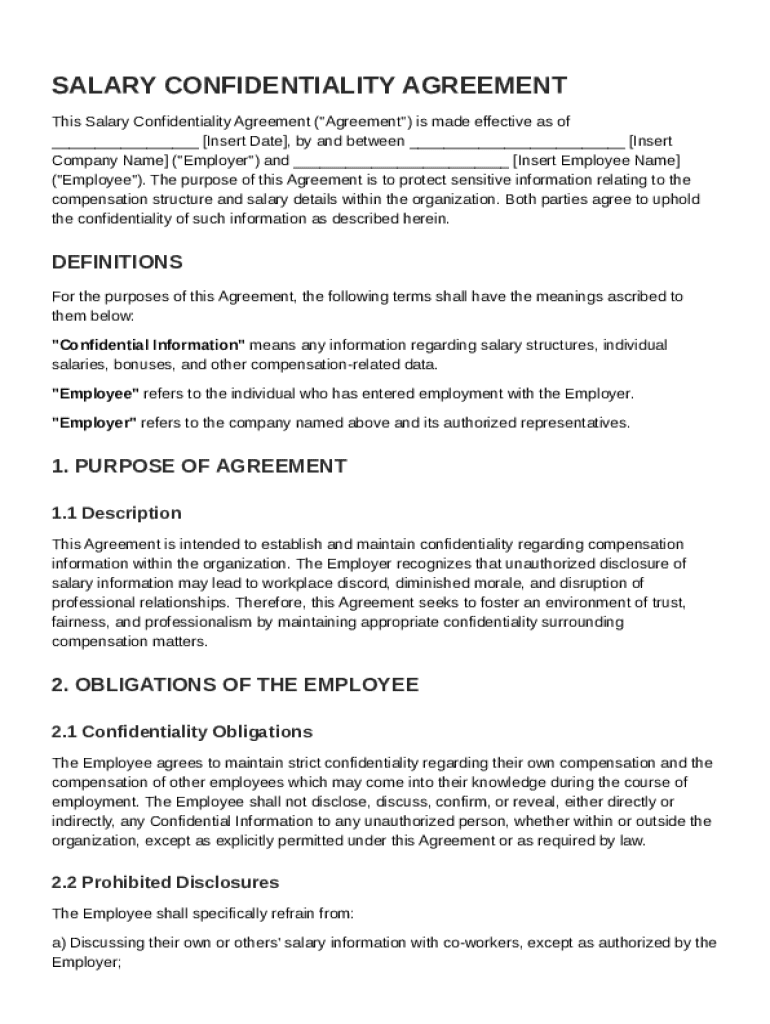







Definition and Meaning
A Salary Confidentiality Agreement Template is a legally binding document that outlines the terms and conditions under which salary and compensation information must be kept confidential within an organization. This template serves as a foundation for creating specific agreements tailored to the needs of employers and employees, ensuring that sensitive financial information is protected. The agreement includes definitions of what constitutes confidential information, detailing both the obligations and rights of the parties involved. Examples of confidential information under such an agreement might include base salary, bonuses, equity compensation, and benefits packages. This tool is designed to prevent unauthorized disclosure that could lead to workplace disputes or competitive disadvantage.
Key Elements of the Salary Confidentiality Agreement Template
The Salary Confidentiality Agreement Template contains several critical components that define its scope and enforceability. Key elements include:
- Confidentiality Obligations: This section details the employee's duty to refrain from sharing salary information with unauthorized individuals. It may outline what actions an employer can take if these obligations are breached.
- Exceptions to Confidentiality: Not all disclosures are prohibited. For example, employees may share salary information with legal advisors or as required by law. This section clarifies such exceptions.
- Consequences of Breach: Specifies the ramifications for failing to adhere to the confidentiality terms, which might include disciplinary action, termination of employment, or legal repercussions.
- Duration of Agreement: Indicates how long the confidentiality obligations last, which could extend beyond the period of employment.
- Governing Law: Mentions the legal jurisdiction that governs the agreement, ensuring that disputes are resolved under specific legal frameworks.
Steps to Complete the Salary Confidentiality Agreement Template
Filling out a Salary Confidentiality Agreement Template requires careful attention to detail to ensure all relevant information is accurately recorded. Here is a step-by-step guide:
-
Enter Party Information: Start by inputting the names and contact details of both the employer (or representative) and the employee.
-
Define Confidential Information: Clearly specify what salary and compensation details are considered confidential. This may include listing types of compensation that need to be protected.
-
Detail Obligations and Exceptions: Ensure that the obligations of the employee and any exceptions are explicitly stated to avoid ambiguity.
-
Outline Penalties for Breach: Clearly define the consequences if the employee does not adhere to the confidentiality terms.
-
Choose Governing Law: Select the appropriate jurisdiction that will enforce the agreement and resolve any legal disputes.
-
Review and Sign: Both parties should carefully review the agreement, make necessary amendments, and sign the document. Electronic signatures may be used if permitted.
-
Distribute Copies: Provide a signed copy of the agreement to all parties involved for their records.
Legal Use of the Salary Confidentiality Agreement Template
In the United States, salary confidentiality agreements are widely used across various industries to safeguard employers' sensitive financial information. These agreements are enforceable provided they comply with relevant state and federal laws. Employers use them to mitigate the risks associated with potential salary disclosure, which can affect competitiveness and employee morale.
The legal framework surrounding such agreements often requires them to be reasonable in scope and duration. Courts might scrutinize agreements for fairness and overbreadth, rejecting clauses perceived as restrictive on employees’ rights unduly. For example, any clause that impedes an employee’s right to discuss working conditions with union representatives may be unenforceable under the National Labor Relations Act.
Importance of Using a Salary Confidentiality Agreement Template
Using a Salary Confidentiality Agreement Template is essential for several reasons:
- Protection of Sensitive Information: It ensures that salary-related data is not disclosed unauthorizedly, protecting the employer's competitive advantage.
- Promoting Fairness: By limiting who can access salary information, it helps manage expectations and perceptions of fairness within the workplace.
- Legal Compliance: It helps ensure that information handling complies with legal standards and employment law.
- Dispute Resolution: Establishes a clear framework for action if disagreements arise, reducing the likelihood of litigation.
State-Specific Rules for the Salary Confidentiality Agreement Template
State laws in the U.S. can vary widely concerning salary confidentiality agreements. For example:
- California: Employers cannot prohibit the discussion of wages, as per the California Labor Code Section 1197.5, which aims to address wage disparity among employees.
- New York: While salary discussions are allowed, confidentiality agreements can still protect other forms of compensation from disclosure.
- Texas: Agreements must clearly outline confidentiality terms while allowing for exceptions under state labor codes.
Employers need to tailor the agreement to comply with state laws, as these can affect enforceability and legal obligations.
Practical Examples of Using the Salary Confidentiality Agreement Template
Consider the case of a tech firm looking to protect the compensation packages of its high-performing sales team. By implementing a Salary Confidentiality Agreement, the firm ensures that employees cannot disclose whether their incentive packages include stock options, which may be a sensitive competitive detail.
In contrast, a healthcare provider may use such agreements to ensure that salaries for specialists remain confidential, preventing any potential poaching by competitors who offer slightly better terms.
Both examples highlight the strategic importance of keeping particular salary components confidential to maintain an organization’s competitive edge.
Differences Between Digital and Paper Versions
Today's digital solutions, like DocHub, offer benefits over traditional paper-based confidentiality agreements:
- Streamlined Processing: A digital version allows for immediate editing, sharing, and signing without the need for printing or physical storage.
- Enhanced Security: Online platforms can offer encryption and authentication features unavailable with paper copies.
- Accessibility and Convenience: Digital versions can be accessed on multiple devices, enabling remote completion and review by parties in different locations.
However, some organizations might still prefer or require physical copies for specific regulatory reasons or personal preference.




