






Definition and Meaning
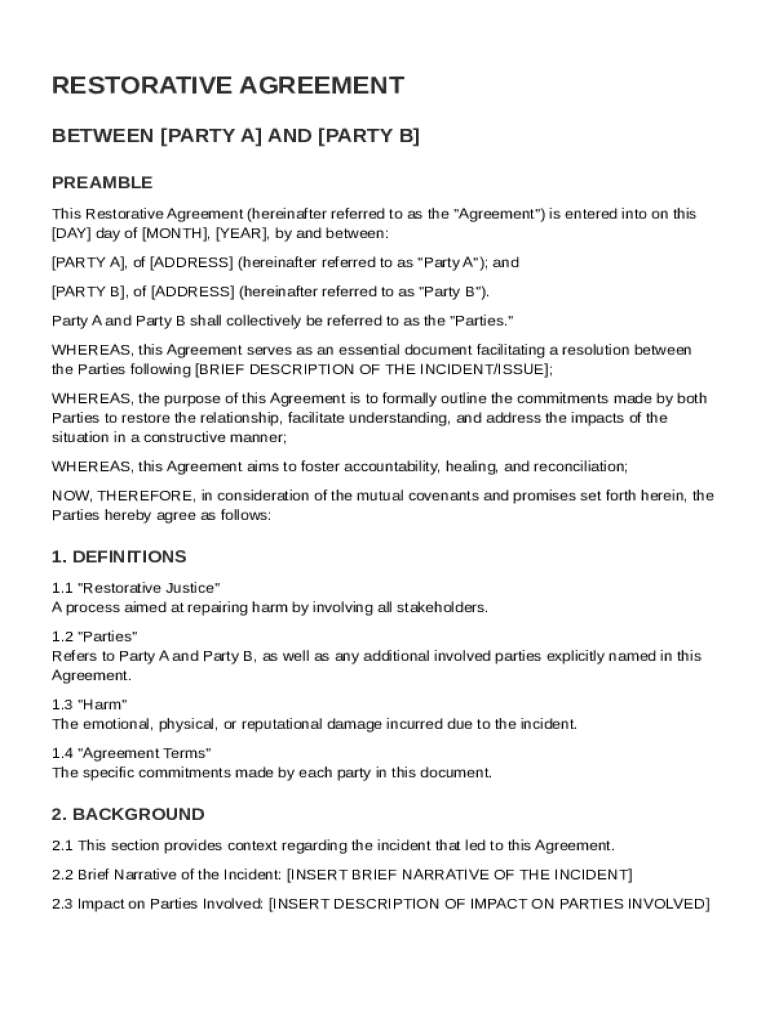
A Restorative Agreement Template is a formal document utilized to resolve conflicts or incidents, focusing on accountability, healing, and reconciliation between the involved parties. It typically involves commitments from all parties to restore relationships, promote understanding, and establish a framework for rectifying the situation. Such an agreement can be crucial in contexts like workplaces, educational institutions, or community settings where restoration of harmony is a priority.
Key Elements of the Restorative Agreement Template
The Restorative Agreement Template generally comprises several critical elements that ensure a comprehensive approach to conflict resolution:
- Definitions: Clarifies terms specific to the incident and agreement to avoid misunderstandings.
- Background Information: Provides context for the incident, including key events and participants.
- Acknowledgments: Includes statements from each party acknowledging their role and perspective.
- Commitments: Details specific actions each party agrees to undertake as part of the resolution.
- Restitution Terms: Outlines any compensatory actions or reparations agreed upon.
- Follow-up Procedures: Establishes schedules for monitoring compliance and effectiveness.
- Confidentiality Clauses: Protects the privacy of involved parties and the details of the agreement.
- Dispute Resolution Methods: Describes steps to be taken if the agreement is breached or disputed.
- Final Provisions: Concludes with signatures and a date to confirm the binding nature of the agreement.
Steps to Complete the Restorative Agreement Template
- Gather Initial Details: Collect information about the incident, including a timeline of events and those involved.
- Define Terms and Conditions: Agree on the definitions of key terms to ensure clarity.
- Write Acknowledgments: Each party drafts their acknowledgment of the incident and their involvement.
- Establish Commitments: Parties outline their specific commitments towards resolving the issue.
- Define Restitution: Agree on any compensation or reparative measures needed.
- Set Follow-Up Procedures: Schedule regular check-ins or evaluations to monitor progress.
- Include Confidentiality: Draft clauses to maintain the privacy of discussions and terms.
- Outline Dispute Resolution: Prepare methods for addressing any breaches or disagreements.
- Finalize and Sign: Participants sign the document to formalize their agreement.
Legal Use of the Restorative Agreement Template
In the U.S., Restorative Agreements are often used in educational, corporate, and legal settings to mediate disputes without resorting to litigation. They are designed to be legally binding when all parties consent to the terms voluntarily. Legal enforceability can vary by state, and it's crucial to ensure compliance with any local laws that may affect the agreement's standing.
Who Typically Uses the Restorative Agreement Template
Restorative Agreements are utilized by a diverse range of individuals and organizations, including:
- Educational Institutions: For conflict resolution among students or staff.
- Workplaces: To address interpersonal conflicts and promote a harmonious work environment.
- Community Groups: In mediating community disputes and fostering collective healing.
- Legal Entities: As an alternative method to resolve issues without formal court proceedings.


Important Terms Related to Restorative Agreement Template
Understanding specific terms within the agreement is vital for accurate application:
- Accountability: Acceptance of responsibility by each party for their actions.
- Healing: Efforts made to reconcile differences and promote mutual understanding.
- Reconciliation: Actions aimed at restoring previously damaged relationships.
- Confidentiality: Assurance that information shared within the agreement remains private.
Real-World Examples of Using the Restorative Agreement Template
Restorative Agreements have been successfully implemented in several real-world scenarios:
- School Bullying: Two students involved in a bullying incident agreed to cooperate on a community service project, learn about empathy, and jointly issue an apology.
- Workplace Conflict: Colleagues with persistent disagreements set terms to improve communication and undergo conflict resolution training.
- Community Dispute: Neighbors in conflict over property lines reached a mutual understanding through mediation, resulting in shared guidelines for property use.
Digital vs. Paper Version of the Restorative Agreement Template
With the advance of technology, the Restorative Agreement Template is available both digitally and in paper format:
- Digital Version: Offers ease of access, allows real-time collaboration, and provides a secure method to store and share the document online. Platforms like DocHub can aid in editing, signing, and managing these agreements efficiently.
- Paper Version: May be preferred for a tangible, hard-copy record of the agreement, suitable for parties less familiar with digital tools. It ensures accessibility where digital devices are not available.
Understanding these various facets of the Restorative Agreement Template can help users effectively employ it in resolving conflicts and restoring trust and relationships.