






Definition and Meaning
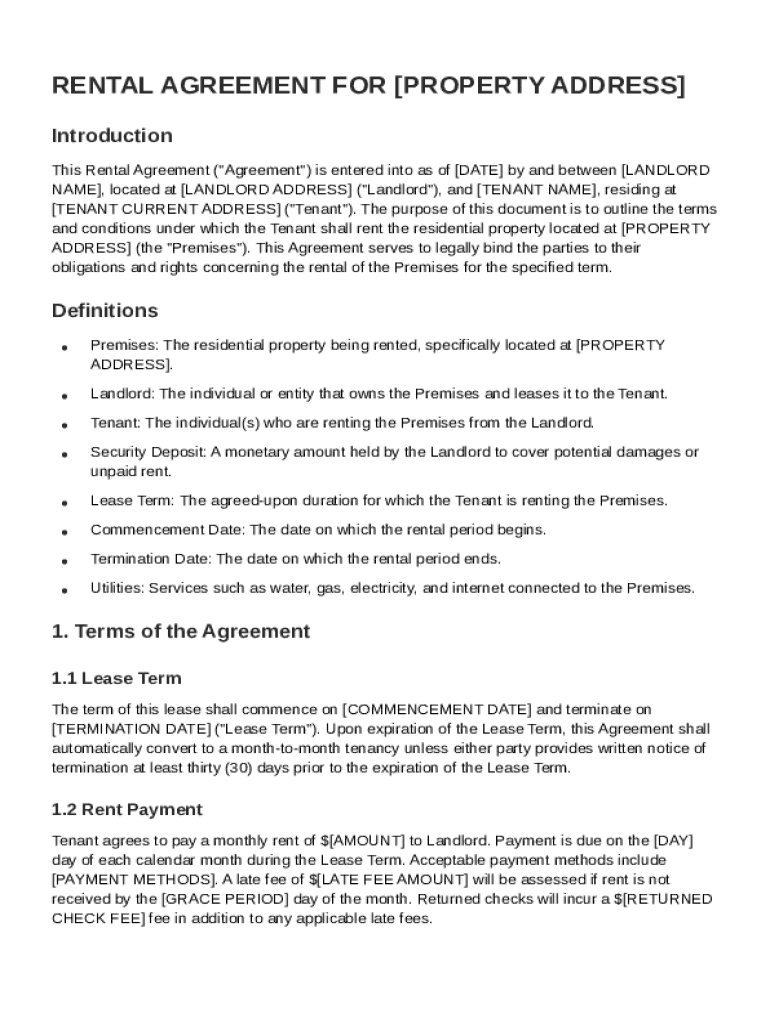
A Rental for House Agreement Template is a standardized document that outlines the terms and conditions for renting a residential property. It serves as a binding contract between the landlord and tenant, detailing the mutual obligations, rights, and responsibilities of both parties. This agreement includes essential components such as lease duration, rent amount, security deposits, maintenance duties, and rules for using the premises. With clearly defined terms, both landlords and tenants can minimize potential disputes and misunderstandings, fostering a harmonious rental arrangement.
Key Elements of the Rental for House Agreement Template
A comprehensive Rental for House Agreement typically includes several fundamental elements:
- Lease Duration: Clearly defines the start and end dates of the rental period.
- Rent Payment Details: Specifies the amount, due date, and acceptable payment methods.
- Security Deposit Information: Outlines the amount required, conditions for its return, and potential deductions.
- Maintenance Responsibilities: Details duties related to property upkeep, including who is responsible for repairs.
- Use of Premises: Sets rules on how the property can be used, including restrictions on subletting or renovations.
These components ensure that both parties are aware of their roles and responsibilities, helping to prevent disputes.
How to Use the Rental for House Agreement Template
Using the Rental for House Agreement Template involves several steps:
- Customization: Tailor the template to fit the specific rental situation, adjusting terms like rental duration and rent amount as needed.
- Review: Carefully go over the agreement with all parties involved to ensure clarity and mutual understanding.
- Signatures: Once finalized, have both the landlord and tenant sign the document to confirm their acceptance of the terms.
- Secure Storage: Keep a copy of the signed agreement in a secure location for future reference.
These steps help in crafting a clear, legally solid agreement tailored to the specific needs of the rental situation.
Steps to Complete the Rental for House Agreement Template
Completing a Rental for House Agreement Template involves several crucial steps:
- Fill in Basic Information: Include all necessary personal and property details in the agreement.
- Specify Rent and Deposits: Enter the rent amount, due dates, and any deposits required.
- Outline Maintenance Responsibilities: Clearly delineate who is responsible for property upkeep.
- Set Usage Restrictions: Define permissible uses of the property and any restrictions.
- Review Legal Terms: Ensure that all terms comply with local laws and regulations.
- Gather Signatures: Have both parties sign and date the agreement to validate its terms.
These guided steps ensure that the agreement is thorough and serves its intended purpose effectively.
Legal Use of the Rental for House Agreement Template
The Rental for House Agreement Template must adhere to applicable legal standards:
- Compliance with Local Laws: Ensure the agreement respects federal, state, and local rental laws.
- Fair Housing Compliance: Avoid language that discriminates against potential tenants based on race, gender, religion, etc.
- Disclosure Requirements: Fulfill legal obligations to disclose specific property conditions or hazards.
Adhering to these legal criteria is crucial for ensuring the validity and enforceability of the rental agreement.
Who Typically Uses the Rental for House Agreement Template
Various parties may use this template, including:
- Private Landlords: Individuals renting out a single property or several units.
- Real Estate Firms: Companies managing multiple rental properties.
- Tenants: Individuals looking to document their rental arrangement.
Using this template helps standardize agreements and ensures all necessary legal protections are in place for both parties involved.


State-Specific Rules for the Rental for House Agreement Template
Different states have unique regulations governing rental agreements:
- Notice Requirements: Varying advance notice periods for termination or rent changes.
- Security Deposit Limits: State-specific caps on deposit amounts and timelines for return.
- Disclosure Mandates: Specific disclosures about property conditions required in certain states.
Understanding these state-specific rules is critical to ensure that the rental agreement is compliant and legally sound.
Versions or Alternatives to the Rental for House Agreement Template
Alternatives to this template may include:
- Commercial Lease Agreements: For non-residential properties like retail or office spaces.
- Month-to-Month Agreements: More flexible arrangements without a fixed term.
- Sublease Agreements: Allowing tenants to lease part or all of their rental to another party.
Exploring different document versions can be beneficial for landlords and tenants looking for agreements tailored to specific situations or needs.