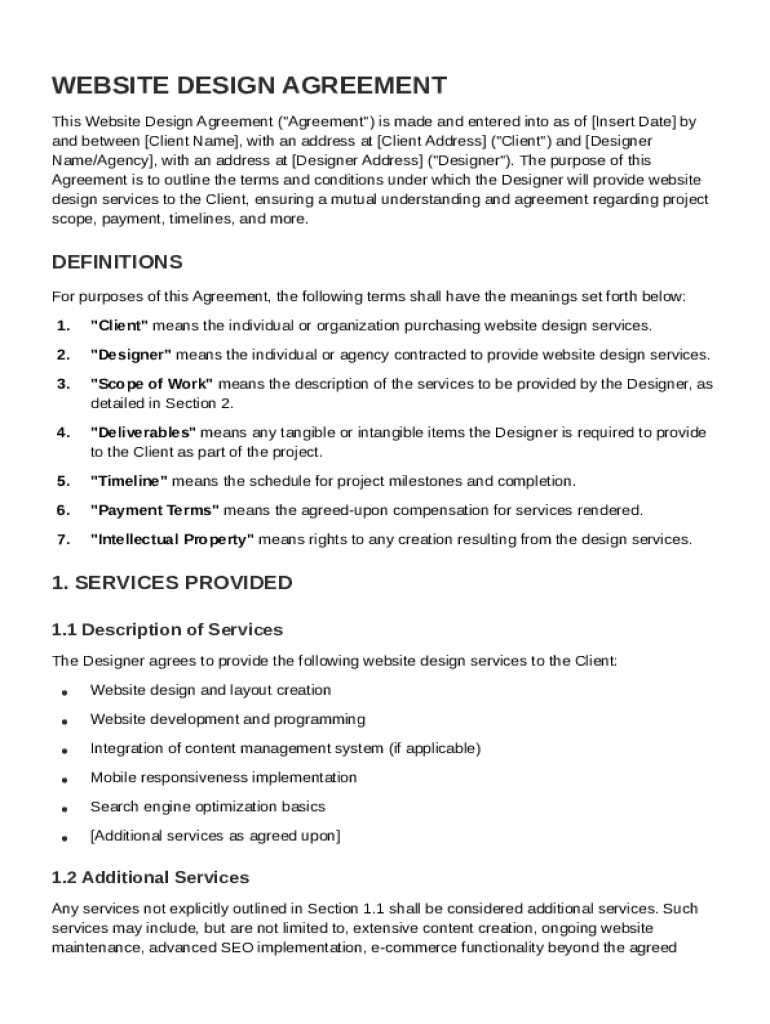







Definition & Meaning
A Website Design Agreement Template is a legal document that outlines the terms and conditions agreed upon by a Client and a Designer for web design services. This template serves as a foundational tool that defines the scope of work, payment structures, deliverables, and deadlines. By providing a clear and concise framework, it helps ensure that both parties have a shared understanding of their duties and expectations. Typical elements include project objectives, intellectual property rights, and confidentiality clauses, each tailored to mitigate potential disputes by establishing clear guidelines for both parties.
Common Scenarios for Usage
- Startups engaging a web designer for their initial website.
- Businesses updating or redesigning an existing website.
- Freelancers and agencies offering web design services.
These scenarios underline the necessity of a formal agreement to secure both parties' interests and clarify the business relationship.
Key Elements of the Website Design Agreement Template
The template encompasses several critical sections that are integral to the design process and collaboration between a Client and a Designer.
Project Scope and Deliverables
- Scope of Services: Details specific tasks and responsibilities, such as UI/UX design, coding, and content creation.
- Deliverables: Clearly lists items to be delivered, like wireframes, prototypes, final designs, and source files.
Payment Terms
- Fee Structure: Outlines payment methods, schedules, and due dates.
- Milestones: Sets up stages where partial payments might be due once corresponding deliverables are presented and accepted.
Intellectual Property Rights
- Specifies who holds the ownership of the final design and any associated materials, preventing future disputes over usage rights.
Steps to Complete the Website Design Agreement Template
Completing the Website Design Agreement Template involves several detailed steps to ensure accuracy and comprehensiveness.
- Identify Both Parties: Include full legal names and contact information for both the Client and the Designer.
- Define the Project Scope: Explicitly outline the nature and scope of the design services to avoid misunderstandings.
- Establish Timelines: Set clear deadlines for each phase of the project to manage expectations and workflow.
- Set Payment Structures: Detail how and when payments will be made, including any upfront deposits or final payments.
- Include Terms of Termination: Specify conditions under which the agreement can be terminated by either party.
Edge Cases
- Amendments: Address procedures for modifying the agreement due to changes in project scope or unforeseen circumstances.
How to Use the Website Design Agreement Template
The utility of this template extends to various contexts and user types, all aiming to streamline the legal formalities of web design services.
Use Cases
- Freelance Designers: Protect their workflows and ensure timely payments.
- Business Entities: Formalize dealings with external design contractors to safeguard company interests.
Digital Completion
Using platforms like DocHub, users can seamlessly import, edit, and sign the template digitally, allowing for efficient collaboration and record-keeping. This flexibility supports quick alterations and secure document storage.
Important Terms Related to Website Design Agreement Template
To effectively navigate and utilize the Website Design Agreement Template, understanding key legal and technical terms is essential:
- Confidentiality Clause: Keeps sensitive design and business information private and restricts its disclosure.
- Force Majeure: Addresses unforeseen events that could prevent either party from fulfilling their contractual duties.
Practical Examples
- Confidentiality: Protects proprietary business processes disclosed during the project.
- Force Majeure: Covers situations like natural disasters or large-scale internet outages influencing project progress.
Why You Should Use the Website Design Agreement Template
Implementing a Website Design Agreement Template is vital for establishing clarity and security in business relationships, particularly within the design industry.
Benefits
- Risk Mitigation: Minimizes the potential for disputes by clearly outlining responsibilities and expectations.
- Professionalism: Enhances the professional stature of designers by employing comprehensive documentation.
- Time Efficiency: Streamlines the kickoff process by providing a reusable framework.
Who Typically Uses the Website Design Agreement Template
This template is employed by a range of individuals and entities that require detailed agreements for web design services.


Primary Users
- Freelancers and Independent Designers: Facilitate business transactions with new or repeat clients.
- Design Firms and Agencies: Use it to standardize contracts across multiple projects and clients.
- Corporate Clients: Secure agreements with clear expectations when engaging design services for internal projects.
Real-World Application
A startup may engage a freelancer using this template to ensure both parties are aligned on deliverables and timelines, safeguarding the project against miscommunication and ensuring smooth delivery.