






Definition and Meaning
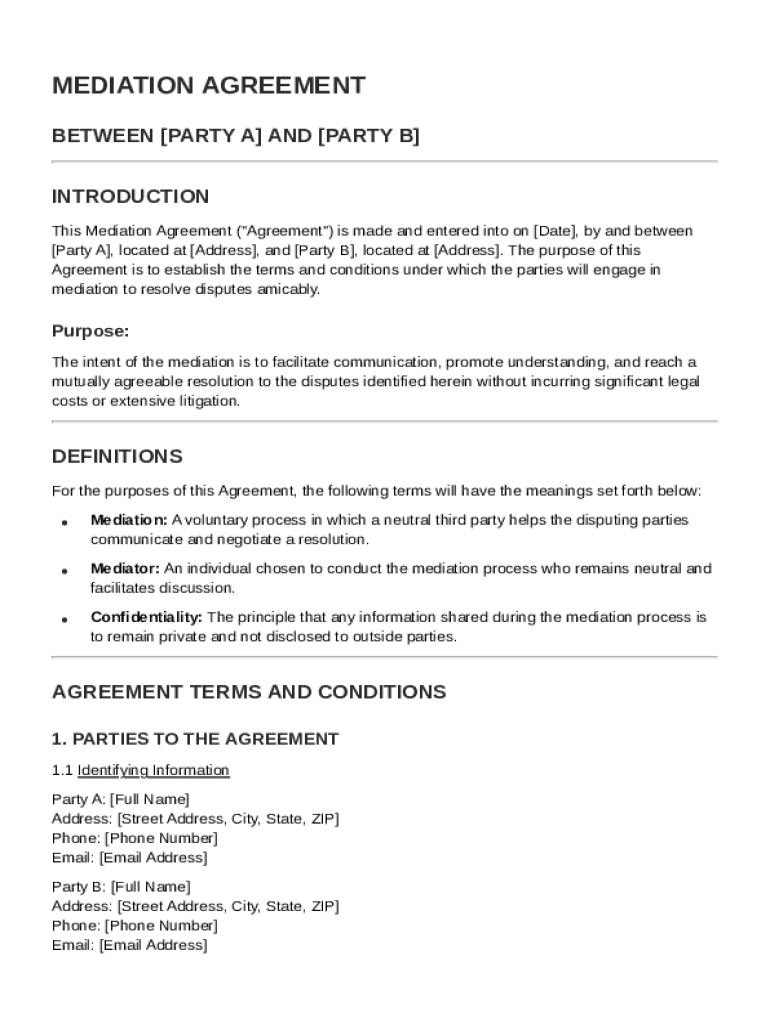
A Mediation Contract Template serves as a formal agreement outlining the terms and conditions for engaging in mediation to resolve disputes amicably between two or more parties, typically referred to as Party A and Party B. It is a structured document used to formalize the engagement of a mediator who facilitates negotiations and dialogues between the disputing entities. The template encompasses key concepts like "mediation," "mediator," and "confidentiality," ensuring that all parties understand the process and the role of each participant.
Mediation is a voluntary and confidential process where a neutral third party, the mediator, assists disputants in reaching a mutually agreeable settlement. This document also covers jurisdictional governance, typically aligning with the laws of a specified jurisdiction in the United States. Such contracts are essential for clarifying expectations, preventing future conflicts, and establishing a formal basis for conducting mediation sessions.
Key Elements of the Mediation Contract Template
The Mediation Contract Template includes several critical elements designed to ensure clarity and efficiency in the mediation process:
-
Mediator Selection: Detailed criteria and procedures for selecting a mediator, ensuring an unbiased and skilled facilitator.
-
Confidentiality Clauses: An emphasis on protecting the privacy of communicated information during mediation, with confidentiality bounding both parties and the mediator.
-
Session Procedures: Outline of how sessions will be conducted, the expected number of sessions, timelines, and any logistical details.
-
Compensation and Fees: Specification of mediator fees, payment terms, and any additional costs involved in the mediation process.
-
Binding Resolutions: Conditions under which mediation outcomes are considered final and legally binding, or if they require further action to implement.
Steps to Complete the Mediation Contract Template
Completing the Mediation Contract Template involves several key steps to ensure its effectiveness and enforceability:
-
Gather Information: Collect essential details about each party involved, including contact information and dispute context.
-
Mediator Engagement: Agree upon a mediator who meets the specified selection criteria and outline the mediator's responsibilities.
-
Define Terms and Conditions: Clearly articulate the terms and conditions of mediation, focusing on confidentiality, session agendas, and decision-making authority.
-
Draft the Document: Use the collected information to fill out the template, ensuring all sections are complete and accurate.
-
Review and Revise: Conduct a thorough review with all parties to verify accuracy and comprehension. Revise as necessary to reflect mutual agreements.
-
Signatures: Obtain signatures from all parties and the mediator to formalize the contract, which activates the mediation process.
Important Terms Related to Mediation Contract Template
Understanding specific terms is crucial when dealing with mediation contracts:
-
Mediator: A neutral individual who facilitates communication and negotiation between disputing parties.
-
Confidentiality: A stipulation that details discussed within mediation remain private and cannot be shared without consent.
-
Jurisdiction: The legal authority under which the mediation contract is governed, usually influenced by the location of the parties involved.
-
Resolution Binding: Specifies whether agreements reached during mediation are enforceable or require additional legal proceedings.
Legal Use of the Mediation Contract Template
Legal validity is an important consideration for mediation contracts.
-
United States Compliance: The template complies with U.S. laws to ensure enforceability. It aligns with legal standards for mediation and adherence to relevant state laws.
-
Confidentiality Obligations: Strict adherence to confidentiality agreements is necessary to protect sensitive information and uphold ethical standards during mediation.
-
Legal Resolutions: The contract determines whether outcomes of mediation are binding, allowing for legal challenges or agreements as applicable.
Who Typically Uses the Mediation Contract Template
Mediation Contract Templates are commonly used by various entities:
-
Businesses: Companies seeking to resolve internal or external disputes without resorting to litigation engage in mediation agreements.
-
Individuals: People involved in personal disputes or civil matters may opt for mediation as a less adversarial alternative to court proceedings.
-
Legal Professionals: Attorneys and legal advisors often employ mediation contracts when representing clients in dispute resolution scenarios.
The diversity of users underscores the flexibility and utility of mediation as an effective dispute resolution tool that saves time and maintains relationships.


State-Specific Rules for the Mediation Contract Template
Variability in state laws affects how mediation contracts operate:
-
Jurisdictional Differences: Different states have distinct requirements for the enforceability of mediation agreements, emphasizing the need to tailor contracts accordingly.
-
License Requirements: Some states may have specific licensing requirements for mediators or additional steps for enforcing confidentiality agreements.
-
State Legislation: Understanding state-specific rules regarding mediation can aid in drafting a legally sound document that holds up in court.
Examples of Using the Mediation Contract Template
Real-world applications of mediation contracts illustrate their importance:
-
Workplace Disputes: Companies might use mediation to resolve conflicts between employees, avoiding escalation to formal grievances or legal action.
-
Family Law Cases: In scenarios such as divorce or child custody, mediation contracts can help parties reach an amicable agreement without the stress and cost of court.
-
Commercial Disagrrements: Businesses often use mediation to address contractual disputes with partners or vendors, allowing for continued collaboration post-resolution.
These examples demonstrate the versatility of mediation contracts in providing structured, non-confrontational dispute resolution across various contexts.