






Definition & Meaning
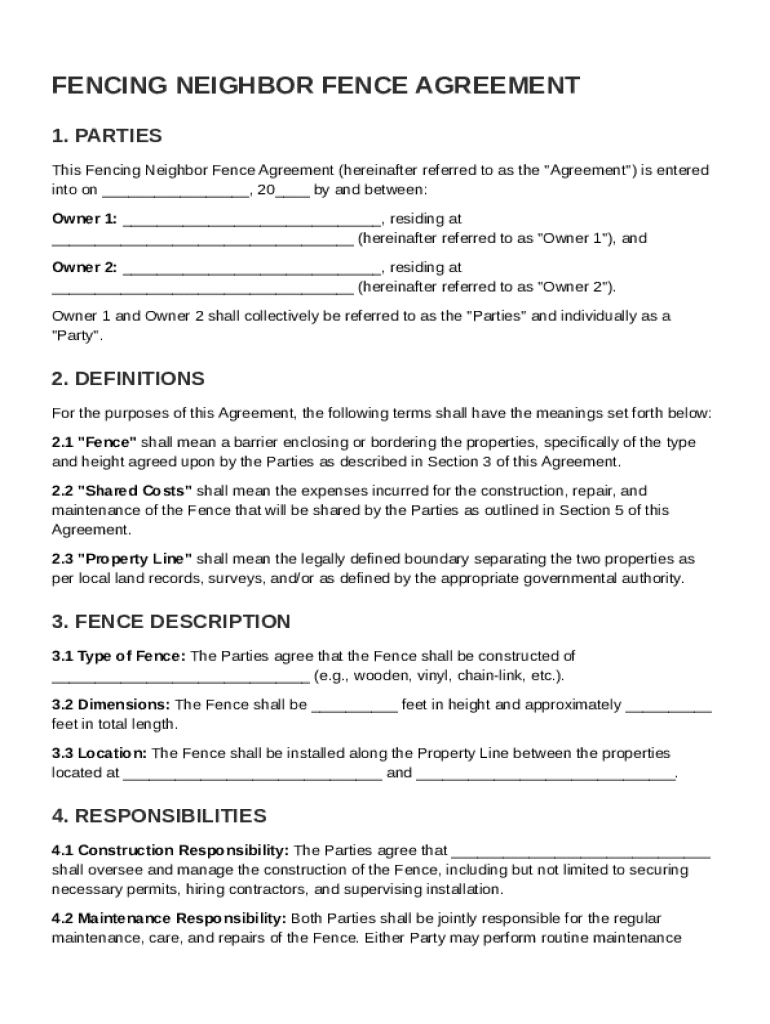
The Fencing Neighbor Fence Agreement Template is a legal document that outlines the responsibilities and obligations of neighboring property owners regarding the construction and maintenance of a shared boundary fence. This agreement is crucial in preventing disputes and ensures clarity over the roles and cost-sharing mechanisms involved in the fence installation and upkeep. It serves as a contract that both parties must adhere to, governed by applicable state laws, and clearly outlines the terms under which the fence will be managed.
Key Elements of the Fencing Neighbor Fence Agreement Template
The agreement includes several critical components:
- Definitions: Clear definitions of key terms like "property line," "maintenance," and "cost-sharing" ensure that both parties understand the responsibilities.
- Description of the Fence: Details regarding the type, dimensions, and materials of the fence to avoid any ambiguity.
- Construction and Maintenance Responsibilities: Specific roles each neighbor will play in the construction and ongoing maintenance of the fence.
- Cost-Sharing Arrangements: How costs will be split between the neighbors, including initial construction and future repairs.
- Timeline: Agreed-upon dates for the start and completion of the fence construction.
- Dispute Resolution: Mechanisms for resolving disagreements, often involving mediation or arbitration.
- Governing Law: The specific state laws that will govern the agreement.
How to Use the Fencing Neighbor Fence Agreement Template
To use the template effectively, follow these steps:
- Review Local Laws: Verify state and local regulations regarding shared fences to ensure compliance.
- Personalize the Template: Enter details specific to the property and agreement, such as names, addresses, fence specifications, and cost breakdown.
- Consult Legal Counsel: Although a template provides a foundation, legal advice ensures all nuances and local requirements are appropriately addressed.
- Discuss Terms: Both parties should openly discuss and agree on terms to prevent misunderstandings.
- Sign and Notarize: Finalize the agreement with signatures from both property owners. Some situations may require notarization for additional legal reinforcement.
- Maintain Copies: Each party should keep a signed copy for their records.
Important Terms Related to the Fencing Neighbor Fence Agreement Template
Several terms in the agreement are vital for ensuring clarity and effectiveness:
- Easement: The right of one property owner to use a portion of another’s land for a specific purpose, such as accessing the rear of a property.
- Encroachment: An intrusion onto a neighbor's property, which the agreement aims to prevent through clear boundary definitions.
- Lien: A legal claim against a property if a party fails to fulfill its financial obligations under the agreement.
- Settlement: The resolution process stipulated within the agreement, often involving third-party mediation.
State-Specific Rules for the Fencing Neighbor Fence Agreement Template
State laws can significantly impact the terms and enforceability of a fence agreement:
- California: Known for its Good Neighbor Fence Act, California mandates equitable cost-sharing between neighbors unless another agreement is reached.
- Texas: Typically follows the common law approach where neighbors split costs, but the agreement can specify otherwise.
- New York: Local zoning laws may dictate fence height and materials, making them important considerations in any agreement.
Why Use the Fencing Neighbor Fence Agreement Template
A formal agreement offers several benefits:
- Prevention of Disputes: Clearly laid out terms help prevent misunderstandings that could lead to legal conflict.
- Equitable Sharing of Costs and Responsibilities: Facilitates a fair distribution of financial and maintenance duties.
- Legal Protection: A signed agreement can be used as evidence in court if disputes arise.
- Clear Communication: Establishes expected behavior and promotes harmonious relationships between neighbors.
Who Typically Uses the Fencing Neighbor Fence Agreement Template
This template is typically used by:
- Residential Property Owners: Homeowners looking to share the physical and financial responsibility of a boundary fence with their neighbor.
- Landlords: Owners of rental properties needing to ensure fence upkeep without burdening tenants with complex decisions.
- Property Management Companies: Those managing multiple properties and looking to create standardized agreements across locations.


Legal Use of the Fencing Neighbor Fence Agreement Template
Legal considerations include:
- Binding Nature: Once signed, the agreement holds legal weight and can be enforced in court.
- Notarization Requirements: Varies by state, but notarization can add legitimacy and prevent challenges.
- Local Ordinances: Must ensure compliance with local building codes and restrictions related to fence installations.
Steps to Complete the Fencing Neighbor Fence Agreement Template
Completing the agreement involves:
- Gathering Information: Collect relevant details about the properties and parties involved.
- Drafting Terms: Outline responsibilities, cost-sharing, and construction timelines in detail.
- Review by Parties: Both neighbors must review and agree on the final draft.
- Signing: Both parties sign the document, with the potential for witness or notary involvement.
- Storage: Safely store copies of the signed agreement for reference and legal protection.
Through careful use of the Fencing Neighbor Fence Agreement Template, property owners can ensure a cooperative and legally sound approach to managing a shared boundary fence.