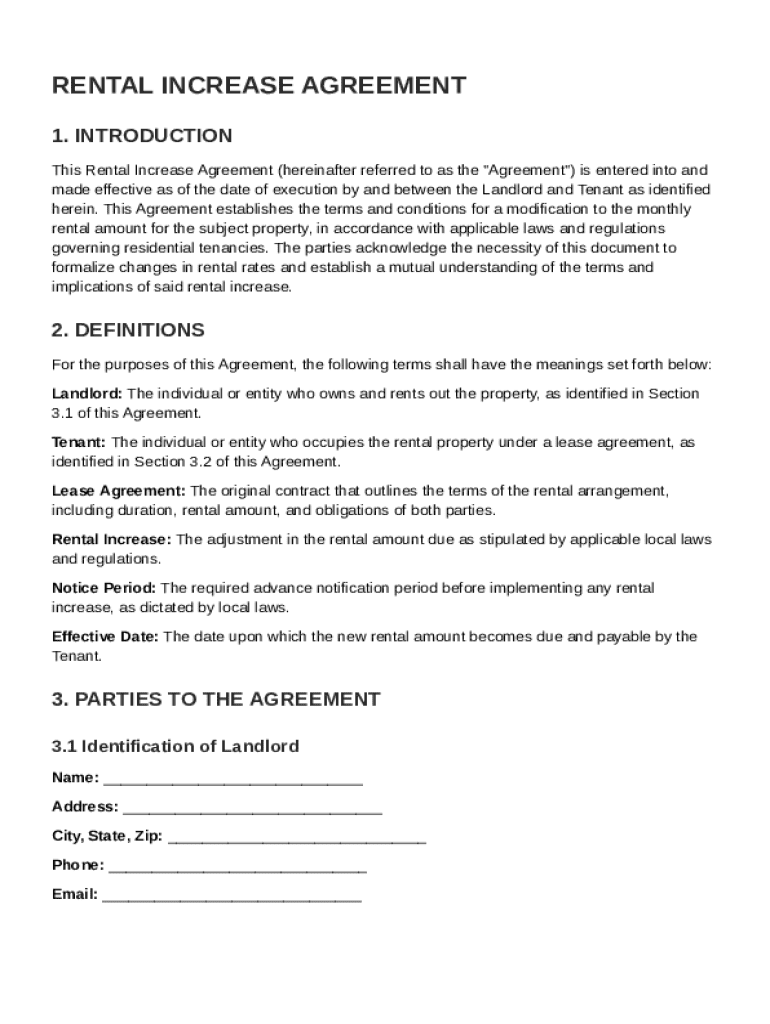







Definition and Scope of the Rental Increase Agreement Template
The Rental Increase Agreement Template is a formal document that delineates the modification of a rental amount agreed upon by both the landlord and tenant. This document provides clarity on the terms associated with the rent adjustment, ensuring both parties are on the same page. It typically includes detailed information such as the names of the involved parties, description of the rental property, and specifics of the existing lease agreement. By formalizing the increase, this agreement reduces the potential for misunderstandings or disputes.
Elements Typically Included
- Parties Involved: Names and contact information of the landlord and tenant.
- Property Details: Description and address of the rental property.
- Current Lease Information: Existing rent amount, terms, and duration.
- Proposed Increase: New rental amount and effective date.
- Justification: Reason for the rent increase.
- Notice Requirements: Timeline for when the notice was given in compliance with local laws.
How to Use the Rental Increase Agreement Template
Using the Rental Increase Agreement Template involves a structured approach to ensure all parties understand their rights and obligations. The document is a valuable tool for landlords to communicate rent changes formally and offers tenants a clear explanation of any adjustments.
Steps to Use the Template
- Review Current Lease: Verify current lease terms to ensure compliance with notice requirements.
- Communicate: Notify the tenant in advance about the intention to increase rent, providing reasons where applicable.
- Fill Out Template: Input all relevant information, including property details, parties involved, and the new rent amount.
- Signatures: Both landlord and tenant must sign the agreement to validate it.
- Distribute Copies: Ensure both parties receive a signed copy for their records.
Steps to Complete the Rental Increase Agreement Template
Completing the Rental Increase Agreement Template requires attention to detail to ensure it is legally sound. This section outlines the steps to accurately fill in and finalize the document.
Comprehensive Process
- Gather Necessary Information: Ensure you have all required details, such as current lease terms and property information.
- Input Data into Template: Carefully enter the information into each designated section of the template.
- Review Provisions: Double-check the rent increase specifics, ensuring they align with local legislation.
- Negotiate Changes: If disputes arise, reconcile any differences before proceeding.
- Final Review and Signatures: Conduct a final review with the tenant and obtain signatures from all parties involved.
- Document Storage: Keep a copy securely for future reference.
Legal Use of the Rental Increase Agreement Template
The Rental Increase Agreement Template carries legal weight in ensuring that both parties adhere to their obligations concerning a rent increase. Missteps can result in legal disputes or tenant dissatisfaction, so understanding its legal application is crucial.
Legal Considerations
- Compliance with Laws: Verify that the proposed rent increase complies with state and local laws regarding notice periods and allowable rent increases.
- Dispute Resolution: The agreement should include provisions for resolving disputes, such as mediation or arbitration.
- Tenant Rights: Must respect tenant rights, offering clear justification for the increase to avoid claims of unfair treatment.
Important Terms Related to the Rental Increase Agreement Template
When dealing with the Rental Increase Agreement Template, knowing key terms and their implications helps in understanding the document's full spectrum. This section outlines and explains these terms for clarity.
Key Terms and Meanings
- Effective Date: The date when the new rent amount begins.
- Notice Period: The legally required time frame within which the tenant should be informed about the increase.
- Current Lease Agreement: The original rental contract which remains in force until modified by this agreement.
- Justification for Increase: The landlord's rationale for raising the rent, often required to avoid legal challenges.
Examples of Using the Rental Increase Agreement Template
Providing real-world scenarios can bridge the gap between understanding the template in theory and practical application. This section highlights typical uses of the agreement.
Scenarios
- Seasonal Adjustments: A landlord increases the rent seasonally in areas with high tourist demands to capitalize on influx periods.
- Market Value Alignment: Rent is adjusted to match the going rates in the neighborhood, ensuring fair market practices.
- Property Upgrades: When substantial improvements or renovations have been made, justifying an increase to recoup investments.
State-Specific Rules for the Rental Increase Agreement Template
Rent regulations can vary significantly across state lines, affecting how rental increase agreements are structured and enforced. Understanding these differences ensures compliance.
State Variations
- California: Requires a 30-day notice for increases up to 10% and 90-day notice if over 10%.
- New York: Often involves rent stabilization laws affecting increase limits, depending on the property's location and type.
- Texas: No state laws limit rent increase amounts, but federal and local laws may impose notice requirements.
Who Typically Uses the Rental Increase Agreement Template
This agreement template is essential not just for landlords, but for anyone involved or affected by the rent negotiation process. Identifying the typical users of the template can provide insights into its wide applicability.


Common Users
- Landlords and Property Managers: Those managing leased properties who need to formalize rental changes.
- Tenants: Individuals seeking clarity on new rent terms, ensuring transparent negotiations with landlords.
- Legal Professionals: Attorneys who provide guidance on rental agreements often use these templates in drafting and reviewing client contracts.