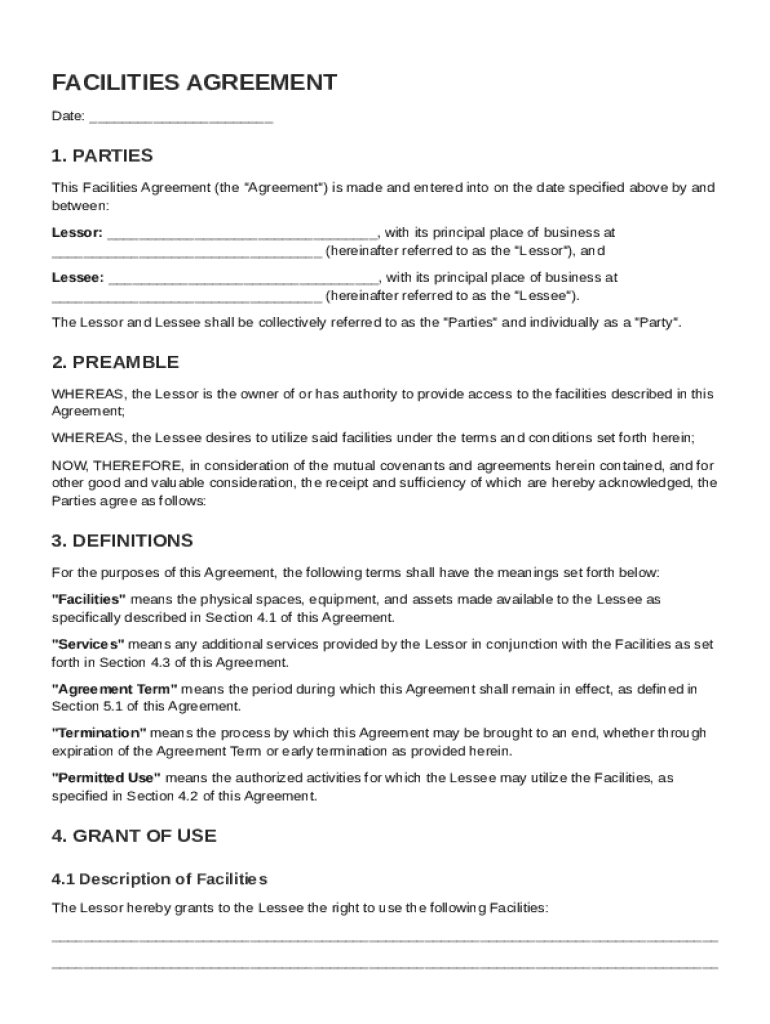







Key Elements of the Facilities Agreement Template
The Facilities Agreement Template serves as a comprehensive legal framework outlining the terms between a lessor and lessee for the use of a facility. Understanding the key elements can help both parties ensure compliance and protect their interests.
-
Definitions and Permitted Uses: Clearly defines all essential terms used throughout the agreement, such as "Lessor," "Lessee," "Facility," and "Permitted Use." This section specifies the exact nature and scope of activities allowed within the facility.
-
Fees and Payment Terms: Outlines all fees associated with the use of the facility, including deposit amounts, payment schedules, and penalties for late payments. This ensures transparency and helps avoid financial disputes.
-
Responsibilities of the Parties: Details the obligations of both the lessor and lessee. This includes maintenance requirements, utility payments, and any specific duties for each party.
-
Insurance Requirements: Specifies the types and amounts of insurance coverage necessary to protect both parties from potential liabilities. This is crucial for minimizing risk in case of accidents or damages.
-
Termination Rights: Lists the conditions under which either party can terminate the agreement early. This might include breach of terms, mutual agreement, or other specified circumstances.
-
Dispute Resolution and Modification Terms: Provides a framework for resolving disputes, which might include mediation, arbitration, or court litigation. It also stipulates the process for modifying the agreement, typically requiring written consent from all parties involved.
Steps to Complete the Facilities Agreement Template
Completing the Facilities Agreement Template involves several critical steps to ensure legal accuracy and completeness.
-
Review the Template Thoroughly: Begin by carefully reading through the entire template to understand each section and its implications.
-
Customize the Terms: Tailor the agreement terms to suit the specific needs of both parties. This includes adjusting rental rates, specifying the duration of the lease, and detailing any special conditions.
-
Enter Party Information: Input the full legal names and contact information for both the lessor and lessee. This section should also include any authorized representatives.
-
Signatures and Date: Ensure both parties sign and date the agreement. This solidifies the contract and provides a legal timestamp.
-
Obtain Necessary Approvals: If required, get the agreement reviewed by legal counsel or other necessary authorities.
-
Distribute Copies: After finalizing the agreement, provide a signed copy to each party for their records.
Legal Use of the Facilities Agreement Template
The Facilities Agreement Template must comply with local laws to be legally binding. Here are some essential legal considerations:
-
Compliance with Zoning Laws: Ensure that the facility's intended use complies with local zoning regulations to avoid legal complications.
-
Adherence to State-Specific Laws: Local jurisdictions may have specific requirements for facility agreements, such as health and safety standards.
-
Inclusion of Mandatory Clauses: Some states require the inclusion of specific clauses, such as nondiscrimination statements or environmental regulations.
-
Legally Binding Signatures: Both parties must sign the document in adherence to proper legal standards, such as witnessing requirements, to ensure the agreement is enforceable.
Important Terms Related to the Facilities Agreement Template
Certain terms are crucial for the consistent application and interpretation of the Facilities Agreement Template:
-
Indemnification: A clause typically included to protect one party from liabilities or damages incurred by the other party.
-
Force Majeure: Refers to unexpected events, such as natural disasters, that may impede the contractual obligations of the parties involved.
-
Subletting Clause: Details the conditions under which the lessee may share or lease parts of the facility to another party.
-
Breach of Contract: Describes the conditions considered a breach, and the potential penalties or remedies available.
Who Typically Uses the Facilities Agreement Template
This template is utilized by a diverse range of individuals and organizations:
-
Commercial Real Estate Owners: To lease facilities for business operations, events, or meetings.
-
Community Centers: Often use these agreements to rent out space for local events or non-profit activities.
-
Educational Institutions: Universities and schools may lease parts of their campus for external events or additional services.
-
Government Agencies: May engage in facilities agreements for public events and activities.


Versions or Alternatives to the Facilities Agreement Template
Several versions or modifications may exist to better fit specific needs or legal contexts:
-
Short-Term Facilities Agreement: Designed for temporary or one-time uses, such as event rentals.
-
Long-Term Lease Agreements: Used when the facility is rented for extended periods, often including more comprehensive terms.
-
Service Facility Agreements: Focused on facilities where specific services are provided, such as maintenance or shared utilities.
Business Types that Benefit Most from the Facilities Agreement Template
Different types of businesses can rely heavily on facilities agreements to optimize their operations:
-
Event Management Companies: Frequently renting event spaces for weddings, conferences, and concerts.
-
Sports and Recreation Centers: Leasing fields or courts for sports activities and tournaments.
-
Co-working Spaces: Renting out office space to freelancers, startups, and small businesses.
-
Retailers: Utilized for pop-up shops and temporary retail locations.
State-Specific Rules for the Facilities Agreement Template
Legal requirements for facilities agreements can vary greatly based on state legislation:
-
Minimum Wage Regulations: Some states may require details on wage compliance if the facility includes employment obligations.
-
Environmental Compliance: States like California have specific environmental and sustainability laws for facility use.
-
Fire Safety Standards: Varying requirements for fire safety and emergency exits might be stipulated in the lease agreement.
Being aware of state laws is critical for drafting a legally compliant facilities agreement.