






Definition & Meaning
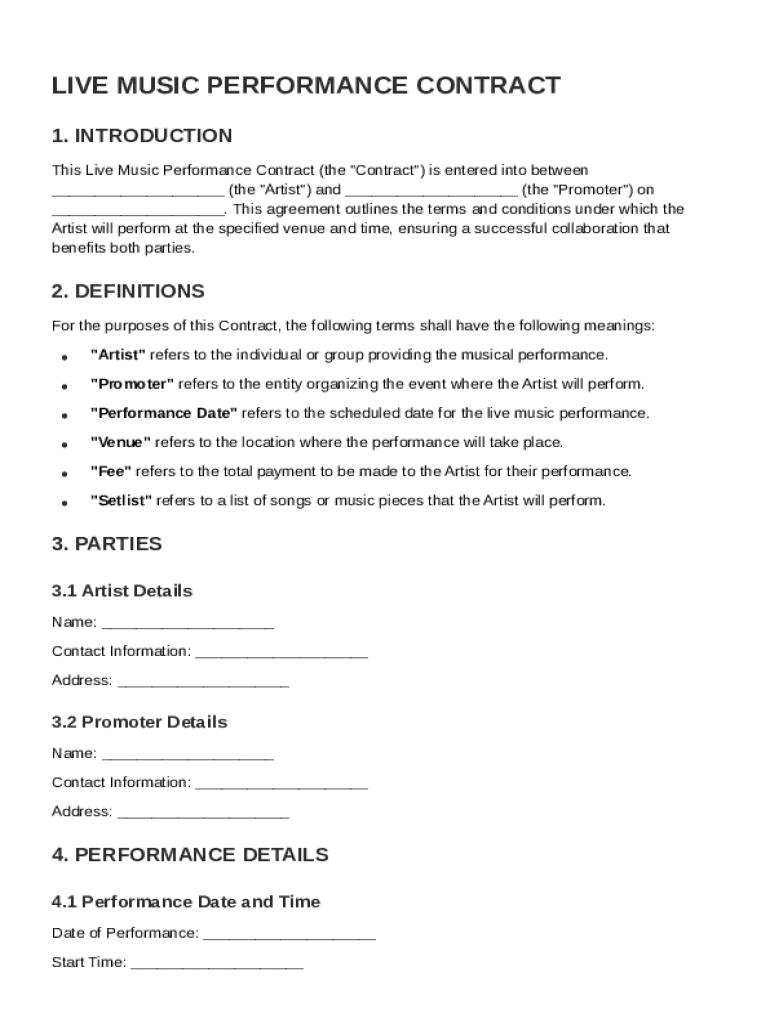
The Live Music Performance Contract Template is a crucial legally binding agreement between an Artist and a Promoter. It details the terms under which a live music performance is to take place, specifying obligations, compensation, and logistics. The aim of this contract is to protect both parties and ensure a smooth collaboration. By defining roles and responsibilities, it reduces the likelihood of disputes and provides a framework for resolution if disagreements arise.
Key Elements of the Live Music Performance Contract Template
Several critical components define the Live Music Performance Contract:
- Performance Details: Clearly outlines the date, time, and location of the performance, ensuring both parties agree on logistics.
- Compensation: Specifies the amount to be paid to the Artist and the method of payment, securing the Artist’s financial interests.
- Responsibilities: Details the duties of both the Artist and the Promoter, including setup, soundcheck, and promotional activities.
- Cancellation Policies: Sets guidelines for what happens if the performance is canceled by either party, including potential compensation obligations.
- Liability and Insurance: Defines who is responsible for various liabilities, ensuring both parties have adequate protection.
- Force Majeure: Covers unforeseen events that might prevent either party from fulfilling their contractual obligations, offering protection from legal consequences.
- Dispute Resolution: Establishes how disagreements will be resolved, often including mediation or arbitration clauses.
- Miscellaneous Provisions: May include additional terms such as confidentiality agreements or non-competes to protect proprietary interests.
How to Use the Live Music Performance Contract Template
To use the template effectively, follow these steps:
- Download and Review: Obtain the template and read through all sections to understand the terms and conditions.
- Customize: Modify the template to reflect the specific details of your agreement, such as performance date and compensation terms.
- Consult Professionals: Consider having a legal professional review the contract to ensure it meets legal standards and all clauses are appropriate.
- Negotiate: Discuss any points of contention or necessary modifications with the other party to reach a mutual agreement.
- Finalize and Sign: Once both parties agree on the terms, sign the contract to make it legally binding. Consider using electronic signature tools for ease and legality.
Steps to Complete the Live Music Performance Contract Template
Completing the template involves several steps:
- Gather Information: Collect all necessary details about the performance, including date, time, venue, and compensation.
- Enter Data: Fill out the template with gathered information, ensuring accuracy to prevent future misunderstandings.
- Review Conditions: Verify all responsibilities, terms, and conditions reflect your expectations and circumstances.
- Make Adjustments: If required, edit clauses to better suit the specific performance arrangement or to address unique requirements.
- Legal Consultation: Seek a review from a legal professional to ensure compliance with applicable laws.
- Signatures: Use legally binding electronic signatures to sign the document, then share with the other party.
- Distribute Copies: Provide each party with a copy of the signed contract to maintain transparency and for record-keeping.
Legal Use of the Live Music Performance Contract Template
The Live Music Performance Contract is a legal document designed to meet the requirements of artists and promoters in the United States. It complies with the ESIGN Act, allowing for electronic signatures that hold the same legal weight as traditional signatures. It is crucial to ensure the template is complete and accurate, as omissions or alterations can impact its enforceability. This contract should include clauses that address state-specific legal requirements to meet jurisdictional obligations.
Important Terms Related to Live Music Performance Contract Template
Understanding the terminologies and clauses within this template is essential:
- Promoter: The entity or individual responsible for organizing and promoting the event.
- Artist: The performer or group contracted to perform during the event.
- Rider: An addendum to the contract detailing specific requests or requirements of the artist, often covering technical and hospitality needs.
- Backline: Equipment and instruments provided by the promoter as specified in the contract.
- Load-in/Load-out: Scheduled times for equipment transport, setup, and dismantling.
- Soundcheck: Pre-performance testing of sound equipment to ensure audio quality.
Who Typically Uses the Live Music Performance Contract Template
This template is commonly used by:
- Solo Artists and Bands: To secure terms for live performances.
- Event Promoters: To formalize agreements with performers and ensure event success.
- Venue Owners: When hosting performances to ensure all parties understand their obligations.
- Booking Agents: To mediate agreements between artists and venues, ensuring clarity and protection for their clients.


State-Specific Rules for the Live Music Performance Contract Template
When using this contract, be aware of state-specific regulations that can affect its terms:
- Jurisdiction Clauses: Ensure the contract specifies which state's law will govern the interpretation and enforcement of the contract.
- Tax Obligations: Vary by state, and both parties must comply with local tax regulations that might impact compensation.
- Insurance Requirements: Different states may impose varying requirements for liability insurance, affecting contract conditions.
Examples of Using the Live Music Performance Contract Template
Several use cases highlight the versatility of this template:
- Festival Performances: Templates are often tailored for multi-act events where terms must account for timing and shared resources.
- Club Gigs: Contracts might include details specific to venue size and audience expectations.
- Private Events: Performances at non-public events like weddings where agreements include specific requests from clients.
- Tour Agreements: When part of a larger tour, agreements may be adapted to address logistical and scheduling complexities.