






Definition and Purpose
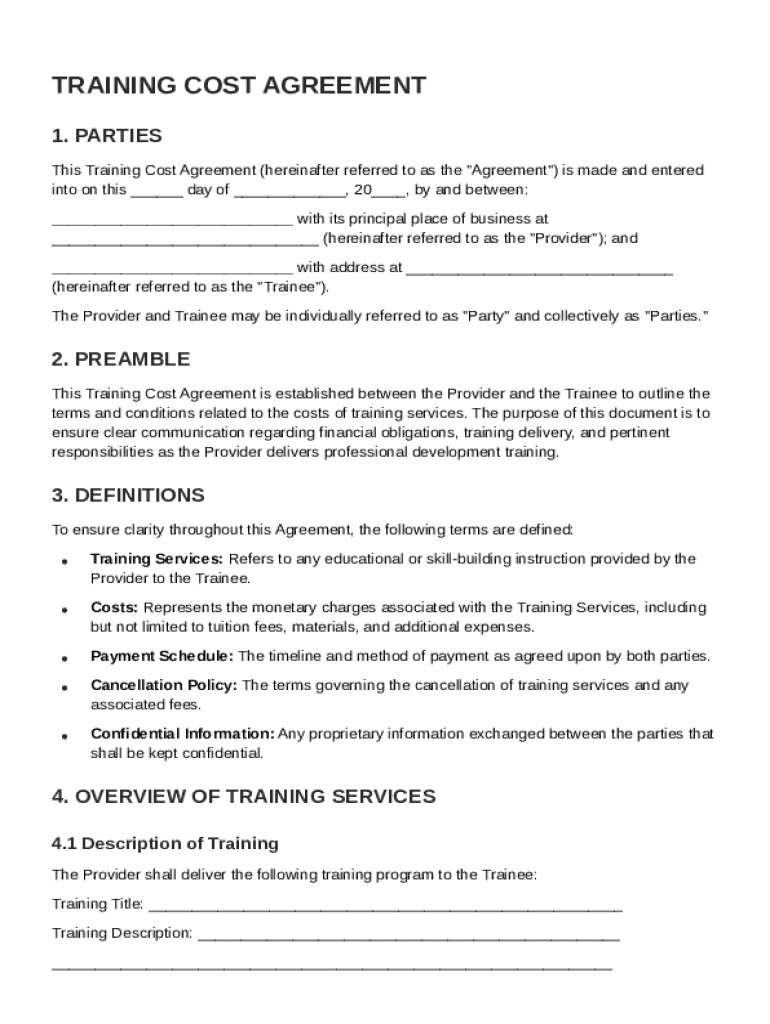
A Training Cost Agreement Template is a formal document that specifies the conditions under which a training provider and a trainee engage in a training program. It outlines the costs, responsibilities, and terms for the delivery of training services. This agreement acts as a critical tool to ensure both parties understand their financial obligations, thus preventing future disputes.
Key components include:
- Definitions of terms used within the agreement to avoid misunderstandings.
- Breakdown of training costs, detailing what the trainee is expected to pay.
- Responsibilities of both parties concerning the delivery and receipt of training services.
Who Typically Uses the Training Cost Agreement Template
Training Cost Agreement Templates are predominantly used by corporate training departments, educational institutions, and professional development organizations. Both the provider and the participant benefit from clarity and security that this agreement offers.
Examples of typical users:
- Companies investing in employee skill development programs.
- Educational firms offering certificate courses.
- Individuals seeking clarity on training expenses.


How to Use the Training Cost Agreement Template
To effectively use the Training Cost Agreement Template:
- Review the template to understand all sections.
- Customize sections to reflect specific agreements between the parties, such as cost allocation and payment terms.
- Use the form's guidance sections to fill out your specific terms, ensuring each party's obligations are clearly outlined.
- Both parties should review the agreement to prevent any oversight.
Key Elements of the Training Cost Agreement Template
Critical components of a Training Cost Agreement Template include:
- Definitions: Terms like "Training Provider" and "Trainee" should be clearly defined.
- Financial Details: Clear breakdown of all training costs and payment schedules.
- Cancellation Policies: Clear terms for canceling the training without penalties.
- Confidentiality Obligations: Any information sharing must have confidentiality terms.
- Dispute Resolution: Procedures in place for resolving any disagreements.
Steps to Complete the Training Cost Agreement Template
- Download and Review: Start by obtaining the template and familiarizing yourself with its sections.
- Fill Out Financial Details: Insert the agreed-upon cost structures and responsible parties.
- Define Roles and Responsibilities: Clearly outline what each party is expected to deliver.
- Set Terms for Termination: Outline conditions under which either party can terminate the agreement.
- Legal Review: Have the completed agreement reviewed by legal professionals for validity and compliance.
Important Terms Related to Training Cost Agreement Template
Several critical terms to understand when working with this template include:
- Trainee: The individual receiving the training.
- Training Provider: The organization or person providing the training service.
- Payment Schedule: Details on when payments are due for the training provided.
- Confidentiality Clause: Obligations relating to the handling of sensitive information shared during training.
- Dispute Resolution Mechanism: Agreed processes for resolving conflicts that may arise.
Benefits of Using a Training Cost Agreement Template
Using a Training Cost Agreement Template provides multiple benefits, including:
- Clarity and Transparency: Ensures both parties have a clear understanding of financial commitments.
- Legal Protection: Offers a legally binding document that protects both parties’ interests.
- Professionalism: Establishes a formal relationship and commitment to training.
- Reduced Dispute Likelihood: Clearly defined terms reduce the chances of misunderstandings.
Legal Use of the Training Cost Agreement Template
The legal use of a Training Cost Agreement Template includes:
- Ensuring the agreement complies with local and national labor and contract laws.
- Providing a legally binding document that is enforceable in court.
- Including necessary disclaimers and legal terms that protect both parties' rights and duties.
Legal advice is recommended to ensure compliance with jurisdictional requirements.