01. Edit your form online
Type text, add images, blackout confidential details, add comments, highlights and more.

Type text, add images, blackout confidential details, add comments, highlights and more.

Draw your signature, type it, upload its image, or use your mobile device as a signature pad.

Send it via email, link, or fax. You can also download it, export it or print it out.
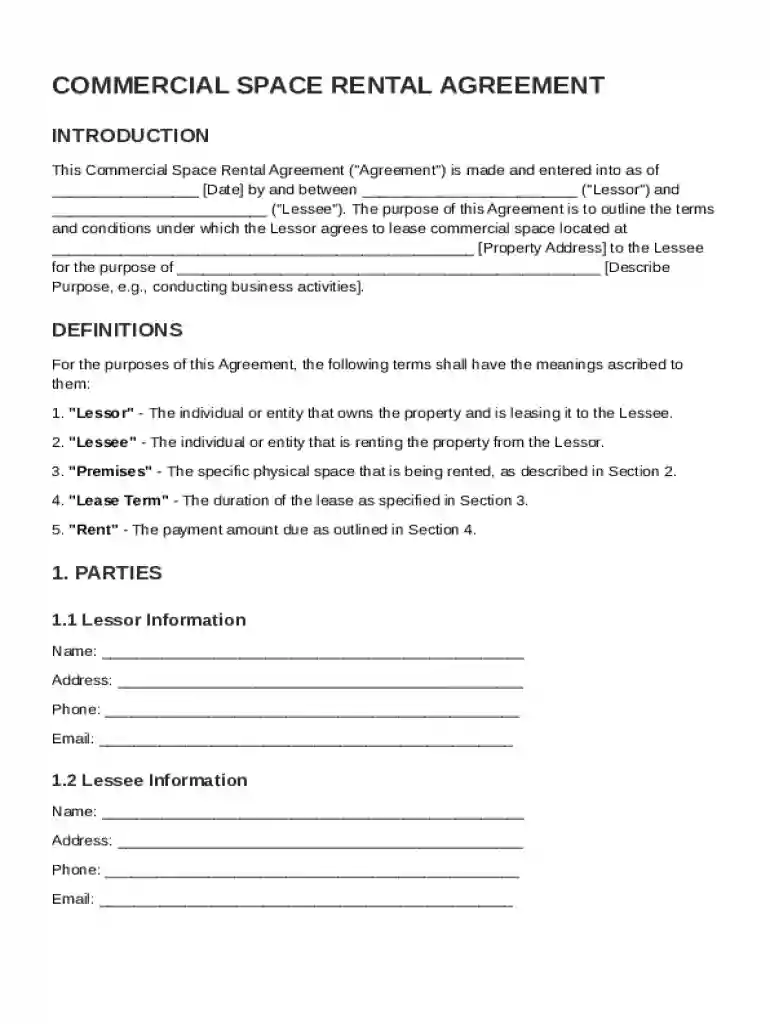
A Commercial Space Rental Agreement Template is a legally binding document that outlines the terms and conditions for leasing a commercial space. This agreement is formalized between the property owner, known as the lessor, and the occupant, known as the lessee. It provides a comprehensive framework that defines the rights and responsibilities of both parties involved in the transaction. Key elements typically include the description of the property, lease duration, rent payment details, and stipulations regarding the permitted use of the premises.
Using the template is a straightforward process that facilitates the creation of a clear and enforceable contract. To begin, you should familiarize yourself with each section of the template to ensure comprehensive understanding. Fill in all relevant details specific to your agreement including the names of the lessor and lessee, property description, and agreed lease term. You should also complete sections covering rent amount, payment schedule, and maintenance obligations. Once the template is completed, it should be reviewed by both parties to confirm that all terms are accurately represented and understood before signing.
Gather Information: Collect details about the property including location, size, and amenities. You will also need the full legal names of the lessor and lessee.
Fill in Lease Details: Include the start and end dates of the lease, monthly rental rate, and payment due dates.
Identify Use Restrictions: Specify how the property will be used to ensure it aligns with zoning laws and regulations.
Outline Maintenance Responsibilities: Clearly state whether the lessor or lessee is responsible for repairs and ongoing maintenance.
Add Insurance Requirements: Describe any insurance policies that need to be obtained by the lessee and lessor, including liability coverage.
Include Termination Clauses: Detail the conditions under which the lease can be terminated by either party, including notice periods.
Review and Sign: Both parties should thoroughly review the document. Once reviewed, both the lessor and lessee should sign and date the agreement.
The template comprises several critical components to ensure a legally binding agreement:
The template serves as a framework for a legally binding agreement and complies with federal and state legislation. It ensures both parties meet legal obligations under landlord-tenant laws. Additionally, it includes provisions for confidentiality, indemnification, and representation warranties. The agreement is structured to withstand legal scrutiny, protecting the rights and interests of both parties should disputes arise.
Rental agreements must align with state-specific regulations regarding commercial leases. This includes guidelines on security deposits, rent increase notifications, and eviction processes. For instance, some states have specific regulations dictating the maximum allowable security deposit or requiring disclosures about property conditions. Adhering to state-specific rules ensures the enforceability of the lease agreement and compliance with local laws.
Each state in the United States might have variations in how commercial leases are regulated. These differences can affect how lease durations are handled, how security deposits are managed, or how eviction procedures are processed. Understanding and incorporating state-specific statutes and landlord-tenant laws into the lease agreement can prevent legal issues and misunderstandings. Below are a few examples of state-specific requirements:
By considering these variances, lessors and lessees can ensure their agreements are as ironclad and compliant as possible.
Consider a small retail business leasing space in a shopping center. The lease agreement outlines that the premises will be used for retail operations and not as a storage facility. Or, an office-based company renting a floor in a commercial building uses the template to specify shared maintenance responsibilities for common areas. These examples illustrate the template's versatility across different business types and operational needs.
At DocHub, your data security is our priority. We follow HIPAA, SOC2, GDPR, and other standards, so you can work on your documents with confidence.