






Definition and Meaning of a Summary Agreement Template
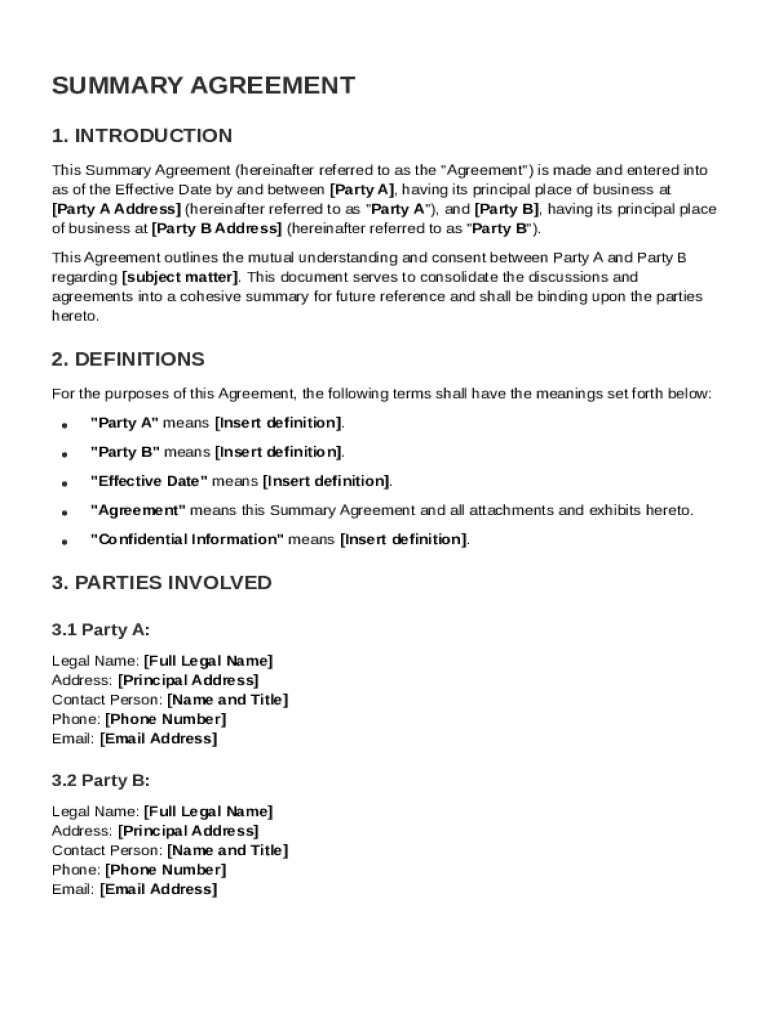
A Summary Agreement Template is a structured document that outlines the mutual understanding and key terms of a collaboration between two parties. It acts as a concise representation of the objectives, obligations, and expectations agreed upon by the involved parties. This document ensures that both parties are on the same page regarding the scope of the agreement, confidentiality provisions, and conditions for termination. The template is crucial for formalizing the understanding, reducing misunderstandings, and providing a reference point in case of disputes.
Key Elements
- Parties Involved: Clearly states the names and roles of the parties entering into the agreement.
- Objective: Outlines the main goals of the agreement and what both parties aim to achieve.
- Obligations: Details the duties and responsibilities each party is expected to fulfill.
- Confidentiality: Specifies any restrictions on information sharing and confidentiality terms.
- Termination Conditions: Provides conditions under which the agreement can be terminated.
Steps to Complete the Summary Agreement Template
Completing a Summary Agreement Template involves several crucial steps to ensure that the document reflects the accurate details of the agreement.
- Identify Parties: Enter the legal names and roles of the parties involved.
- Outline Objectives: Clearly define the purpose and goals of the agreement.
- List Obligations: Specify the obligations and duties each party agrees to undertake.
- Set Confidentiality Terms: Detail any agreed-upon confidentiality clauses.
- Define Termination Clauses: Outline circumstances under which the agreement may be terminated.
Tips for Effective Completion
- Ensure clarity and precision in language to avoid ambiguity.
- Involve legal counsel if necessary, particularly for more complex agreements.
- Review all sections carefully to ensure all important aspects are covered.
Legal Use of the Summary Agreement Template
The legal framework surrounding a Summary Agreement Template is crucial to its enforceability. This document is not only a guideline for collaboration but also a legally binding contract.
Binding Nature
- Compliance with ESIGN Act: The template can be electronically signed, making it legally binding under U.S. law.
- Governing Law: Specifies which state's law governs the agreement to ensure clarity in case of disputes.
Importance of Legal Review
- Ensure the template meets all regulatory requirements.
- Legal professionals can help tailor the template to specific business needs, ensuring all legal bases are covered.
How to Use the Summary Agreement Template
Utilizing the Summary Agreement Template involves understanding its structure and purpose.
Scenarios for Use
- Business Collaborations: Ideal for partnerships, joint ventures, and collaborative projects.
- Service Agreements: Can be used for outlining terms between service providers and clients.
- Internal Agreements: Useful within organizations for defining roles and cooperation between departments.
Practical Tips
- Customize the template to fit the unique needs of the agreement.
- Discuss the terms with all parties to ensure mutual understanding and consent.
Key Elements of the Summary Agreement Template
The effectiveness of a Summary Agreement Template lies in its detailed composition.
Essential Sections
- Definitions: Explains key terms used throughout the document for clarity.
- Scope of Agreement: Provides details on the reach and limits of the agreement.
- Dispute Resolution: Describes the methods to be used in case disagreements arise.
Considerations for Drafting
- Be precise to prevent potential loopholes.
- Use clear and simple language to facilitate understanding.
Who Typically Uses the Summary Agreement Template
Understanding who benefits most from the Summary Agreement Template is key to its application.

Common Users
- Businesses and Corporations: For documenting terms of partnerships and contracts.
- Legal Professionals: Advising on and drafting agreements for clients.
- Project Managers: Establishing clear terms for collaborative projects within or between organizations.
Examples
- A software company partnering with a hardware manufacturer.
- A consultancy agency formalizing service agreements with clients.

State-Specific Rules for the Summary Agreement Template
Adapting a Summary Agreement Template to comply with state-specific regulations ensures its enforceability across different jurisdictions.
Considerations
- State Variations: Certain states may have unique requirements for agreements, particularly regarding electronic signatures and confidentiality clauses.
- Governing Law Clause: Clearly specify which state's laws will govern the agreement to avoid jurisdictional disputes.
State Adaptability
- Regularly review state laws to ensure compliance when drafting agreements for multi-state use.
Software Compatibility and Integration
The compatibility of the Summary Agreement Template with various software solutions enhances its usability.
Supported Platforms
- DocHub: Easily edit, sign, and send agreements securely.
- Google Workspace: Integrates seamlessly, allowing for straightforward file import from Google Drive and convenient editing within the Google ecosystem.
Technology Considerations
- Ensure the document is compatible with the preferred editing and sharing tools of the organization for efficient processing and collaboration.