01. Edit your form online
Type text, add images, blackout confidential details, add comments, highlights and more.

Type text, add images, blackout confidential details, add comments, highlights and more.

Draw your signature, type it, upload its image, or use your mobile device as a signature pad.

Send it via email, link, or fax. You can also download it, export it or print it out.
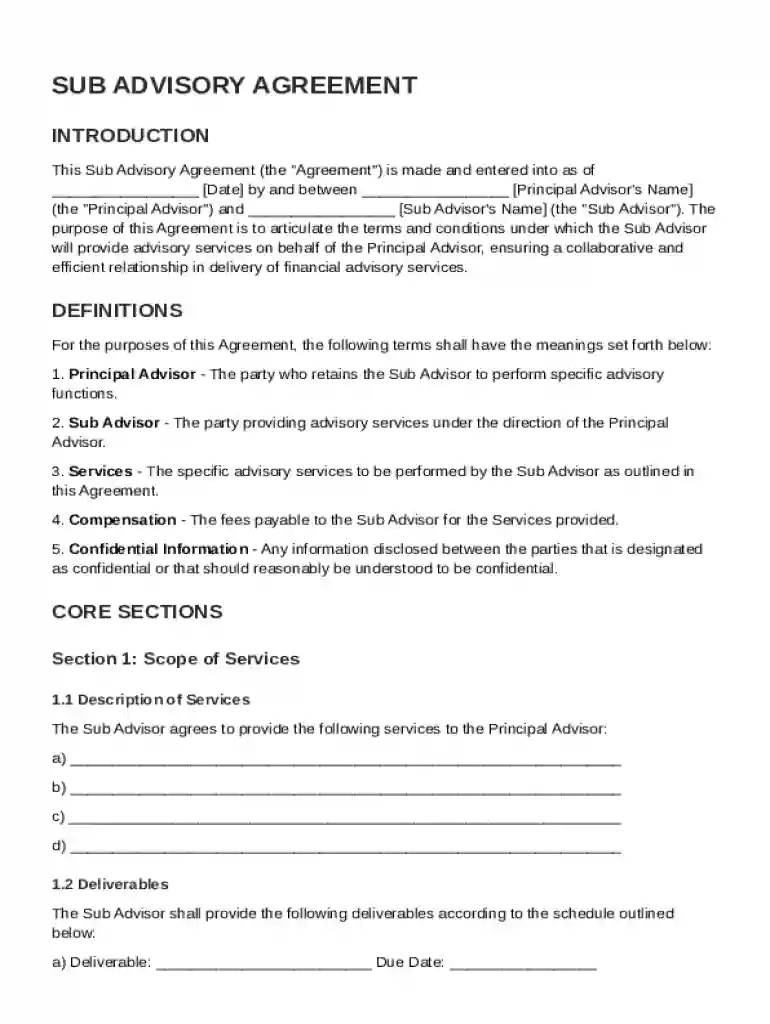
A Sub Advisory Agreement is a legal document that outlines the partnership between a Principal Advisor and a Sub Advisor, specifying the terms under which advisory services will be provided. This agreement clarifies each party’s roles and responsibilities, ensuring both comply with regulatory standards while safeguarding confidential information shared during their collaboration. The document typically includes compensation arrangements, service scope, and indemnification clauses, which collectively function to formalize the professional relationship and ensure mutual understanding.
Sub Advisory Agreements are comprehensive documents comprising several critical sections essential for clear communication and legal compliance. Below are the core components that make up the agreement:
Successfully completing a Sub Advisory Agreement involves several sequential steps to ensure that all necessary information is accurately captured and both parties are in agreement.
Initial Information Gathering: Gather and document all pertinent details about both the Principal and Sub Advisors, including names, contact information, and respective roles.
Define the Scope of Services: Outline the advisory services to be provided, establishing clear boundaries and deliverables expected from the Sub Advisor.
Draft Compensation Details: Specify all terms related to compensation, ensuring both parties are satisfied with payment terms, including fees, schedules, and conditions.
Ensure Compliance with Confidentiality Obligations: Draft clauses that protect sensitive information and align with legal confidentiality requirements.
Finalize Legal Provisions: Include indemnification, governing law, and dispute resolution clauses, and confirm consensus on these before final document preparation.
Review and Signature: Review the completed document thoroughly with all parties involved, allowing for adjustments before final signatures and implementation.
The legal use of a Sub Advisory Agreement ensures that both the Principal Advisor and Sub Advisor uphold their obligations while adhering to relevant regulatory standards. This agreement serves as a binding contract that enforces the legal rights and duties of both parties involved in the advisory process.
Understanding key terms within the Sub Advisory Agreement is essential for comprehending the document's full scope and responsibilities.
Sub Advisory Agreement Templates are primarily utilized by financial institutions, investment firms, and independent advisors requiring specialized advisory services from external consultants or firms.


Using a Sub Advisory Agreement Template provides a structured approach to documenting the advisory relationship, ensuring all parties understand their roles, rights, and responsibilities, ultimately safeguarding legally binding agreements.
While the Sub Advisory Agreement Template provides a comprehensive framework, it's crucial to consider state-specific regulations that may impact the agreement's formulation or enforceability.
These detailed explanations ensure a thorough understanding of each component, facilitating the effective use of a Sub Advisory Agreement Template tailored to the needs and regulatory environment of users within the United States.
At DocHub, your data security is our priority. We follow HIPAA, SOC2, GDPR, and other standards, so you can work on your documents with confidence.