






Definition and Meaning of the Deferred Rent Payment Agreement Template
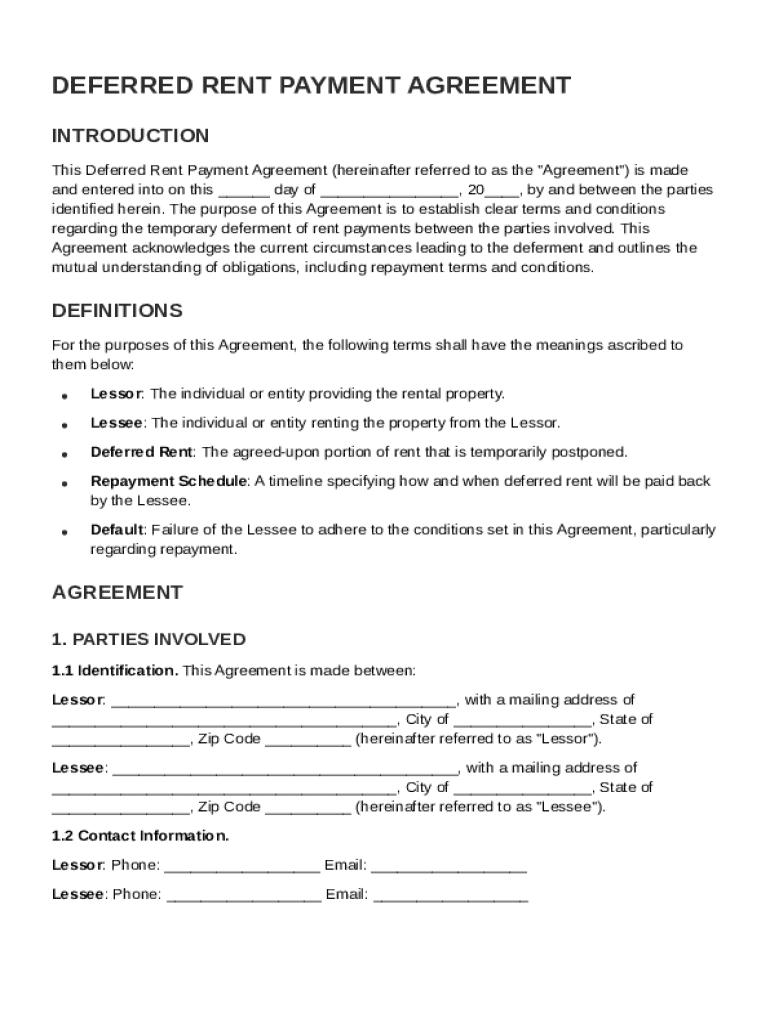
The Deferred Rent Payment Agreement Template serves as a legal document outlining the terms for temporarily postponing rent payments due to specific circumstances. Such agreements are primarily used when the Lessee or tenant faces financial hardships or unforeseen events that impact their ability to meet rent obligations. This document ensures both Lessor (landlord) and Lessee are on the same page regarding the deferral period, amount, repayment terms, and additional responsibilities. The primary aim is to foster mutual understanding and compliance between the involved parties, minimizing potential disputes during the deferment period.
How to Use the Deferred Rent Payment Agreement Template
To effectively utilize the Deferred Rent Payment Agreement Template, one begins by assessing the specific needs and conditions warranting the rent deferment. Collect all essential information, including details of the property, identities of involved parties, and exact financial arrangements. Follow these steps:
- Fill in Lessor and Lessee Details: Enter full names, addresses, and contact information for both parties.
- Define Property and Lease Details: Specify the property address and initial lease terms.
- Outline Deferral Terms: Clearly state the deferred period, total deferred amount, and conditions triggering the deferment.
- Set Repayment Terms: Detail how and when the deferred rent will be repaid, including interest rates if applicable.
- Obligations and Rights: Specify any additional obligations of the Lessee during the deferment and the rights of the Lessor.
It is crucial to review the agreement for accuracy and ensure both parties comprehend all stipulations before signing.
Steps to Complete the Deferred Rent Payment Agreement Template
Completing the Deferred Rent Payment Agreement Template involves several critical steps to ensure its legitimacy and fairness:
- Draft the Agreement: Use the template to draft the agreement with all necessary clauses.
- Review Legal Compliance: Ensure the agreement aligns with local and state laws regarding rent payments and deferrals.
- Discuss and Agree on Terms: Facilitate a discussion between Lessor and Lessee to agree on the proposed terms.
- Mutual Signatures: Once both parties concur, proceed with signing the document electronically or in person.
- Secure Electronic Copies: Store electronic copies securely and ensure all involved parties have access to the signed document.
By adhering to these steps, the deferral agreement will not only be comprehensive but also legally binding.
Key Elements of the Deferred Rent Payment Agreement Template
A well-structured Deferred Rent Payment Agreement Template includes several key components:
- Identification Details: Full identification details of both Lessor and Lessee.
- Property Description: Clear description of the leased property.
- Deferral Clause: Comprehensive details about the deferment, including duration and total amount.
- Repayment Schedule: Clearly defined schedule for repayment, including any installments or lump sum payments.
- Rights and Responsibilities: Outline the responsibilities of both parties during the deferment and what recourses exist in case of a breach.
- Consequences of Default: Explicit consequences if either party fails to comply with the agreement terms.
These elements guarantee that all potential issues are foreseen and documented, aiding in smooth execution and enforcement of the agreement.
State-Specific Rules for the Deferred Rent Payment Agreement Template
The legal enforceability of the Deferred Rent Payment Agreement may vary across different states due to unique regulatory frameworks. Several considerations include:
- Variation in Tenancy Laws: Each state has specific landlord-tenant laws that dictate permissible deferral terms.
- Notification Requirements: Some states may require landlords to provide specific notices for rent deferral.
- Eviction Moratoriums: Certain states may have eviction bans during deferment periods.
- Local Jurisdiction Policies: Some jurisdictions may impose additional regulations affecting rent payment agreements.
Ensuring compliance with state-specific rules is critical to avoid legal pitfalls and ensure the longevity of the agreement.
Who Typically Uses the Deferred Rent Payment Agreement Template
The typical users of the Deferred Rent Payment Agreement Template include:
- Residential Tenants and Landlords: When tenants face temporary financial hardships and need to defer rent payments.
- Commercial Tenants and Property Owners: Businesses that experience revenue fluctuations and require an adjustment in rental terms.
- Property Managers and Real Estate Agents: Who facilitate agreements on behalf of property owners.
- Legal Professionals: Drafting, reviewing, and ensuring agreements adhere to applicable laws and standards.
These users leverage the template to formalize arrangements that are equitable and transparent, benefiting both parties involved.


Important Terms Related to the Deferred Rent Payment Agreement Template
Understanding specific terminology is critical for drafting and comprehending the agreement:
- Lessor: The property owner or person leasing out the premises.
- Lessee: The tenant or party granted temporary possession of the property.
- Deferral Period: The duration for which rent payments are postponed.
- Repayment Schedule: Timeline and method for repaying the deferred amount.
- Default Terms: Conditions and consequences of failing to adhere to the agreement.
Being familiar with these terms ensures all parties clearly understand their obligations and rights within the agreement.
Legal Use of the Deferred Rent Payment Agreement Template
This template is designed to be used within the legal frameworks applicable to landlord-tenant agreements. Key legal aspects include:
- Compliance with State Laws: The agreement must reflect current state laws and rental regulations.
- Notarization Requirements: Some states or circumstances might necessitate notarization for legal validity.
- Potential Implications in Court: Should disputes arise, the agreement serves as a comprehensive legally binding record.
- Enforceable Clauses: Ensure all clauses are enforceable under the prevailing legal standards.
Proper attention to these legal aspects sustains the agreement's integrity and applicability in potential legal situations.