






Definition & Meaning
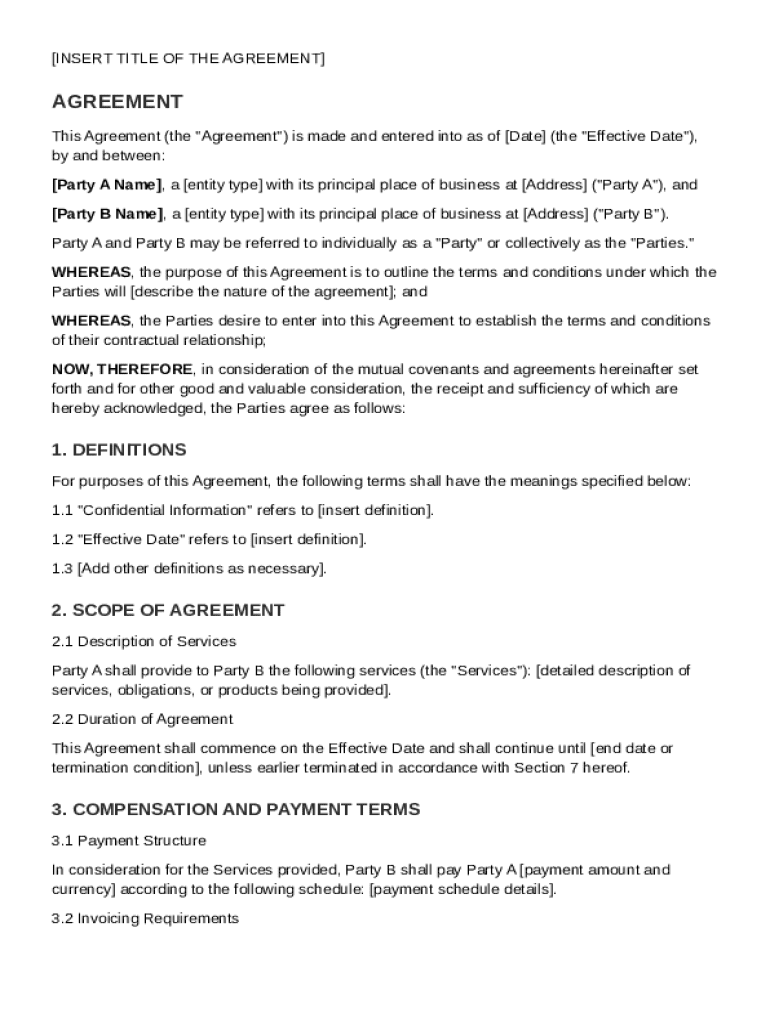
A legal binding agreement template serves as a standardized framework for formalizing agreements between two or more parties. This document specifies mutual obligations, rights, and responsibilities, providing a foundation for enforceable legal obligations. It includes vital components such as the scope of services, payment terms, confidentiality clauses, and dispute resolution mechanisms. By outlining these parameters, the template ensures clarity and precision, reducing the risk of misunderstandings and disputes.
Key Elements of the Legal Binding Agreement Template
The template comprises several crucial components designed to cover all aspects of the agreement. Among these are:
- Definitions: Clearly defined terms that ensure mutual understanding of key concepts.
- Scope of Services: Details the exact nature and extent of services or goods provided.
- Payment Terms: Specifies payment amounts, schedules, and invoicing procedures.
- Confidentiality Obligations: Protects sensitive information shared between parties.
- Indemnification Clauses: Outlines obligations for compensation in case of damages or losses.
- Termination Conditions: Sets the terms under which the agreement can be terminated.
- Dispute Resolution: Provides mechanisms for resolving disagreements, including mediation or arbitration.
These elements collectively ensure that the agreement is comprehensive and enforceable under U.S. law.
How to Use the Legal Binding Agreement Template
To effectively utilize the template, follow these steps:
- Identify Parties Involved: Clearly state the names and roles of all parties in the agreement.
- Customize Sections: Edit template sections to reflect specific terms and conditions relevant to your agreement.
- Include All Relevant Details: Ensure all services, payments, and legal obligations are detailed.
- Review Legal Language: Consult with legal counsel to ensure the language used complies with applicable laws.
- Finalize and Sign: Once both parties agree on the terms, execute the agreement by signing it.
Using this template simplifies the process of drafting a legally binding contract, protecting interests and minimizing risks.
Steps to Complete the Legal Binding Agreement Template
The process of completing the template involves several important steps:
- Draft Introduction & Background: Include a brief overview of the agreement’s purpose.
- ** Fill Out Terms & Conditions**: Enter specific terms related to the transaction or arrangement.
- ** Specify Responsibilities**: Clearly outline the obligations and duties of each party.
- ** Add Financial Details**: Input all relevant financial agreements, including price, payment method, and timing.
- ** Review and Revise**: Carefully review the agreement for accuracy and completeness before approving.
Proper completion ensures that all parties have a clear understanding of their obligations and expectations.
Who Typically Uses the Legal Binding Agreement Template
Legal binding agreement templates are frequently used by various individuals and entities, including:
- Businesses & Corporations: For mergers, partnerships, and service contracts.
- Freelancers & Contractors: To formalize agreements about deliverables and payment.
- Real Estate Professionals: In property sale or lease agreements.
- Non-Profit Organizations: For sponsorships or partnership agreements.
- Consultants & Advisors: In drafting agreements with clients or stakeholders.
The template's adaptability makes it a valuable tool across diverse industries and professional relationships.

State-Specific Rules for the Legal Binding Agreement Template
While the template provides a general framework, modifications may be necessary based on state-specific regulations. These can include:
- Contractual Capacity: Age and mental capacity requirements may vary.
- Witness & Notary Requirements: Some states require agreements to be witnessed or notarized.
- Interest Rates & Loan Terms: Varies for agreements involving financial transactions.
- Usury Laws: Limits on interest rates differ widely.
Consult local legal resources to ensure compliance with state laws when using the template.
Important Terms Related to Legal Binding Agreement Template
Understanding key terms enhances the effectiveness of the template:
- Amendment: Modifications or additions to the original agreement.
- Breach of Contract: Failure to perform any term of a contract without a legitimate legal excuse.
- Force Majeure: Clauses excusing parties from obligations due to unforeseen events.
- Governing Law: The legal jurisdiction whose laws will be used to resolve disputes.
- Severability: A clause ensuring that if one part of the agreement is invalid, the rest remains effective.
Familiarity with these terms aids in drafting a precise and enforceable agreement.
Examples of Using the Legal Binding Agreement Template
Examples illustrate how the template is applied in real-world scenarios:
- A tech startup uses the template to outline terms with a software developer, detailing deliverables, timelines, and confidentiality obligations.
- A catering company employs the template when contracting with event venues, specifying services, payment schedules, and liability clauses.
- An online retailer uses it for partnerships, defining product placement, revenue sharing, and marketing responsibilities.
These examples demonstrate the template’s versatility across different industries and scenarios.