






Definition & Meaning
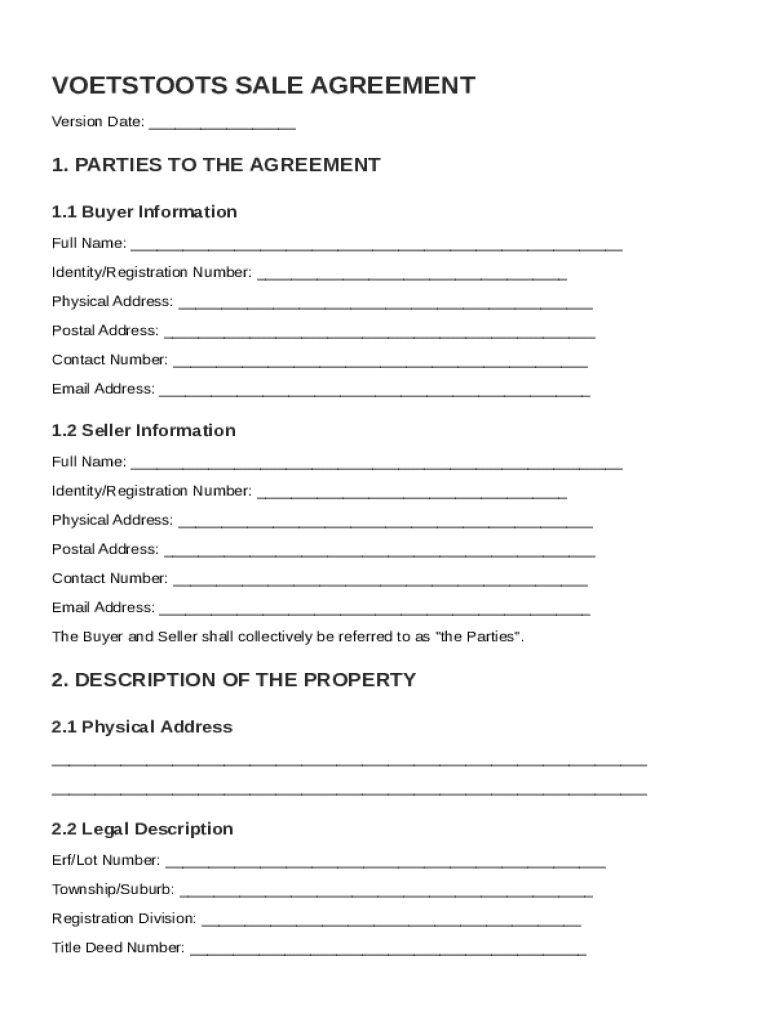
The "Voetstoots Contract Template" is a legal document typically used in property sales. Derived from South African legal terminology, "voetstoots" means "as-is" in English. This clause allows the seller to sell goods or property without warranties, meaning the buyer accepts items with all their existing faults. The template is pivotal for outlining the terms under which a property is sold, emphasizing that the buyer is responsible for inspecting the property and accepting it in its current condition.
Key Elements of the Voetstoots Contract Template
A comprehensive voetstoots contract template includes several critical components:
-
Parties Involved: Identifies the buyer and seller, providing full names and contact information. This section outlines each party's role and responsibilities.
-
Property Description: Details the specifics of the property being sold, including address, dimensions, and any notable features or liabilities associated with it.
-
Purchase Price & Payment Method: Specifies the agreed-upon sale price and outlines the payment methods, such as cash, bank transfer, or installment plan.
-
Voetstoots Clause: Explicitly states the property is being sold as-is, with buyers acknowledging their responsibility for examining the property before purchase.
-
Transfer of Ownership: Details the process and timeline for transferring the property title from the seller to the buyer, including necessary legal documentation.
-
Representations and Warranties: Lists any declarations made by the seller and buyer regarding the legality and condition of the sale, along with assurances about the property’s status.
How to Use the Voetstoots Contract Template
Using the voetstoots contract template involves several methodical steps to ensure both parties agree to the terms:
-
Download and Review: Obtain the template from a reputable source and carefully review its content to ensure it meets legal requirements and personal expectations.
-
Customize the Template: Fill in specific details such as buyer and seller information, property description, and sale price. Ensure that any personalized clauses are accurately reflected.
-
Property Inspection: Conduct a thorough inspection of the property. Note any faults, as the voetstoots clause excludes seller liability for undisclosed issues once the agreement is finalized.
-
Seek Legal Advice: Consult with a legal professional to ensure that the contract’s clauses comply with local laws and regulations. This step is crucial for avoiding future disputes.
-
Signing the Contract: Both parties must sign the document to make the agreement legally binding. Ensure that signatures are correctly dated and witnessed if required by law.
Legal Use of the Voetstoots Contract Template
The legal use of a voetstoots contract template is primarily for real estate transactions, protecting sellers from future claims related to undisclosed property defects. However, it must be carefully drafted to ensure legal enforceability:
-
Clause Validity: Ensure the voetstoots clause is explicitly stated and understood by both parties. Any ambiguities can lead to disputes or invalidation.
-
Seller Disclosure: Despite the as-is nature, sellers must not knowingly hide significant property defects to avoid claims of fraudulent nondisclosure.
-
Applicable Jurisdictions: Verify that the use of a voetstoots clause is permissible in the specific state or region where the property is located, adhering to local consumer protection laws.
Who Typically Uses the Voetstoots Contract Template
The primary users of the voetstoots contract template include:
-
Property Sellers: Individuals or entities selling residential or commercial property wishing to limit future liability.
-
Real Estate Agents: Professionals assisting in property sales to ensure transactions are legally sound and clients understand the sale terms.
-
Legal Practitioners: Attorneys drafting or reviewing contracts to safeguard clients’ interests during property sales.


Important Terms Related to Voetstoots Contract Template
Understanding the terminology is crucial for interpreting the contract properly:
-
As-Is: A declaration that the buyer accepts the property in its current state without further repair obligations from the seller.
-
Defect: Any fault or imperfection in the property that might affect its value or usability and must be considered under the as-is clause.
-
Indemnification: A clause ensuring that any losses or damages incurred by one party due to breaches of the agreement by another are compensated.
Steps to Complete the Voetstoots Contract Template
Completing this template involves several strategic steps:
-
Identify Parties and Property: Clearly define who is involved and what property is included.
-
Determine Price and Terms: Settle on the sale price along with payment terms, ensuring clarity for both parties.
-
Confirm Inspection: Verify through documentation or correspondence that the buyer has conducted their inspection.
-
Finalize the Agreement: Check all sections for completeness, ensuring no critical information is omitted.
-
Legal Review: Have an attorney review the agreement to ensure all clauses are enforceable and compliant with applicable law.
-
Execute the Contract: Upon satisfaction with the document’s content, both parties should sign and date the contract to make it official.
State-Specific Rules for the Voetstoots Contract Template
While the voetstoots concept is widely recognized, its application can vary by state:
-
Disclosure Requirements: Some states may have specific disclosure laws that impact how as-is clauses are enforced.
-
Consumer Protection Laws: Review local legislation to ensure compliance, as some states offer more robust protection for buyers, limiting the enforceability of as-is agreements.
-
Real Estate Laws: State laws governing property sales might dictate specific provisions that need inclusion within the template, impacting elements such as default remedies and dispute resolution.
Recognizing these nuances aids both buyers and sellers in understanding their rights and obligations effectively.