01. Edit your form online
Type text, add images, blackout confidential details, add comments, highlights and more.

Type text, add images, blackout confidential details, add comments, highlights and more.

Draw your signature, type it, upload its image, or use your mobile device as a signature pad.

Send it via email, link, or fax. You can also download it, export it or print it out.
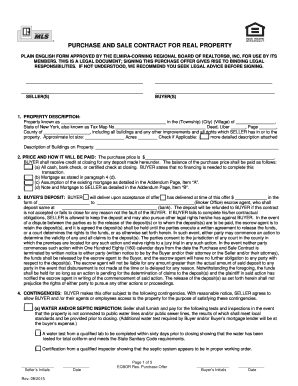
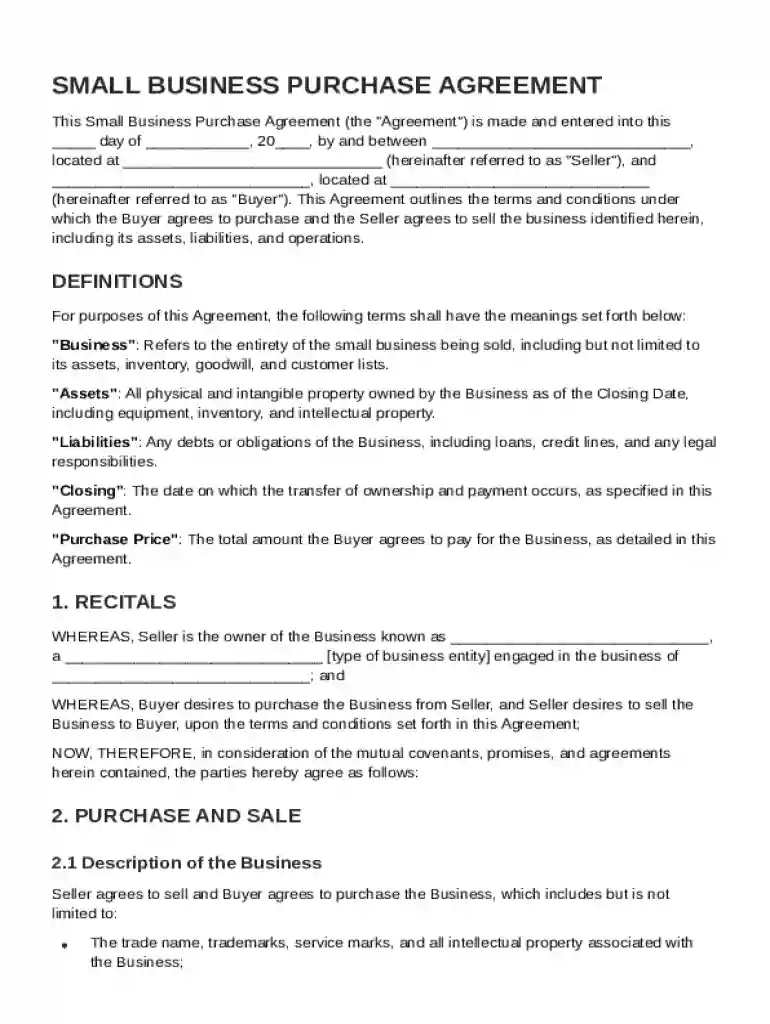
A Small Business Purchase Agreement Template is a formal document used to outline the terms and conditions for the sale of a small business. It serves as a comprehensive legal framework to ensure both parties, namely the Seller and the Buyer, agree to the defined obligations. The template includes details such as purchase price, assets and liabilities, representations and warranties, conditions for closing, and indemnification clauses. This agreement aims to facilitate a smooth transfer of ownership while securing the interests of all parties involved.
The agreement generally includes various components such as:
To effectively utilize the Small Business Purchase Agreement Template, follow these steps:
This section outlines the agreed-upon monetary value for the business sale. It includes payment schedules and methods, such as lump sum or installment payments.
Describes the business assets being sold and any liabilities the buyer will take on. This could cover inventory, equipment, and outstanding debts or obligations.
Both parties must declare truthful representations about their authorization to conduct the sale and the condition of the business. Misrepresentations can lead to legal consequences.
Lists necessary conditions to be fulfilled before the contract becomes effective. For example, obtaining required regulatory approvals or financing.
The agreement must adhere to federal and state laws relevant to business transactions. This includes antitrust laws, securities regulations, and any industry-specific requirements.
Once signed, the agreement becomes legally binding. Non-compliance with the terms can lead to legal action and potential penalties.
Consulting with legal professionals ensures the agreement satisfies all legal criteria. They can also help identify potential liabilities and legal implications.
The application of the Small Business Purchase Agreement Template can vary depending on local state laws and regulations. Some states might have specific disclosure requirements or require certain forms for registration.
A small retail shop owner used the template to sell their store, including inventory and existing lease agreements. The buyer agreed to continue employing the existing staff and assume responsibility for account payables.
A franchisee owner sold their franchise using the template, with terms specific to franchise agreements. It included provisions for the transfer of franchise rights and obligations compliance with the franchisor's rules.
When completing a Small Business Purchase Agreement Template, gather essential documents such as:
These documents support the information provided in the agreement and ensure both parties have a complete understanding of the business's financial and operational status.
Different versions or adapted forms of the Small Business Purchase Agreement Template may be required depending on the business type, scale, and specific requirements. Useful variations include:
Each version of the agreement serves distinct purposes and can be selected based on the transaction details and business structure involved.
At DocHub, your data security is our priority. We follow HIPAA, SOC2, GDPR, and other standards, so you can work on your documents with confidence.