







Definition & Meaning
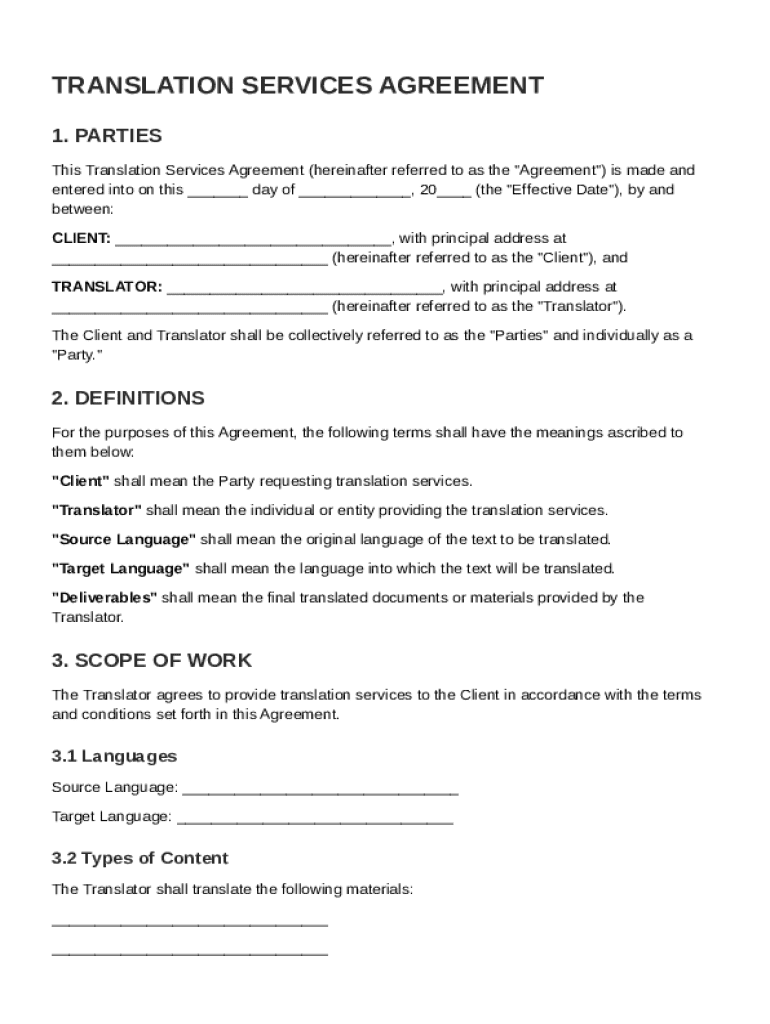
A Translation Contract Template is a standardized document that outlines the terms and conditions between a client and a translator for the provision of translation services. It is not merely a generic agreement but a comprehensive instrument ensuring that both parties have a clear understanding of their rights, obligations, and expectations within the translation process. This form serves as a legal framework that specifies essential aspects, such as the scope of work, payment terms, confidentiality clauses, and termination conditions. By using this template, parties can effectively avoid misunderstandings and legal disputes, ensuring a smoother professional relationship.
Key Elements of the Translation Contract Template
A well-constructed Translation Contract Template includes several critical components that collectively form the backbone of a robust agreement:
-
Scope of Work: Defines the specific services to be provided, including the source and target languages, and any specific terminologies or style guides to be used.
-
Payment Terms: Details the agreed-upon rate, payment schedule, and any additional costs or expenses that may be incurred during the translation process.
-
Confidentiality Obligations: Establishes the obligation of both parties to keep sensitive information private, especially if the content of the documents involves proprietary or classified data.
-
Revision and Error Correction: Outlines the number and type of revisions included in the service fee, and the procedures for addressing translation errors or discrepancies.
-
Termination Clause: Specifies the conditions under which the agreement can be terminated by either party, including any notice periods or penalties for early termination.
-
Governing Law: Indicates the jurisdiction under which the contract will be interpreted and disputes resolved, typically aligning with the location of the translator or client.
How to Use the Translation Contract Template
Utilizing a Translation Contract Template involves several methodical steps:
-
Review the Template: Begin by thoroughly reading the template to understand all sections and ensure all necessary provisions are included.
-
Customize Details: Modify the template to fit the specific needs of the transaction. This includes filling in details such as the names and contact information of the parties, the scope of work, and any custom payment arrangements.
-
Legal Compliance Check: Ensure the contract adheres to legal requirements, particularly if the work involves international jurisdictions with varying translation laws.
-
Discuss with the Translator: Engage in a discussion with the translator to negotiate terms, make amendments, or add any clauses specific to the project requirements.
-
Finalize and Sign: Once both parties agree on the terms, the contract should be signed and dated by both the client and the translator to formalize the agreement.
Steps to Complete the Translation Contract Template
Completing the Translation Contract Template involves a precise series of actions:
-
Gather Information: Before completing the template, collect all relevant information, such as project specifics, expected completion dates, and resource availability.
-
Fill Out Key Sections: Enter detailed descriptions in sections like scope of work and payment terms. Ensure clarity and avoid ambiguous language.
-
Consult with Legal Advisor: Seek legal advice to verify that the completed template satisfies all applicable legal standards and does not expose either party to unexpected liabilities.
-
Finalize Revisions: After discussing any necessary revisions, incorporate these into the template and review for consistency and completeness.
-
Secure Signatures: After all details have been verified and agreed upon, obtain signatures from both parties, ensuring that each keeps a signed copy for their records.
Legal Use of the Translation Contract Template
Legal considerations play a vital role in using the Translation Contract Template:
-
Enforceability: Ensure the contract is enforceable by verifying that all elements required by contract law (offer, acceptance, consideration, mutual intent, and legality) are present.
-
Compliance with Laws: The template must comply with the applicable federal, state, and local laws, including but not limited to copyright and confidentiality laws.
-
Dispute Resolution: Include clauses that specify the methods for resolving disputes, such as mediation or arbitration, to provide a structured approach for handling potential conflicts.
Who Typically Uses the Translation Contract Template
Various parties can benefit from employing a Translation Contract Template:
-
Individual Freelance Translators: Ensures clarity in engagements with clients and protects individual interests by setting clear expectations and payment terms.
-
Translation Agencies: Provides a uniform agreement for engaging multiple clients, helping to maintain consistency and clear communication across projects.
-
Corporate Entities: When requiring translation services for business expansions or multilingual communications, companies can use the template to formalize their engagement with translation providers.
-
Legal Professionals: Lawyers handling contracts for translation services may utilize the template as a reliable starting point for more customized legal agreements.


Important Terms Related to Translation Contract Template
Understanding the critical terminology associated with the Translation Contract Template is essential:
-
Source Language: The original language of the text to be translated.
-
Target Language: The language into which the text will be translated.
-
Translator: The individual or entity providing the translation service.
-
Client: The individual or organization commissioning the translation service.
-
Non-Disclosure Agreement (NDA): A clause or separate document requiring confidentiality of sensitive information within the translation content.
Examples of Using the Translation Contract Template
Practical applications of the Translation Contract Template reveal its versatility:
-
Literature Translation: For an author commissioning the translation of a book into another language, the template ensures that expectations around style and deadlines are formally documented.
-
Business Documentation: Corporations expanding internationally may use the template to secure translation of business reports, contracts, and marketing materials, protecting intellectual property through confidentiality clauses.
-
Legal Documents: Legal professionals requiring accurate translations of legal contracts for use in different jurisdictions can utilize the template to align services with necessary legal requirements.
-
Academic Works: Academic institutions or scholars may use the template for translating research papers or educational materials, ensuring that academic integrity and confidentiality are upheld.




