






Definition and Meaning
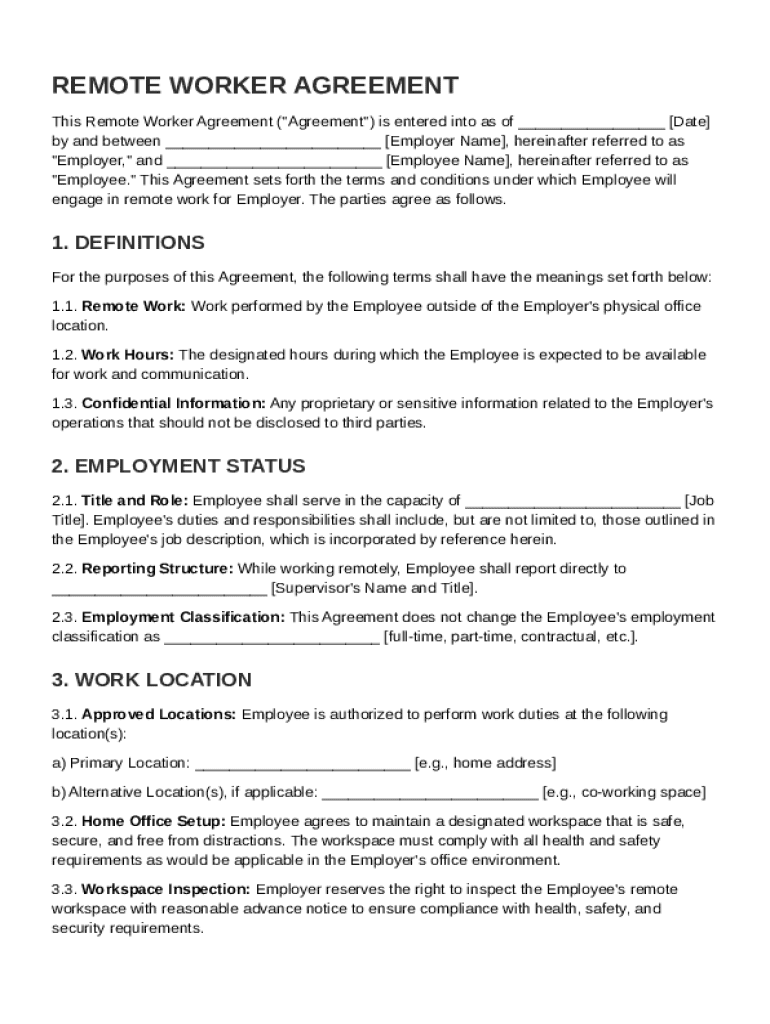
A Remote Worker Agreement Template is a formal document that establishes the foundation for an employee's remote work arrangement with their employer. It aims to provide clarity on the expectations and responsibilities of both parties. This agreement typically includes elements such as employment status, location specifics, working hours, communication protocols, performance standards, and equipment management. By outlining these critical aspects, it serves as a tool to prevent misunderstandings and ensure smooth operation within a remote work setting.
How to Use the Remote Worker Agreement Template
The Remote Worker Agreement Template is a versatile document designed to be adapted based on the particular needs of an organization. Employers should customize the template with specific terms related to their company’s policies and the individual roles of remote employees. Key steps in using the template include:
-
Customize Terms:
- Update the template to reflect the company’s specific policies on work hours, communication, and performance expectations.
- Include any industry-specific regulations that may apply to remote working situations.
-
Review and Revise:
- Ensure all sections are completed and free of ambiguities.
- Engage legal professionals to verify that the information adheres to relevant labor laws.
-
Communicate with Employees:
- Discuss the agreement with employees to ensure understanding and obtain their input.
- Use the template as a starting point for conversations about expectations and responsibilities.
By following these steps, organizations can effectively use the template to create tailored remote work agreements that meet their operational needs and employee expectations.
Steps to Complete the Remote Worker Agreement Template
Completing a Remote Worker Agreement Template involves several critical steps to ensure all necessary information is accurately documented. Here’s a detailed breakdown of the process:
-
Gather Information:
- Collect all relevant employee and employer details, including contact information, job titles, and employment dates.
-
Define Work Arrangements:
- Specify the remote work schedule, designated work location, and any flexible hours arrangements.
- Outline expectations for availability and response time during working hours.
-
Outline Communication Protocols:
- Detail methods and frequency of communication, specifying tools and platforms to be used.
- Include protocols for regular check-ins and performance reviews.
-
Document Equipment and Expenses:
- List any equipment provided by the employer and outline maintenance responsibilities.
- Explain policies for reimbursing costs related to remote work, such as internet service or office supplies.
-
Clarify Confidentiality and Data Security Obligations:
- Highlight protocols and measures for data protection and confidentiality.
- Include employee obligations to safeguard company information while working remotely.
By following these steps, the template can be completed with precision, ensuring clarity and agreement on all remote work conditions.
Key Elements of the Remote Worker Agreement Template
The Remote Worker Agreement Template encompasses several key elements essential for defining a successful remote work arrangement:
-
Employment Status: Clarifies whether the employee is full-time, part-time, or on a freelance basis, setting the foundational employment terms.
-
Work Location and Equipment: Specifies where the employee will be working from and details any equipment they will be using, whether provided by the employer or personally owned.
-
Work Hours and Schedule: Sets expectations for daily working hours, breaks, and any flexibility in scheduling, contributing to work-life balance.
-
Communication and Reporting: Establishes methods for regular communication, setting expectations for meetings, reports, and other interactions.
-
Performance Expectations: Outlines performance metrics and goals, providing clear benchmarks for employee evaluation.
-
Confidentiality and Security Measures: Enforces compliance with data protection and confidentiality standards crucial for remote work security.
These elements form a comprehensive framework for remote work, covering every significant aspect required to maintain an effective and lawful employment relationship.
Legal Use of the Remote Worker Agreement Template
The Remote Worker Agreement Template is a legally binding document that sets out clear terms and conditions of remote employment. It serves as legal protection for both employers and employees by delineating rights and responsibilities. Employers should ensure:
-
Legal Compliance: The template should comply with state and federal labor laws, including wage and hour regulations.
-
Consistent Updates: Regularly review and update the agreement to reflect changes in legislation or company policy.
-
Employee Acknowledgment: Secure formal acknowledgment from employees signifying that they understand and agree to the terms, reinforcing the legality of the document.
Using the template within these legal parameters safeguards against disputes and provides a foundation for lawful employee management in a remote context.
Examples of Using the Remote Worker Agreement Template
The application of the Remote Worker Agreement Template extends across various industries and scenarios, highlighting its versatility:
-
Tech Companies: Use the template to facilitate remote development teams, emphasizing flexible hours and communication tools like Slack.
-
Customer Service Roles: Adapt the template for home-based service representatives, focusing on designated work hours and secure data management.
-
Freelance or Contract Work: Customize for freelance positions to establish clear payment schedules and project-based objectives.
Each use case improves clarity and structural guidance for remote work, aiding companies in establishing consistent remote work practices.
Important Terms Related to the Remote Worker Agreement Template
Several critical terms are commonly found in a Remote Worker Agreement Template. Understanding these terms is vital for both employers and employees:
-
Telecommuting: Often used interchangeably with remote work, denotes working from a location other than the traditional office.
-
Flexible Schedule: Refers to variable work hours that may deviate from the standard nine-to-five structure, allowing for alterable start or end times based on employee needs.
-
Confidential Information: Classified or sensitive data that employees must protect, particularly in a remote setting.
-
Performance Metrics: Specific criteria used to assess an employee’s work performance, such as deadlines, quality standards, and project completion rates.
Grasping these terms ensures comprehensive understanding and effective communication during the remote work agreement process.
Who Typically Uses the Remote Worker Agreement Template
The Remote Worker Agreement Template is a valuable resource for a broad range of users:
-
Employers and HR Professionals: Use it to formalize the terms of remote employment and standardize remote policies within the organization.
-
Remote Employees: Benefit from clear guidelines on expectations, ensuring they understand their responsibilities and rights.
-
Legal Consultants: Provide advice and adjustments to ensure the agreement aligns with legal standards and specific organizational needs.
These diverse users rely on the template to structure remote work arrangements comprehensively, enhancing mutual understanding and productivity within remote teams.