
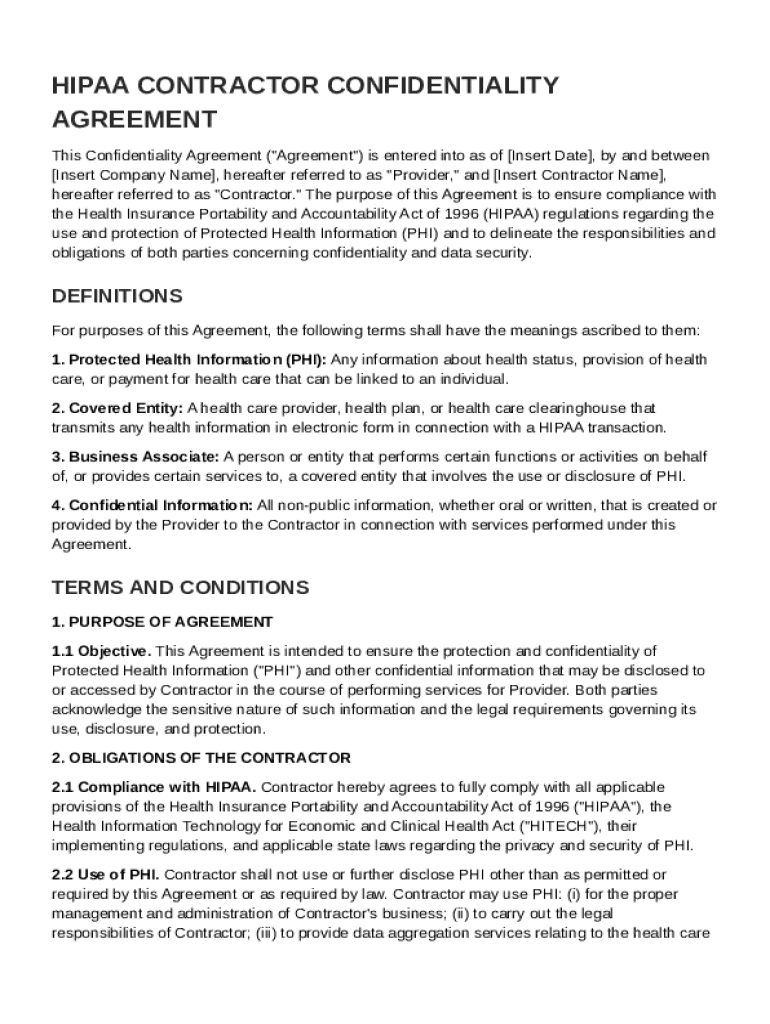







Definition and Meaning of HIPAA Contractor Confidentiality Agreement
The HIPAA Contractor Confidentiality Agreement is a legal contract between a healthcare provider and a contractor. This agreement ensures that the contractor complies with HIPAA regulations to protect Protected Health Information (PHI). It establishes clear definitions and obligations for maintaining confidentiality, emphasizing the importance of safeguarding sensitive health information.
- Definitions: Clarifies key terms such as "Protected Health Information" and "Contractor" within the context of HIPAA.
- Obligations: Outlines the contractor’s responsibilities to ensure PHI confidentiality and security.
- Liability and Legal Framework: Establishes legal liabilities for failure to comply and specifies governing laws.
This agreement is crucial in healthcare settings where contractors are involved in handling PHI. It ensures all parties understand their roles and responsibilities in protecting health data.
Key Elements of the HIPAA Contractor Confidentiality Agreement Template
Understanding the core components of the HIPAA Contractor Confidentiality Agreement Template helps in ensuring comprehensive compliance. Critical elements include:
- Confidentiality Obligations: Specifies the requirements for safeguarding PHI.
- Security Measures: Describes the technical and physical safeguards the contractor must implement to protect PHI.
- Breach Notification: Outlines the process for reporting and managing data breaches.
- Data Use Limitations: Details restrictions on how information can be used and shared by the contractor.
- Return or Destruction of Data: Establishes requirements for data management upon contract termination.
- Training Requirements: May include requirements for contractor training in HIPAA compliance.
Each element serves a specific purpose in maintaining the integrity and confidentiality of PHI, ensuring legal compliance and protecting against potential breaches.
How to Use the HIPAA Contractor Confidentiality Agreement Template
Utilizing the HIPAA Contractor Confidentiality Agreement Template effectively involves several steps:
- Review: Carefully examine the template to understand its provisions and make necessary customizations.
- Customize: Adapt language to reflect specific organizational and contractual needs while ensuring compliance with HIPAA.
- Consult Legal Counsel: Engage legal experts to verify that the agreement meets all required legal standards.
- Distribute: Share the finalized agreement with the contractor for review and signature.
- Training: Provide training for contractors on HIPAA compliance and their specific agreement obligations.
- Regular Updates: Review and update the agreement as needed to reflect changes in regulations or organizational policies.
These steps help ensure that the template is effectively integrated into organizational practices, promoting robust PHI protection.
Steps to Complete the HIPAA Contractor Confidentiality Agreement Template
Completing the HIPAA Contractor Confidentiality Agreement Template involves a systematic approach:
- Input Party Information: Include details of all parties involved such as names, roles, and contact information.
- Define Scope and Purpose: Clearly outline the agreement’s purpose and the scope of services provided by the contractor.
- Specify PHI Handling Procedures: Detail procedures for handling PHI, including authorized and unauthorized uses.
- Assign Responsibilities: Clarify responsibilities for safeguarding PHI and managing breaches.
- Signatures: Ensure all parties sign and date the agreement to formalize their consent and understanding.
By following these steps, organizations can properly draft and execute an effective confidentiality agreement tailored to their operational needs.
Legal Use and Compliance with HIPAA
Ensuring that the HIPAA Contractor Confidentiality Agreement is legally compliant is crucial for protecting both parties:
- Adherence to HIPAA Standards: Agreement must be aligned with existing HIPAA regulations and standards for PHI protection.
- Legal Counsel: Consult with legal professionals to validate the agreement’s compliance.
- Audit Trail: Maintain documentation of compliance efforts and agreement execution.
Legal use of this template fortifies an organization’s defense against potential legal challenges related to PHI breaches or mismanagement.
Important Terms Related to HIPAA Contractor Confidentiality Agreement
Several critical terms are associated with the HIPAA Contractor Confidentiality Agreement:
- Protected Health Information (PHI): Any health-related information that can be directly or indirectly linked to an individual.
- Business Associate: A person or entity performing functions or activities on behalf of, or providing services to, a covered entity that involves access to PHI.
- Minimum Necessary Standard: The principle that PHI disclosures should be limited to the minimum necessary to accomplish the intended purpose.
Understanding these terms ensures clarity and precision in both drafting and executing the agreement.
State-Specific Rules for HIPAA Contractor Confidentiality Agreement
It's important to consider state-specific nuances when deploying the HIPAA Contractor Confidentiality Agreement Template in the U.S.:
- State Laws: Be aware of state legislation that might provide stricter regulations around PHI than federal HIPAA laws.
- Variations in Requirements: Different states may have varying requirements for breach notification and PHI management.
Reviewing these laws ensures the agreement addresses all local regulatory requirements, preventing compliance issues.
Examples and Scenarios of Using the Template
Practical examples offer insight into how the HIPAA Contractor Confidentiality Agreement Template can be applied:
- Healthcare IT Contractors: Ensures that IT service providers accessing PHI for system maintenance adhere to HIPAA standards.
- Medical Billing Services: Billing companies using PHI for claims processing must agree to safeguard this information under HIPAA.
- Transcription Services: Those transcribing medical records can have access restricted to the information necessary for service rendering.
These scenarios illustrate the template’s applicability across various healthcare-related contracts.




