






Definition and Meaning
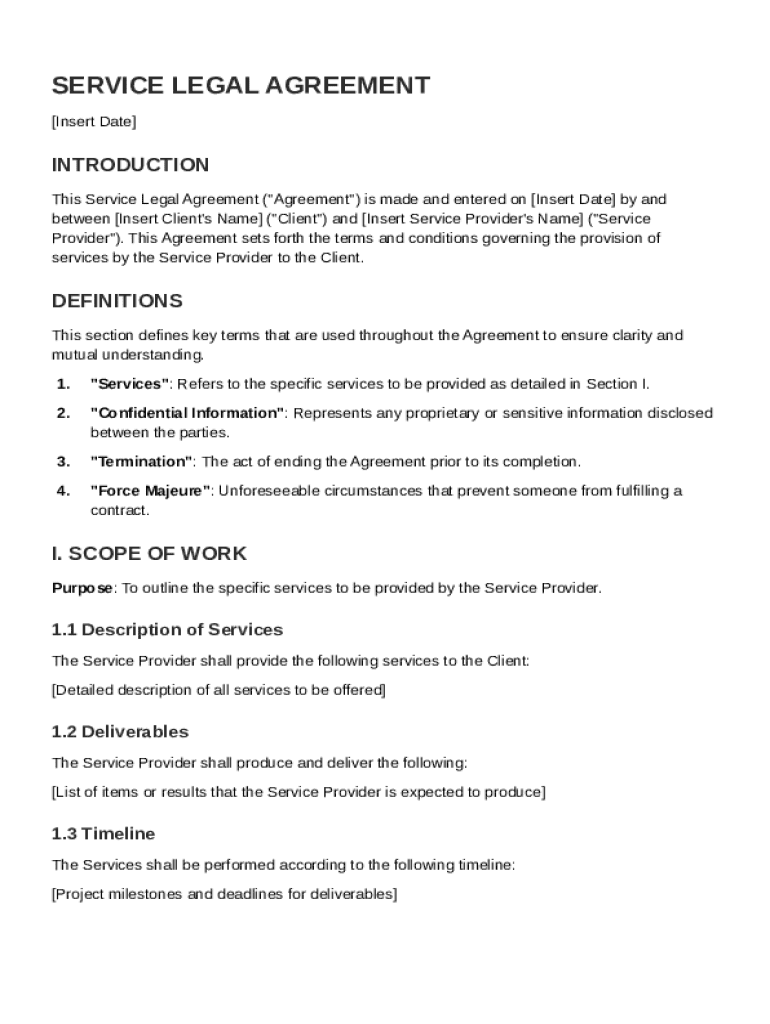
A Service Legal Agreement (SLA) Template is a pre-designed document that helps formalize a contract between a client and a service provider. This document outlines the terms and conditions under which specific services will be provided. The primary purpose of an SLA is to establish clear expectations between the involved parties, ensuring mutual understanding and agreement on the scope of services, performance metrics, and other critical elements of the service relationship. By setting out clear obligations and rights, an SLA also aims to mitigate potential disputes and enhance the quality of service provision.
Key components typically covered in a Service Legal Agreement Template include:
- Scope of Services: Detailed description of the services to be provided.
- Performance Standards: Criteria for assessing the quality and timeliness of services.
- Compensation Details: Information regarding payment terms and invoicing.
- Responsibilities of Both Parties: Duties and obligations of the client and service provider.
- Confidentiality Obligations: Requirements to protect sensitive information.
- Liability Limitations: Clauses that define the extent of liability for each party.
- Termination Terms: Conditions under which the agreement can be terminated.
- Governing Law and Jurisdiction: Specifies the legal framework and location for resolving disputes.
By using an SLA Template, both parties can ensure that they have covered all essential aspects of their service relationship in a clear and structured manner.
How to Use the Service Legal Agreement Template
Utilizing a Service Legal Agreement Template effectively involves several steps designed to customize and formalize the agreement to fit the specific needs of the parties involved. Here’s a detailed guide:
-
Review the Template: Begin by thoroughly reading through the entire template. Ensure you understand each section and determine which sections need to be customized or modified to meet your specific requirements.
-
Customize Content: Modify the template’s content where necessary. This includes adding specific service details, performance metrics, compensation terms, and confidentiality clauses. Make sure every aspect of your service relationship is accurately represented in the document.
-
Consult Legal Counsel: If possible, consult with a legal professional to review the customized SLA. Legal advice can help ensure that the agreement complies with regulatory requirements and effectively protects your interests.
-
Discuss with the Other Party: Share the draft SLA with the other party involved. Discuss any proposed changes and ensure mutual agreement on the stipulated terms.
-
Finalize the Agreement: Once both parties agree on the terms, finalize the document. This may involve incorporating any amendments agreed upon during discussions.
-
Sign and Store: Both parties should sign the completed SLA. Retain a signed copy in your records for future reference and accountability.
Using the Service Legal Agreement Template in this way ensures that both parties have a clear, mutual understanding of their service relationship, reducing the likelihood of disputes.
Key Elements of the Service Legal Agreement Template
The Service Legal Agreement Template typically includes several key elements that define the contractual relationship between the client and service provider. These components are critical for ensuring comprehensive coverage of all aspects of the agreement:
-
Parties Involved: Identification of the client and service provider, including contact information and authorized representatives.
-
Service Delivery Timeline: Detailed schedule of when services are to be delivered or milestones expected to be met.
-
Performance Measurement: Specific metrics or standards against which the service delivery will be measured.
-
Compensation and Payment Terms: Comprehensive breakdown of financial obligations, including rates, payment schedules, and penalties for late payments.
-
Amendment Procedures: Guidelines on how changes or amendments to the SLA can be made, ensuring that both parties agree to any modifications in writing.
-
Dispute Resolution Process: Predefined processes for resolving disputes between the parties, such as mediation or arbitration, to avoid litigation.
-
Termination Clauses: Conditions and procedures under which the SLA can be terminated by either party, including any notice periods required.
By addressing these elements comprehensively, the SLA Template functions as a strong legal foundation for a successful service relationship.
Steps to Complete the Service Legal Agreement Template
Completing a Service Legal Agreement Template involves a structured series of steps to ensure that the document is comprehensive and legally binding. Here’s how you can accomplish this efficiently:
-
Gather Necessary Information: Collect all pertinent information, including contact details of both parties, descriptions of services, and payment terms.
-
Draft Initial Content: Start by filling out sections of the template with known information. This includes the parties involved, service description, and timelines.
-
Tailor the Template: Adjust the template’s boilerplate language to reflect specific terms that apply to your unique service arrangement.
-
Review and Verify Details: Scrutinize all entered information for accuracy and completeness. Check that all performance metrics and financial terms are clearly stated.
-
Incorporate Feedback: If applicable, obtain feedback from stakeholders involved in the service delivery. This could be internal departments or external advisors.
-
Legal Review: Have a legal expert review the draft SLA to ensure it meets legal standards and protects your interests.
-
Share with Counterparty: Provide the completed draft to the other party for review, discussing any suggested changes or concerns.
-
Finalize and Sign: Agree on the completed terms, make any needed modifications, and obtain signatures from authorized representatives of both parties.
-
Store and Distribute Copies: Retain a signed original and distribute copies to both parties for their records.
Following these steps aids in creating a robust and effective Service Legal Agreement that serves the interests of both parties.
Important Terms Related to Service Legal Agreement Template
Understanding the specific terminology used in a Service Legal Agreement Template is vital for ensuring clarity and proper interpretation of the document. Below are some important terms commonly found within an SLA:
-
Service Level Objective (SLO): Specific metric or goal used to measure the quality or performance of the service provided.
-
Service Level Indicator (SLI): A quantitative measure of performance defined in an SLO, enabling assessment of service levels.
-
Uptime Commitment: The percentage of time the service is expected to be operational, often critical for IT services.
-
Response Time: The time taken by the service provider to respond to client queries or issues, essential for customer satisfaction.
-
Escalation Procedures: Defined procedures for escalating issues when standard response times or resolutions are not met.
-
Remediation Plans: Steps a service provider agrees to take if service levels fall below agreed standards, ensuring continued service improvement.
-
Exclusions: Specific services or scenarios that are not covered under the SLA, clarifying boundaries and expectations.
These terms help articulate the operational aspects of the services and establish mutual accountability between the client and service provider.
Who Typically Uses the Service Legal Agreement Template
A wide range of individuals and organizations can benefit from using a Service Legal Agreement Template. It serves as a critical tool for formalizing service arrangements across various sectors. Typical users include:
-
Businesses: Companies engaging with external vendors or contractors to obtain specialized services.
-
IT Service Providers: Organizations offering technology solutions, where clear performance metrics and uptime commitments are crucial.
-
Freelancers and Consultants: Individuals providing specialized skills or expertise, ensuring clarity on deliverables and payment schedules.
-
Government Agencies: Public sector bodies working with private entities to deliver public services effectively.
-
Educational Institutions: Schools and universities partnering with service providers for technology, catering, or maintenance services.
These and other users rely on SLAs to establish legal and operational guidelines that foster a productive working relationship, prevent disputes, and ensure service quality.


Examples of Using the Service Legal Agreement Template
Service Legal Agreement Templates can be applied in various practical scenarios to formalize service delivery arrangements. Here are a few examples:
-
IT Support Services: A company hires an IT firm to manage its tech infrastructure. The SLA specifies uptime targets, response times, and maintenance duties.
-
Consultancy Projects: A marketing consultant is engaged to improve a business's social media presence. The SLA lays out project milestones, deliverables, and compensation terms.
-
Facility Management: A property management firm contracts with cleaning services. The SLA outlines cleaning schedules, service standards, and quality assessments.
In each scenario, the use of an SLA Template helps protect both parties by defining service levels, obligations, and methods for resolving disputes. These examples illustrate the template’s flexibility and utility across different industry contexts.
State-specific Rules for the Service Legal Agreement Template
When creating a Service Legal Agreement, understanding state-specific rules and regulations is crucial. Different states may have unique legal requirements affecting how SLAs are drafted and enforced. Notably:
-
Governing Law Clauses: SLAs often contain a governing law clause that specifies which state's law will apply to the agreement. This is important for understanding which legal principles will govern disputes.
-
Enforceability of Terms: Some states have specific statutes that may influence the enforceability of certain SLA provisions, such as liability limitations or non-compete clauses.
-
Consumer Protection Laws: States may have unique consumer protection laws impacting service agreements, especially where consumer rights to refunds or disputes are concerned.
-
Electronic Signatures: State laws may differ regarding the recognition and enforceability of electronic signatures used in SLAs, impacting how agreements are executed and authenticated.
When crafting an SLA, parties involved should be mindful of the legal landscape in the pertinent state to ensure compliance and protect their interests.