






Definition & Meaning
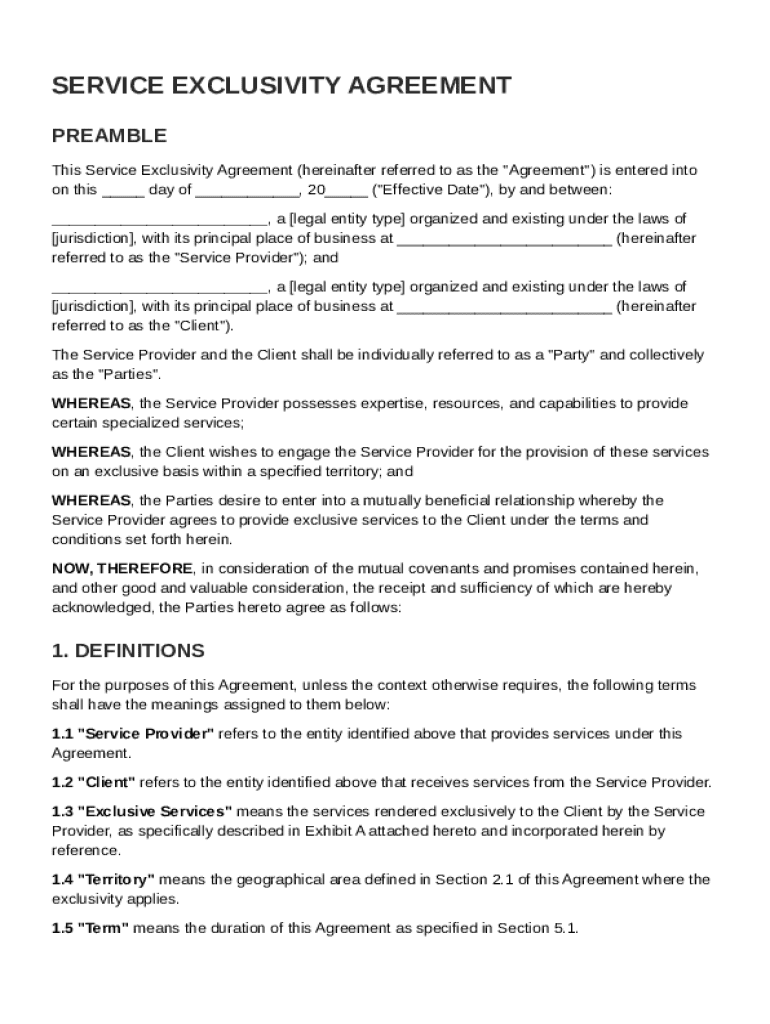
The Service Exclusivity Agreement Template establishes a contract between a Service Provider and a Client, ensuring that services are performed exclusively for the Client within a defined region and timeframe. This agreement outlines both parties' obligations, the scope of exclusive services, and legal conditions that govern the relationship. It is pivotal in regulating competition and maintaining trust between businesses, ensuring that the provider prioritizes the Client's needs. The template serves as a standardized document to streamline negotiations and provide legal clarity.
Key Elements of the Service Exclusivity Agreement Template
Several critical components are inherent to the Service Exclusivity Agreement Template, ensuring comprehensive coverage of the contractual relationship:
- Exclusivity Clause: Clearly states the services that the provider will offer solely to the Client.
- Compensation and Fees: Details the financial arrangements, including payment terms, amounts, and schedules.
- Confidentiality Requirements: Protects sensitive information through non-disclosure obligations.
- Indemnification Clause: Defines how potential liabilities and risks are managed.
- Amendment Provisions: Outlines procedures for modifying agreement terms.
- Termination Conditions: Specifies the events under which the agreement can be dissolved.
Each section is critical for protecting the interests of both parties and ensuring smooth operational relationships.
How to Use the Service Exclusivity Agreement Template
Utilizing the Service Exclusivity Agreement Template involves a structured approach to ensure it serves its intended legal and operational purposes:
- Determine the Scope: Clearly define the services rendered and the exclusivity limits, noting any geographical or time constraints.
- Customization: Adapt the template to align with specific business needs, including adjusting clauses related to fees, confidentiality, and termination.
- Review Legal Terminology: Ensure the language used is compliant with local laws to mitigate potential disputes.
- Consultation: Consider legal advice to validate that the agreement terms protect your business interests.
Thoroughly following these steps helps in crafting an effective and enforceable contract that aligns with business objectives.
Steps to Complete the Service Exclusivity Agreement Template
Completing the template requires meticulous attention to detail:
- Fill in Basic Information: Start with details of both parties, including names, addresses, and contact information.
- Define Terms and Compensation: Indicate service descriptions, exclusivity conditions, and agreed compensation structures.
- Draft Confidentiality Clauses: Specify confidentiality obligations and any monetary penalties for breaches.
- Outline Indemnification Terms: Establish the scope of indemnity and liabilities.
- Set Duration and Termination Clauses: Clearly state the duration of the agreement and conditions for early termination.
- Seek Input: Engage legal expertise as needed to ensure all terms conform to applicable laws.
Completing these steps ensures a comprehensive and legally robust document.
Examples of Using the Service Exclusivity Agreement Template
Real-world scenarios illustrate the practical applications of the template:
- Healthcare Sector: An exclusive service contract between a pharmaceutical company and a distributor to limit competitive distribution.
- IT Services: A technology firm's agreement with a client for dedicated development services precluding work for competitors.
- Retail Partnerships: Exclusive supply deals ensuring a retailer only stocks a particular brand, effectively cornering that segment of the market.
These examples underscore the template’s utility across varying industries, emphasizing its role in fostering exclusive business relationships.
State-Specific Rules for the Service Exclusivity Agreement Template
State legislation may affect how Service Exclusivity Agreements are interpreted and enforced:
- Non-Compete Clauses: Some states have specific restrictions on non-compete terms included in exclusivity agreements.
- Contract Enforcement: Variations in state laws can influence the validity of certain clauses, such as those related to penalties or dispute resolutions.
- Governing Law Clauses: Determining which state's laws govern the contract can impact legal proceedings and outcomes.
Understanding these nuances ensures compliance and reinforces the agreement's validity.
Legal Use of the Service Exclusivity Agreement Template
The template aligns with legal principles governing exclusivity agreements, ensuring it is both lawful and enforceable:
- Compliance with ESIGN Act: When executed electronically, the document must adhere to electronic signature laws, making it legally binding.
- Adherence to State Laws: It should conform to jurisdiction-specific contractual laws, particularly in contentious states.
- Legal Counsel Involvement: Regularly involving legal experts ensures the document reflects current laws and best practices.
These considerations help in managing legal risks associated with exclusive service agreements.
Business Types That Benefit Most from the Service Exclusivity Agreement
Certain businesses naturally find greater advantage in utilizing exclusivity agreements:
- Franchises: Maintaining consistent service delivery and quality across franchise locations often relies on such agreements.
- Consulting Firms: Ensuring proprietary methodologies are not shared with competitors.
- Wholesale Distributors: Protecting exclusive distribution rights for branded products enhances competitive leverage.
These entities leverage the agreements to protect their competitive advantages, ensure market position, and secure business relationships.