






Definition & Meaning
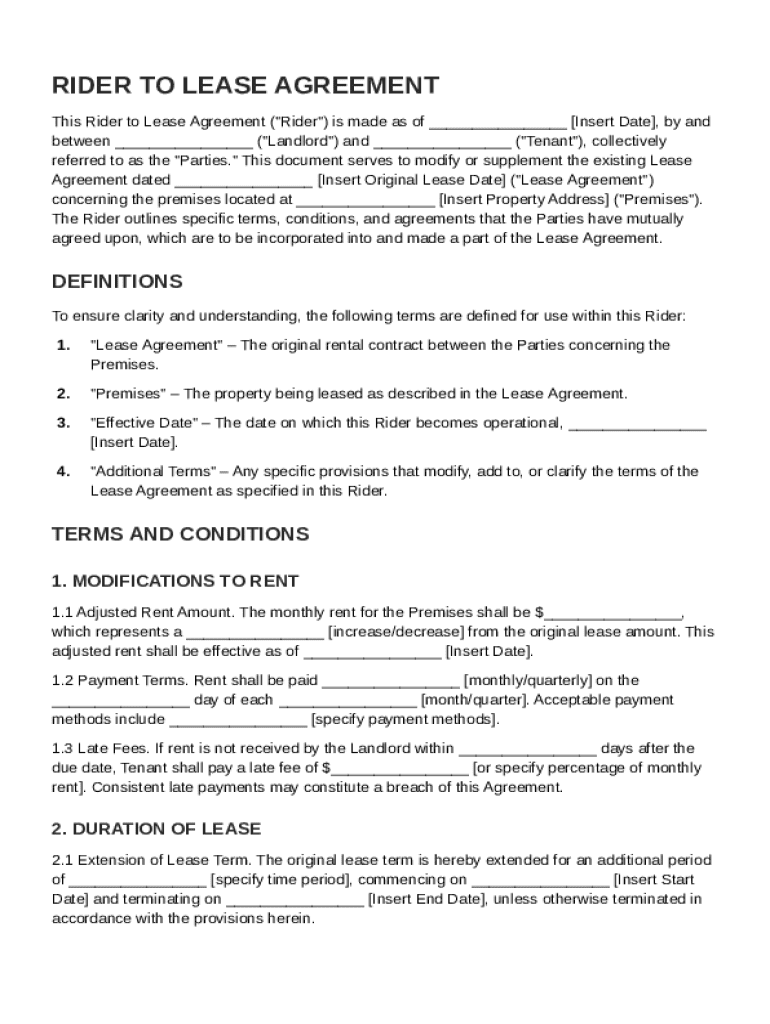
A Rider to Lease Agreement Template serves as an addendum to an existing lease agreement. It is designed to modify or supplement the lease terms initially agreed upon by the landlord and tenant. The rider specifies additional conditions that weren't covered in the original lease. It includes detailed provisions on rent adjustments, duration extensions, and other lease-related changes. Riders are often used to address specific concerns or alterations in the lease, ensuring both parties are aligned on new terms. In the context of a lease agreement, a rider provides clarity and legally binds the enhancements or adjustments to the original terms.
How to Use the Rider to Lease Agreement Template
When utilizing a Rider to Lease Agreement Template, it is important to start by thoroughly reviewing the existing lease terms. This ensures that any added clauses or changes introduced in the rider do not contradict the original agreement. The template provides a structured format to introduce changes such as rent modifications, pet policies, or maintenance obligations. Once the modifications are identified, they should be clearly detailed within the specified sections of the template. Both parties should review the updated agreement, ensure understanding, negotiate as necessary, and sign the document to denote acceptance of the new terms.
Steps to Complete the Rider to Lease Agreement Template
-
Review the Original Lease: Understand the existing lease terms to ensure that the additions or changes in the rider align correctly.
-
Identify Modifications: Clearly define what aspects of the lease need alteration. Common areas include rent changes, duration adjustments, and maintenance obligations.
-
Fill Out the Template: Use the template to document the proposed changes, ensuring each modification is clearly articulated.
-
Review and Agreement: Both the landlord and tenant should go through the proposed rider, discuss and adjust as needed.
-
Signature and Date: Once agreed, both parties should sign and date the rider. Each signatory should retain a copy of the finalized document.
-
Attachment to Original Lease: Attach the finalized rider to the original lease agreement, making sure to note that it legally modifies the initial terms.
Key Elements of the Rider to Lease Agreement Template
-
Rent Adjustments: Detailed conditions related to any changes in the rent structure, timing of increases, or decreases over the lease term.
-
Lease Duration: Terms concerning the extension or reduction of the lease’s duration, including any renewal options.
-
Maintenance and Repairs: Responsibilities relating to property upkeep indicating who is responsible for specific maintenance tasks or repairs.
-
Permitted Property Use: Any changes to the intended use of the premises, including restrictions on additional activities not mentioned in the original lease.
-
Alterations and Improvements: Provisions allowing or restricting modifications to the property like painting, installations, or landscaping.
-
Security Deposit Modifications: Details on how security deposit amounts are affected, including conditions that warrant deductions or changes.
-
Pet Policies: Amendments pertaining to pet ownership, which may include breed restrictions or additional fees.
Legal Use of the Rider to Lease Agreement Template
The legal significance of a Rider to Lease Agreement Template lies in its ability to amend an existing contract while remaining legally valid. It is crucial that both parties consent to these modifications for them to be enforceable. Riders help ensure that changes are documented in written form, reducing potential disputes. In legal terms, it enhances the clarity of the lease agreement and strengthens both parties' understanding of their rights and obligations. Lawyers often recommend the use of riders for significant lease changes to ensure compliance with local lease laws and regulations.
Who Typically Uses the Rider to Lease Agreement Template
Real estate professionals, including property managers, landlords, and tenants, frequently utilize the Rider to Lease Agreement Template. Landlords might use it to address changing conditions in the property market, such as adjusting rent or updating policies on subletting and alterations. Tenants may seek a rider to formalize requested changes, like extending the lease duration or including provisions for pet ownership. Lawyers might also use these templates to create tailored legal documents that capture specific requirements agreed upon by their clients, ensuring all lease amendments are documented properly.


State-Specific Rules for the Rider to Lease Agreement Template
Each state in the U.S. may have specific rules and statutes governing the use of riders in lease agreements. Landlords and tenants should consult state-specific rental laws to ensure compliance. Some states have strict requirements about the language used in riders, while others may dictate permissible changes that can be incorporated through a rider. For example, in some jurisdictions, rent control laws might limit how rent can be adjusted in a rider. It is essential for both parties to understand any state-imposed limitations and seek legal advice as required to ensure the enforceability of the rider.
Important Terms Related to Rider to Lease Agreement Template
-
Addendum: A legal document that modifies an existing contract; similar in function to a rider.
-
Amendment: The formal alteration of contract terms.
-
Tenant: The individual or entity leasing the property.
-
Landlord: The owner or manager of the leasing property.
-
Premises: The physical space being leased.
-
Legal Consideration: Values exchanged in a contract that make it legally binding.
Understanding these terms helps clarify how a Rider to Lease Agreement operates within the broader lease context. Legal terms should be carefully reviewed to ensure all parties understand their rights and obligations as outlined in the rider.