






Definition and Meaning
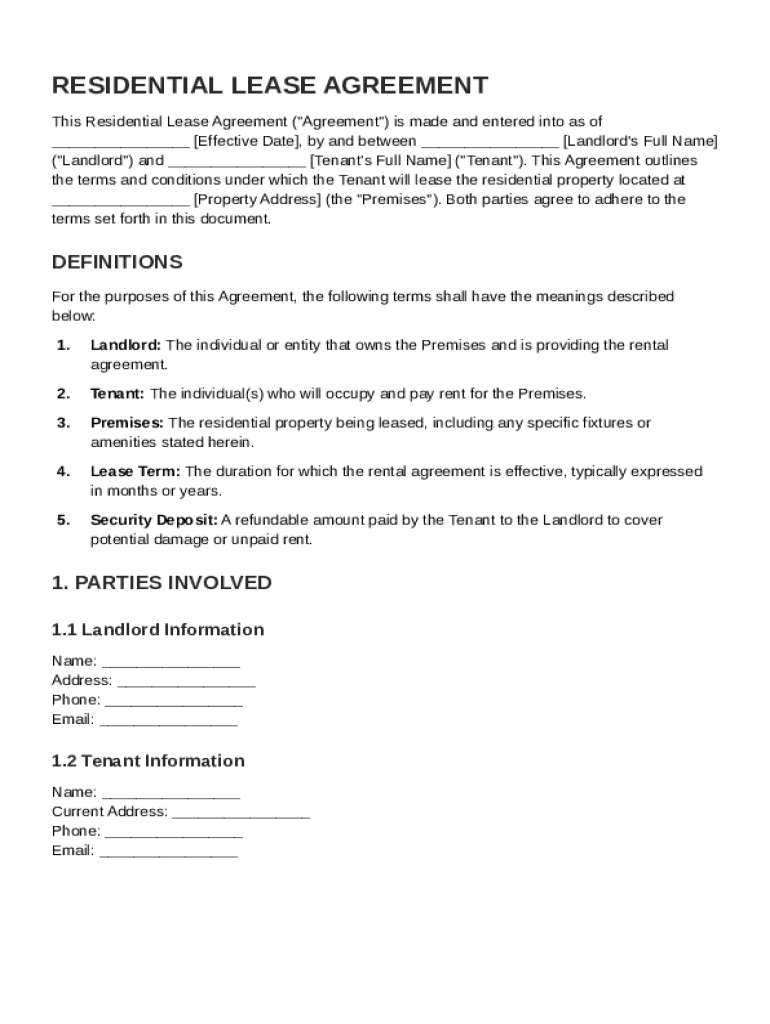
A Rental Or Residential Lease Agreement Template is a pre-formatted document used by landlords and tenants to formalize the terms of a residential rental arrangement. This template outlines the rights and responsibilities of both parties, ensuring legal compliance and mutual understanding. The agreement typically includes essential elements such as rent amount, lease duration, property description, and conditions under which the lease may be terminated. By establishing clear expectations, this template aids in preventing potential disputes between landlords and tenants.
Key Elements of the Rental Or Residential Lease Agreement Template
The Rental Or Residential Lease Agreement Template contains several crucial sections that must be filled out to create a comprehensive document. These include:
- Parties Involved: Identifies the landlord and tenant, including their full legal names and contact information. This section ensures that both parties are clearly defined for the duration of the lease.
- Property Description: Provides a detailed description of the rental property, including the address, unit number, and any specific amenities or features included, such as parking spaces or storage.
- Lease Term: Defines the start and end date of the lease agreement. This section also details the conditions for renewal or extension if applicable.
- Rent Payment Structure: Outlines the monthly rent amount, due date, acceptable payment methods, and any late payment penalties or grace periods.
- Security Deposit Requirements: Specifies the amount of security deposit required, the conditions under which it may be withheld, and the timeline for its return at the end of the lease term.
- Maintenance Responsibilities: Clarifies the maintenance obligations of both the landlord and tenant, including routine repairs and major maintenance issues.
How to Use the Rental Or Residential Lease Agreement Template
Using the Rental Or Residential Lease Agreement Template is straightforward and can provide legal assurance to both parties. Here are the steps to follow:
- Download the Template: Access the template from a trusted source such as DocHub, ensuring it meets legal standards for your state.
- Fill in the Details: Enter the information for each section accurately, including the names of parties, property details, and the agreed-upon terms.
- Review the Conditions: Carefully read each section to understand responsibilities and obligations. Make adjustments as necessary to comply with specific requirements or preferences.
- Sign the Agreement: Both parties should sign the completed document. DocHub allows for electronic signatures to facilitate this process securely.
- Distribute Copies: Provide a completed copy of the signed lease to each party for their records. This ensures both parties have the necessary documentation should any disputes arise.
State-Specific Rules for the Rental Or Residential Lease Agreement Template
Rental laws and requirements can vary significantly between different states in the United States. When using a rental or residential lease agreement template, it is crucial to adhere to state-specific rules that may impact the lease terms:
- Security Deposit Limits: Some states have specific limitations on the amount landlords can charge as a security deposit.
- Notice Requirements: The notice period required for termination or non-renewal of the lease may differ from state to state.
- Rent Control Policies: Certain states or jurisdictions may have rent control measures in place, affecting rent increases and lease renewal terms.
- Disclosure Obligations: States may require landlords to disclose specific information about the property, such as problems with lead paint or other safety hazards.
Legal Use of the Rental Or Residential Lease Agreement Template
Ensuring the legal use of a rental or lease agreement involves adhering to federal, state, and local laws while maintaining the rights and obligations of both parties:
- Comply with Fair Housing Laws: Landlords must ensure that lease terms and tenant screening processes comply with fair housing laws, prohibiting discrimination based on race, religion, gender, or other protected classes.
- Drafting Legally Binding Clauses: Each component of the lease must be enforceable in a court of law, meaning terms cannot infringe on legal rights or impose illegal practices.
- Regular Review and Updates: It is essential to review and update the lease template regularly to incorporate any changes in legislation or best practices in property management.
Important Terms Related to Rental Or Residential Lease Agreement Template
- Lease Term: The duration for which the lease is effective, including start and end dates.
- Tenant: The individual or group who rents and occupies the property.
- Landlord: The property owner or entity leasing out the residential space.
- Security Deposit: A sum of money paid upfront by the tenant to cover potential damages or unpaid rent.
Steps to Complete the Rental Or Residential Lease Agreement Template
Completing a rental or residential lease agreement template involves several precise steps to ensure all necessary details are included:
- Gather Necessary Information: Collect information about the property, including address, unit specifications, and rent details.
- Draft Lease Terms: Clearly define rental terms, payment schedules, and maintenance responsibilities in the agreement.
- Add Additional Clauses: Include any supplementary clauses or addendums that address specific needs or scenarios unique to your arrangement.
- Finalize the Document: Review the completed template for errors or omissions and ensure compliance with local regulations.
- Sign and Distribute: Once finalized, both landlord and tenant should sign the agreement. Utilize DocHub's electronic signature features for secure and streamlined signing.
Who Typically Uses the Rental Or Residential Lease Agreement Template
The Rental or Residential Lease Agreement Template is primarily used by landlords, property managers, and tenants. It is an essential document in the rental process that helps establish a legally binding relationship between landlord and tenant. While these templates are more commonly utilized by landlords and property managers in residential property management, tenants may also use them as a reference to understand the terms they are agreeing to.


Examples of Using the Rental Or Residential Lease Agreement Template
These templates can be customized to suit varied rental arrangements. Consider these examples:
- Short-term Lease for Seasonal Housing: Adapt the template to include terms specific to short-term rentals, like vacation homes, ensuring flexibility while maintaining legal protections.
- Multi-Tenant Lease Agreements: Modify the template to accommodate multiple tenants, detailing individual responsibilities for rent, shared spaces, and other considerations.
- Pet-friendly Rentals: Include clauses related to pet policies, additional deposits, or breed restrictions to accommodate pet owners appropriately.