






Definition and Meaning
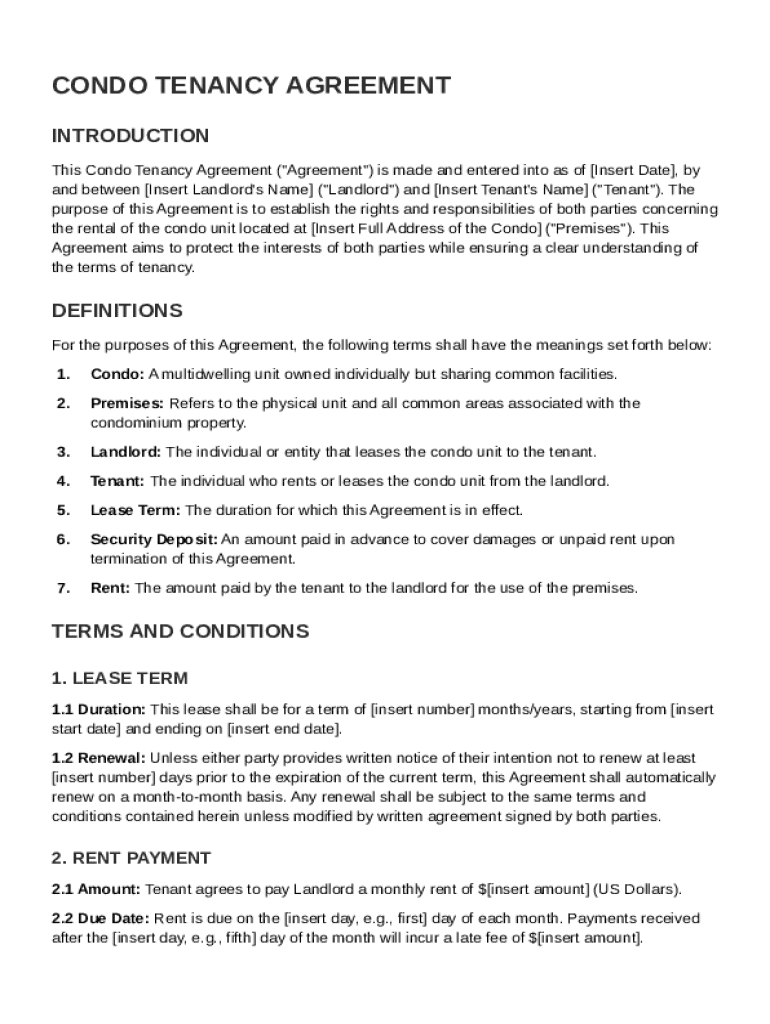
The Condo Tenancy Agreement Template serves as a legally binding document that outlines the terms and conditions between a landlord and a tenant for leasing a condominium unit. This template is designed to ensure clarity and transparency regarding the rights and obligations of both parties involved. By defining key aspects such as lease duration, rent payment obligations, and security deposit requirements, the agreement aims to prevent disputes and provide a reference point for managing the tenancy. It's a crucial tool for both landlords and tenants to protect their interests and ensure that the arrangement aligns with legal standards.
Key Components of the Agreement
- Lease Duration: Defines the period for which the tenant is entitled to occupy the unit.
- Rent Payment Details: Specifies the rental amount, due dates, and acceptable payment methods.
- Security Deposit Requirements: Outlines the amount, conditions for its return, and possible deductions.
- Tenant and Landlord Obligations: Establishes responsibilities such as maintenance and repair duties.
- Premises Usage: Includes rules regarding the permissible use of the condo and any restrictions.
Legal Use of the Condo Tenancy Agreement Template
The Condo Tenancy Agreement Template is crafted to comply with legal standards and regulations governing residential tenancies in the United States. It incorporates clauses that reflect the statutory requirements, such as tenant rights, eviction procedures, and obligations related to property upkeep. Utilizing a standardized template helps ensure that both landlord and tenant are aware of their legal obligations, reducing the risk of legal disputes. It's important to tailor certain sections to specific state laws, as regulations can vary across jurisdictions.
State-Specific Considerations
- Tenant Rights: Each state has unique tenant protection laws that need consideration in the agreement.
- Eviction Processes: Legal eviction protocols differ by state and should be clearly outlined.
- Disclosure Requirements: Certain states may have additional disclosure obligations related to safety or environmental issues.
Steps to Complete the Condo Tenancy Agreement Template
Using the Condo Tenancy Agreement Template involves several detailed steps to ensure its accuracy and completeness. This structured approach helps in avoiding errors and omissions that could affect the legality of the agreement.
- Gather Necessary Information: Collect data regarding the landlord, tenant, condo details, and lease terms.
- Fill in Tenant and Landlord Details: Enter names, contact information, and any identifiers for both parties.
- Specify Lease Details: Clearly define lease commencement and termination dates.
- Outline Rent and Deposit Terms: Detail the rent amount, payment due dates, and security deposit conditions.
- Include Rules and Responsibilities: Specify use of premises, maintenance obligations, and any additional rules.
- Review and Adjust for Legal Compliance: Ensure that the agreement adheres to local legal standards.
- Finalize and Sign: Validate the agreement by having both parties sign, possibly in the presence of a witness or notary if required.
Important Terms Related to Condo Tenancy
Understanding the terminology used in the condo tenancy agreement is crucial for both landlords and tenants. Familiarity with these terms can aid in the proper interpretation and compliance with the agreement.
- Leaseholder: The individual or entity that holds the lease agreement with the property owner.
- Premises: Refers to the condominium unit being rented including any designated common areas.
- Security Deposit: A sum held by the landlord to cover potential damages or unpaid rent.
- Sublease: The act of the tenant letting out the condo to another party, usually requiring landlord approval.
- Property Maintenance: Obligations related to the upkeep and repair of the condo, which can vary between landlord and tenant.
Who Typically Uses the Condo Tenancy Agreement Template
This template is primarily utilized by landlords and property managers overseeing condo rentals, as well as tenants entering into a lease agreement for a condominium. It's particularly suitable for:
- Landlords: Ensuring legal compliance and clear communication of rental terms.
- Property Management Companies: Managing multiple units with a standardized process.
- Tenants: Understanding their rights and responsibilities within the lease agreement.


Examples of Using the Condo Tenancy Agreement Template
Real-world applications of the Condo Tenancy Agreement Template highlight its versatility and necessity. Here are practical scenarios where this template proves beneficial:
- New Lease Agreement: A landlord and tenant use the template to formalize a new rental agreement for the upcoming year.
- Lease Renewal: Modifying existing terms to suit changes in rent or lease duration while maintaining compliance.
- Conflict Resolution: Referencing specific clauses during disputes over rent payments or maintenance responsibilities.
State-by-State Differences
Laws governing condo tenancy agreements vary by state, affecting key aspects of the lease. Thus, landlords and tenants must adapt the template to align with local legal requirements.
Examples of Variation
- Rent Control Laws: In some states, rent increases are regulated, requiring clear documentation.
- Repair and Maintenance Laws: Obligations for property upkeep can differ, requiring specific clauses.
- Disclosure Obligations: Vary by state in terms of safety and environmental disclosures.
Who Issues the Form
The Condo Tenancy Agreement Template is typically provided by legal professionals, real estate agencies, or through document management services like DocHub that offer customizable templates to suit various tenancy arrangements.